ICO stands for Initial Coin Offering. It is one of the ways crypto developers raise funds and distribute new tokens to investors. This article is a beginner's guide to ICOs.
Crypto companies and individuals use Initial Coin Offerings (ICOs) to raise funds, issue new tokens, and exchange crypto assets with investors. Those investors can receive various benefits from the developer when receiving their newly issued tokens. If the acquired tokens are listed on a cryptocurrency exchange, the increased liquidity may lead to a surge in value, making ICOs particularly attractive to investors.
Although the investment threshold for participating in ICOs is low, it is important for every investor to gather as much information as possible and make investment decisions wisely. Conduct due diligence to protect yourself against fraudulent ICOs whose sole purpose is to collect investment capital and disappear. In addition to the information provided by the token issuer, investors should conduct their own research across various platforms (Twitter, Telegram, etc.) to assess the credibility of an ICO.
The exact method of ICO participation varies depending on the project, but generally is as follows:
①Check the token information (whitepaper, etc.) published by the issuer on the Internet, and after collecting information from independent sources, decide whether the ICO is valid and worth investing in.
②Secure the requisite cryptocurrency amount to participate in the ICO.
③Transfer cryptocurrency to the issuer according to their instructions.
④Receive tokens that are the equivalent of the amount transferred for the ICO.
⑤After that, if the token you obtained is listed on a cryptocurrency exchange, you will also be able to buy and sell that token on the exchange.
IPOs are often compared to ICOs. IPO stands for Initial Public Offering, which is a company's first public sale of stocks through a securities exchange to raise funds. In ICOs, the token issuer raises funds by selling tokens. In contrast, companies raise funds through the sale of stocks in IPOs.
Although they may appear similar at first glance, there are significant differences in the rights of investors participating in ICOs and IPOs. In IPOs, investors who acquire shares gain voting rights, allowing them to participate in the company's decision-making process based on the number of shares they hold. In ICOs, investors typically do not have the ability to participate in the decision-making of a specific company with the tokens they acquire. Usually, investors can use these tokens to access services or products provided by the token issuer.
Additionally, the procedures for conducting an IPO are determined by regulatory bodies and securities exchanges. On the other hand, ICOs are subject to less regulation and are instead subject to the policies of different countries. As a result, the costs associated with IPOs are often significantly higher than those of ICOs.
Today, token-based fundraising methods are not limited to ICOs. There are also IEOs and IDOs.
IEO, which stands for Initial Exchange Offering, refers to the issuance of tokens through specific cryptocurrency exchanges, typically subject to the exchange's review process. Users can acquire new tokens on the exchange they are already using.
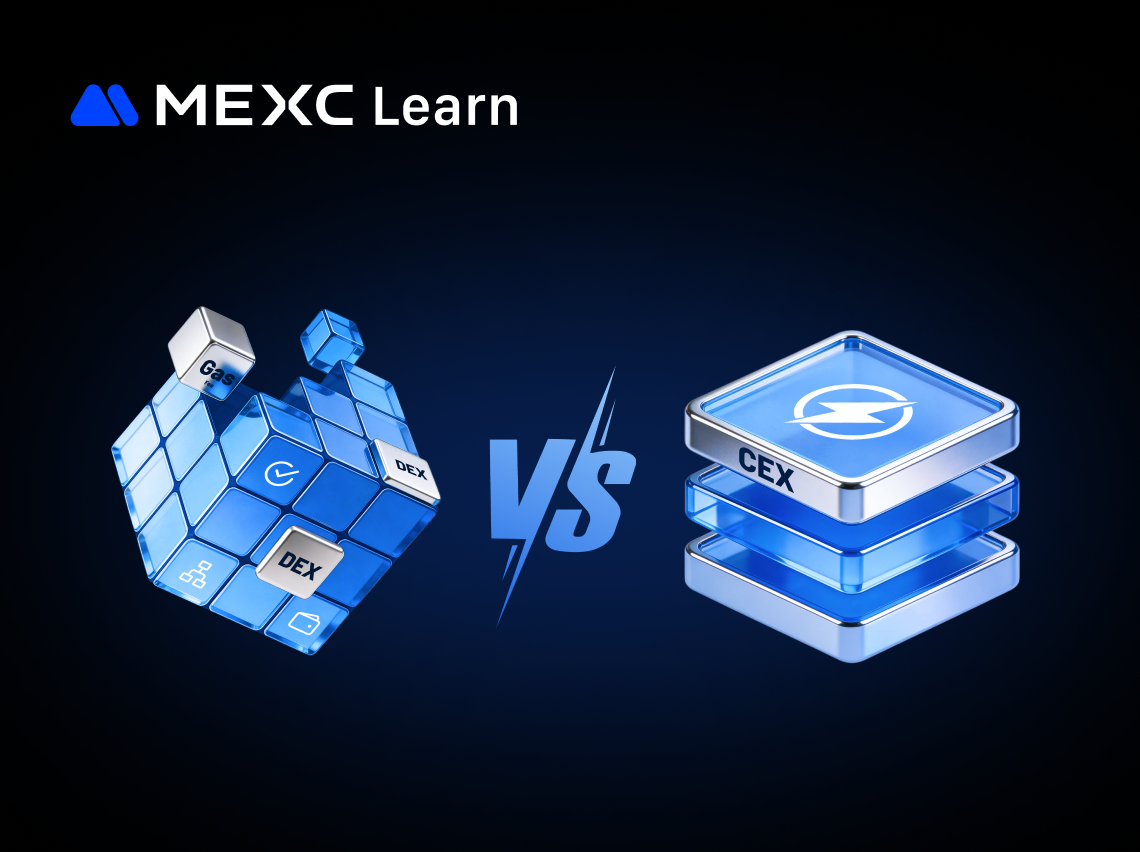
Another method is called IDO, which utilizes decentralized exchanges (DEX) instead of centralized exchanges (CEX). IDO stands for Initial DEX Offering, where tokens sold in an IDO are listed on a decentralized exchange (DEX) from the beginning, allowing investors to immediately buy and sell them.
*This article is intended to provide information about ICOs and does not constitute an endorsement of ICOs nor a recommendation to invest in specific cryptocurrencies.
Disclaimer: Cryptocurrency trading involves risk. This information does not provide advice on investment, taxation, legal, financial, accounting, or any other related services, nor does it constitute advice to purchase, sell, or hold any assets. MEXC Learn provides information for reference purposes only and does not constitute investment advice. Please ensure you fully understand the risks involved and exercise caution when investing. The platform is not responsible for users' investment decisions.