

Trump's new Fed pick threatens to derail one of his biggest campaign promises: experts
Donald Trump’s selection to replace Jerome Powell as the chair of the Federal Reserve has a history that leads many observers to believe the president is not going to like what comes next after his Senate confirmation, according to the Washington Post.
Trump has prioritized lowering interest rates throughout his criticism of Powell's tenure. However, Trump also campaigned on making housing more affordable — goals that may conflict with nominee Kevin Warsh's policy priorities.
According to Post reporter Andrew Ackerman, Warsh believes the Federal Reserve's bond portfolio is unsustainably large and should be reduced. Trimming the $6.6 trillion portfolio of Treasury bonds and mortgage-backed securities could push mortgage rates higher, potentially undermining Trump's affordability objectives.
The tension reflects a fundamental policy conflict. Warsh has consistently criticized the Federal Reserve's balance sheet as "bloated and distortionary," arguing that an oversized central bank portfolio artificially suppresses long-term interest rates and inflates asset prices.
Bill English, former director of the Federal Reserve's division of monetary affairs, noted the contradiction: "If all he does is move to a smaller Fed balance sheet, it's hard to see how that would be consistent with lower mortgage rates, and that creates some tension with the president."
Trump recently stated, "We can drop interest rates to a level, and that's one thing we do want to do. That's natural. That's good for everybody."
This contrasts sharply with Warsh's stated philosophy: "Each time the Fed jumps into action, the more it expands its size and scope, encroaching further on other macroeconomic domains. More debt is accumulated… more capital is misallocated… more institutional lines are crossed… risks of future shocks are magnified."
Jon Hilsenrath, visiting scholar at Duke University's economics department, suggested the fundamental tension will constrain Warsh's ability to satisfy Trump. "Almost everywhere you look, Warsh is kind of hamstrung, including on the balance sheet."
You May Also Like
Crypto execs met with US lawmakers to discuss Bitcoin reserve, market structure bills
Lawmakers in the US House of Representatives and Senate met with cryptocurrency industry leaders in three separate roundtable events this week. Members of the US Congress met with key figures in the cryptocurrency industry to discuss issues and potential laws related to the establishment of a strategic Bitcoin reserve and a market structure.On Tuesday, a group of lawmakers that included Alaska Representative Nick Begich and Ohio Senator Bernie Moreno met with Strategy co-founder Michael Saylor and others in a roundtable event regarding the BITCOIN Act, a bill to establish a strategic Bitcoin (BTC) reserve. The discussion was hosted by the advocacy organization Digital Chamber and its affiliates, the Digital Power Network and Bitcoin Treasury Council.“Legislators and the executives at yesterday’s roundtable agree, there is a need [for] a Strategic Bitcoin Reserve law to ensure its longevity for America’s financial future,” Hailey Miller, director of government affairs and public policy at Digital Power Network, told Cointelegraph. “Most attendees are looking for next steps, which may mean including the SBR within the broader policy frameworks already advancing.“Read more
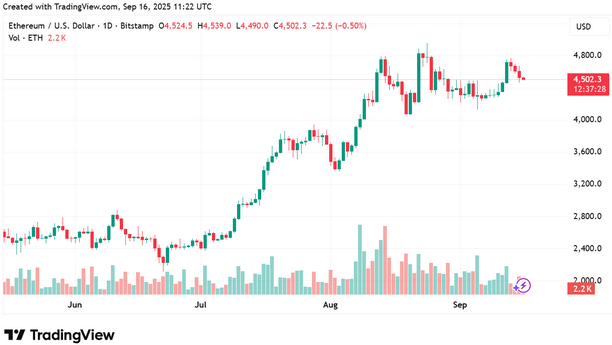
Ethereum Price Prediction: ETH Targets $10,000 In 2026 But Layer Brett Could Reach $1 From $0.0058
