The post WBD, Paramount regulatory path might be easier than Netflix tie-up appeared on BitcoinEthereumNews.com. The Paramount logo is displayed above an entranceThe post WBD, Paramount regulatory path might be easier than Netflix tie-up appeared on BitcoinEthereumNews.com. The Paramount logo is displayed above an entrance

WBD, Paramount regulatory path might be easier than Netflix tie-up

The Paramount logo is displayed above an entrance to Paramount Studios on Feb. 23, 2026 in Los Angeles, California.

Justin Sullivan | Getty Images

A day after Paramount Skydance emerged as the winner to take over fellow media giant Warner Bros. Discovery, questions are mounting about the companies’ regulatory path forward.

The WBD board said on Thursday that Paramount’s revised $31-per-share offer was superior to an existing bid from Netflix, prompting the streamer to announce that it was walking away from the deal entirely and clearing the way for Paramount.

Paramount’s raised offer — up from $30 per share — was the latest in a series of moves it made after it launched a hostile bid late last year to buy WBD. It had initially lost out on a bidding war to Netflix, which offered $27.75 per share.

Paramount’s latest bid also included a $7 billion breakup fee if the deal doesn’t win regulatory approval. And it agreed to pay the $2.8 billion breakup fee that WBD would owe Netflix if the deal fell through.

But media industry experts said it’s looking more likely that the Paramount deal will get through government scrutiny than it did when Netflix was in the picture.

Netflix vs. Paramount

Netflix co-CEOs Ted Sarandos and Greg Peters said Thursday that it was “no longer financially attractive” to match Paramount’s raised offer.

Though Netflix executives had said they were “highly confident” that their deal would win approval, the merger would have brought together two top streaming services — Netflix and Paramount+ — and could have potentially raised prices for consumers and decreased competition.

In early December, Trump said the Netflix-WBD deal “could be a problem” because of the increased market share Netflix would gain, saying he would be involved. He walked back those comments earlier this month, saying the deal would be at the sole discretion of the Department of Justice.

And while the size of a combined Netflix and WBD entity was one of the companies’ largest antitrust obstacles, that issue could still be raised for Paramount.

Both Paramount and WBD have sprawling portfolios of TV networks, in addition to Paramount+ hitting 78.9 million subscribers, according to its most recent earnings report, and HBO Max counting 131.6 million subscribers through the end of 2025.

Paramount executives argued one of the pros of their offer was that a deal with the media company would garner less government scrutiny. Paramount Skydance CEO David Ellison’s father, Oracle co-founder Larry Ellison, is known to have close relations with President Donald Trump.

Trump’s son-in-law, Jared Kushner, is backing the Paramount deal, according to a filing with the Securities and Exchange Commission.

Still, Paramount’s proposed deal had come under criticism for potentially being funded by the sovereign wealth funds of Saudi Arabia; Abu Dhabi, United Arab Emirates; and Qatar. The company has previously said that those entities have agreed to forgo all governance rights, including board representation.

California Attorney General Rob Bonta, a Democrat, warned on Thursday night that the merger was “not a done deal” and that the California Department of Justice, which has an open investigation into the deal, will be vigorous in its review.

And Democratic Sen. Elizabeth Warren of Massachusetts said in a statement that the Paramount and WBD merger is “an antitrust disaster threatening higher prices and fewer choices for American families.”

A potential for fewer concerns

Analysts from Raymond James said they believe the Paramount-WBD deal could pose far less of a risk for regulatory approval than a Netflix tie-up.

In a Friday note, the analysts said the regulatory path forward for Paramount is “meaningfully easier” than Netflix’s, though it would not be a “cakewalk.”

“Of course, there are new challenges with this deal around news, cable networks, international linear networks, etc., but we still feel the WBD/PSKY deal is more palatable all-in,” the analysts wrote. “And, particularly following the reaction to the WBD/NFLX agreement, we believe PSKY’s political standing with the current U.S. administration is much stronger than Netflix’s.”

The analysts noted that questions remain about how the competitive market for the companies will be defined by the DOJ, and they speculated that Netflix likely decided not to match Paramount’s superior offer because of what was “likely to be a brutal regulatory review.”

A Friday note by Morningstar analysts echoed those thoughts. The analysts said the move was right for both Netflix and Paramount because they believed Netflix was unnecessarily overpaying for WBD’s streaming and studios.

Notably, Paramount aimed to buy the entirety of WBD, including its pay-TV networks, such as CNN, TBS and TNT, while Netflix only wanted the company’s studio and streaming assets.

“This is the best outcome for Warner shareholders, in our view, as we’ve felt that, with a higher likelihood of prompt regulatory approval and uncertainty surrounding the value and risk of the network business they would have retained, the best offer would have been $30 in cash,” the analysts wrote.

The analysts added that they don’t expect Paramount to face any regulatory issues during the approval process.

‘Horizontal consolidation’

Joseph Kalmenovitz, an assistant professor of finance at the Simon Business School at the University of Rochester, said Paramount’s timing for the bid was likely strategic.

“David Ellison didn’t just outmaneuver a Hollywood board — he timed the regulatory cycle perfectly,” Kalmenovitz said. “The populist, big-is-bad philosophy is out; the deal-friendly establishment is back in.”

Still, Paren Knadjian, a partner at advisory firm EisnerAmper, said the regulatory path forward for Paramount remains nuanced and isn’t a done deal. While concerns over the Netflix-WBD deal focused largely on library content, the Paramount-WBD deal is far more of a “horizontal consolidation” effort between cable TV, sports, streaming and news, he said.

“I think the biggest thing we’re going to focus on is the concentration of intellectual property under one roof,” Knadjian told CNBC. “What power does that give this new entity in terms of the ability to charge more?”

Knadjian said Paramount will also be facing political concerns, not only from state and federal politicians, but between CNN and CBS combining under one roof, in addition to concerns over blockbuster franchises like “Star Trek” and “Harry Potter.”

Ultimately, the approval of the deal will come down to which concessions the two companies will have to make in order to assuage any fears over a possible media monopoly.

“The regulatory pressure, the political pressure, those are the things that will certainly delay the deal and will make it more complicated, and I think there’s going to have to be significant concessions for it to go through.

There’s so many factors to this. It’s much more complicated than many of the other deals we’ve seen in the past,” Knadjian said.

– CNBC’s Lillian Rizzo contributed to this report.

Source: https://www.cnbc.com/2026/02/27/warner-bros-paramount-skydance-netflix-deal.html

Market Opportunity
CreatorBid Logo
CreatorBid Price(BID)
$0.009261
$0.009261$0.009261
-0.86%
USD
CreatorBid (BID) Live Price Chart
Disclaimer: The articles reposted on this site are sourced from public platforms and are provided for informational purposes only. They do not necessarily reflect the views of MEXC. All rights remain with the original authors. If you believe any content infringes on third-party rights, please contact crypto.news@mexc.com for removal. MEXC makes no guarantees regarding the accuracy, completeness, or timeliness of the content and is not responsible for any actions taken based on the information provided. The content does not constitute financial, legal, or other professional advice, nor should it be considered a recommendation or endorsement by MEXC.

You May Also Like

XRP Volume Rises 212%, Bitcoin ETFs Back in Demand With $506 Million, Dogecoin Price Reclaims $0.10 — U.Today Crypto Digest

XRP Volume Rises 212%, Bitcoin ETFs Back in Demand With $506 Million, Dogecoin Price Reclaims $0.10 — U.Today Crypto Digest

Crypto news digest: 212% increase was seen in XRP volume; BTC ETFs have recovered from the low capital; DOGE price jumps 8%.
Share
Coinstats2026/02/28 05:27
From Idea to App Store: The Complete Guide to Mobile App Development in Saudi Arabia

From Idea to App Store: The Complete Guide to Mobile App Development in Saudi Arabia

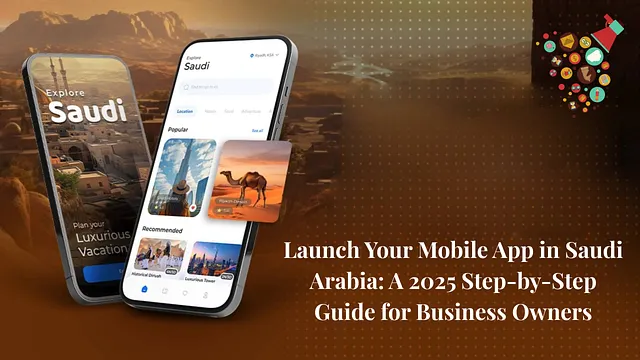
Saudi Arabia is at the forefront of digital transformation. With Vision 2030 driving innovation and a rapidly growing population of tech-savvy users, mobile apps have become a core driver of business growth in the Kingdom. From e-commerce and fintech to healthcare, logistics, and on-demand services, Saudi businesses are embracing mobile apps to connect with customers and scale faster. But how do you take a mobile app idea and turn it into a successful launch on the App Store or Google Play? This guide breaks down the complete mobile app development process in Saudi Arabia — step by step. Step 1: Validate Your App Idea for the Saudi Market Before you start building, ask: What problem does my app solve for Saudi users? Is there a cultural or market gap my app can fill? How do local competitors approach the same challenge? For example, apps related to digital payments, e-learning, delivery services, and healthcare are in high demand across Saudi Arabia. Conducting market research and aligning your app idea with local user behavior is critical. Step 2: Plan Features with Local Needs in Mind Your app should start with an MVP (Minimum Viable Product) — a core version that solves the main problem. Later, you can scale with advanced features. In Saudi Arabia, consider adding: Arabic language support (essential for user adoption) Integration with local payment gateways like STC Pay, Mada, or Apple Pay Regulatory compliance (especially for fintech and health apps) Localization for user preferences (Hijri calendar, cultural UI elements) Step 3: Select the Right Development Approach You can choose: Native Apps (Swift for iOS, Kotlin for Android) — Great for scalability and performance. Cross-Platform Apps (Flutter, React Native) — Cost-effective for startups targeting both iOS and Android simultaneously. Hybrid Apps — Suitable for simpler apps with limited features. For Saudi startups and enterprises, cross-platform development is often preferred to reach a wider audience quickly and efficiently. Step 4: Design With a Local Touch The design must balance global usability standards with local cultural relevance. UI (User Interface): Clean, modern visuals that align with Saudi branding. UX (User Experience): Simple navigation, clear Arabic text support, and intuitive flows. Wireframing & Prototyping: Test early with Saudi users to ensure adoption. A user-friendly design is one of the top reasons apps succeed in the Kingdom’s competitive market. Step 5: Develop Your Mobile App Once the design is ready, the coding begins. Saudi app development companies often follow Agile methodology, ensuring flexibility and faster delivery. Front-End Development: Interface and user interactions. Back-End Development: Databases, servers, and APIs. Integration: Secure connections between front-end and back-end. Strong collaboration between developers, designers, and business analysts ensures your app aligns with Saudi market needs. Step 6: Testing Across Devices and Networks Saudi users rely on different devices and network speeds. That’s why rigorous testing is critical: Functionality Testing: Features work as expected. Performance Testing: The app runs smoothly on both 4G and 5G networks. Localization Testing: Arabic text displays correctly, without alignment issues. Security Testing: Data protection compliance with Saudi cybersecurity standards. Step 7: App Store & Google Play Launch in Saudi Arabia To publish your app: Apple App Store (iOS): Requires an Apple Developer account and strict guideline compliance. Google Play Store (Android): Faster approval but still requires detailed app info. You’ll also need metadata in both English and Arabic — titles, descriptions, and screenshots — to maximize visibility among Saudi users. Step 8: Market Your App in Saudi Arabia Launching an app is only the beginning. You need a marketing strategy tailored to the Kingdom: App Store Optimization (ASO): Use Arabic and English keywords. Social Media Campaigns: Leverage platforms like Snapchat, Twitter (X), and Instagram, which are highly popular in Saudi Arabia. Influencer Marketing: Collaborate with Saudi influencers for early traction. Paid Ads: Google Ads and Saudi-focused Facebook/Instagram ads. Partnerships: Collaborate with local businesses to reach a wider audience. Step 9: Gather Feedback and Optimize Once your app is live, monitor: User reviews on app stores Analytics on engagement, retention, and churn rates Suggestions from Saudi users for culturally relevant features Continuous updates and improvements are vital to stay competitive. Step 10: Scale With Advanced Features Once your MVP gains traction, you can expand with advanced features such as: AI and machine learning for personalization Blockchain-based payments for fintech apps AR/VR features for retail and gaming apps IoT integration for smart home and mobility solutions Saudi Arabia’s digital ecosystem is growing rapidly — apps that adapt quickly will thrive. Conclusion Mobile app development in Saudi Arabia is not just about building an app — it’s about aligning with Vision 2030, cultural needs, and user expectations. By following a clear process — from idea validation to launch and beyond — you can transform your concept into a profitable digital product. Whether you’re a startup or an enterprise in Saudi Arabia, the opportunity is massive. With the right strategy, you can move from idea to App Store and create an app that truly resonates with Saudi users. From Idea to App Store: The Complete Guide to Mobile App Development in Saudi Arabia was originally published in Coinmonks on Medium, where people are continuing the conversation by highlighting and responding to this story
Share
Medium2025/09/18 14:46
Shiba Inu’s (SHIB) Price Prediction for 2025 Points to 4x Growth, But Mutuum Finance (MUTM) Looks Set for 50x Returns

Shiba Inu’s (SHIB) Price Prediction for 2025 Points to 4x Growth, But Mutuum Finance (MUTM) Looks Set for 50x Returns

As Shiba Inu (SHIB) takes over the limelight with experts predicting a potential 4x increase by 2025, a far more disruptive competitor, Mutuum Finance (MUTM), is emerging in the cryptocurrency market. Unlike SHIB, which is depending upon community-driven momentum and speculative buying, Mutuum Finance is building a decentralized protocol for lending and borrowing that will […]
Share
Cryptopolitan2025/09/18 02:30