Oil Market Volatility: Critical Shipping Risks and IEA’s Strategic Supply Plans for 2025
BitcoinWorld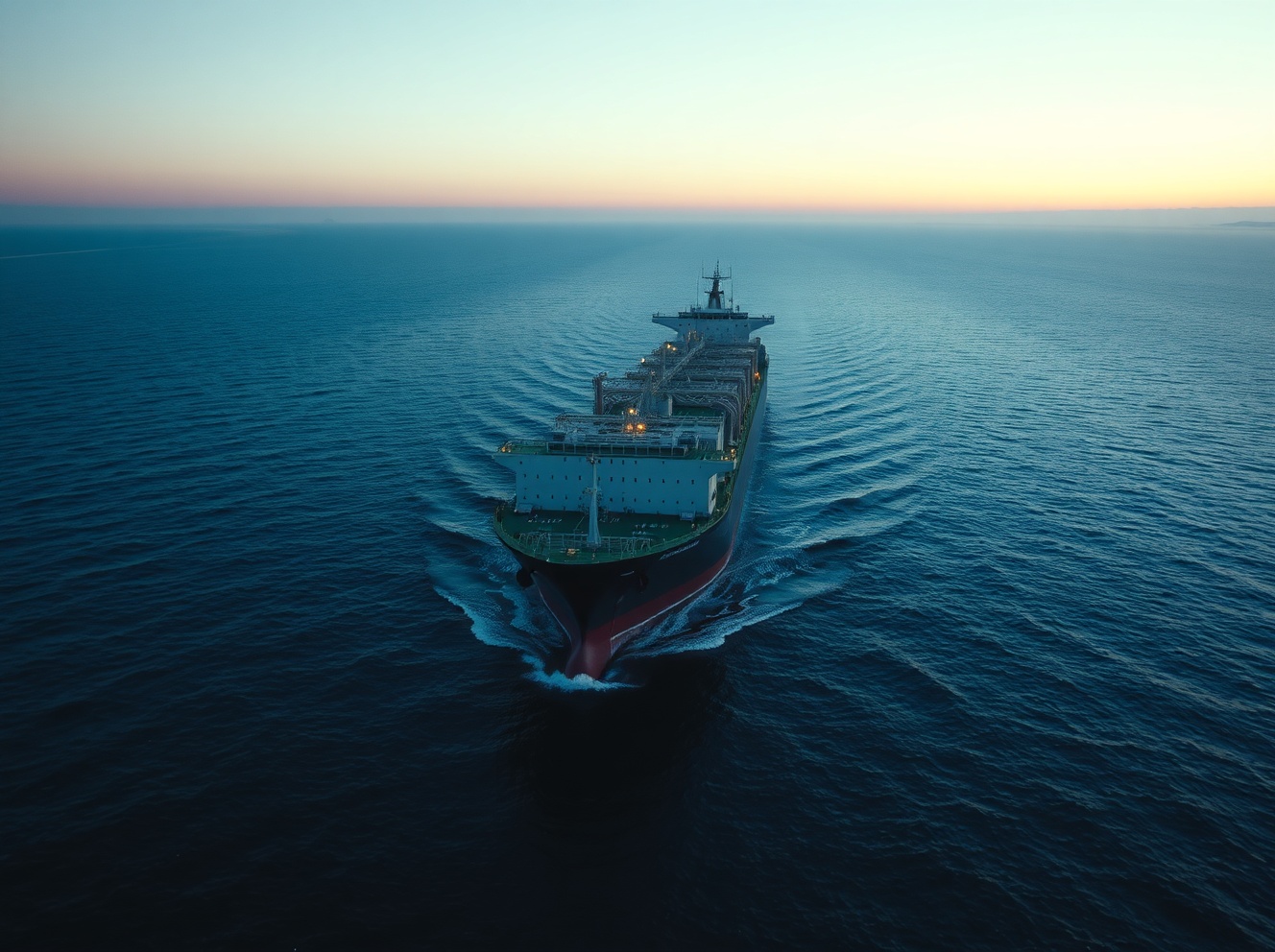
Oil Market Volatility: Critical Shipping Risks and IEA’s Strategic Supply Plans for 2025
Global oil markets face mounting pressure in early 2025 as shipping disruptions intersect with strategic supply planning by the International Energy Agency, creating unprecedented volatility that threatens energy security worldwide.
Oil Shipping Risks Escalate in Key Maritime Corridors
Maritime transportation currently moves approximately 60% of globally traded oil through vulnerable chokepoints. Recent geopolitical tensions have significantly increased insurance premiums for vessels transiting the Strait of Hormuz, where 20% of global oil shipments pass daily. Similarly, the Bab el-Mandeb Strait has experienced intermittent closures, affecting routes serving European and North American markets. These disruptions create immediate supply chain bottlenecks that ripple through global markets within days. Shipping companies now implement complex rerouting strategies that add 10-14 days to typical voyages, consequently increasing transportation costs by 40-60%. The cumulative effect manifests as sustained backwardation in oil futures curves, indicating persistent near-term supply concerns. Market analysts particularly monitor VLCC (Very Large Crude Carrier) availability, as these vessels transport the majority of Middle Eastern crude to Asian refining centers. Charter rates for VLCCs have surged 85% year-over-year, reflecting both demand pressures and risk premiums. Furthermore, environmental regulations mandating slower shipping speeds reduce effective fleet capacity by approximately 5%, compounding existing logistical constraints. These maritime challenges intersect with aging pipeline infrastructure in several producing regions, creating multimodal transportation vulnerabilities that defy simple solutions.
IEA Supply Plans and Strategic Reserve Management
The International Energy Agency maintains coordinated emergency response mechanisms among its 31 member countries, holding strategic petroleum reserves equivalent to 90 days of net imports. Recent IEA communications indicate potential stock releases if supply disruptions exceed 7% of global daily consumption. The agency’s 2025 contingency planning emphasizes diversified release timing to avoid market distortion while addressing genuine supply shortfalls. Historical analysis shows IEA interventions typically stabilize prices within 15-30 trading days following coordinated action. Current reserve levels across member states remain robust, with the United States Strategic Petroleum Reserve at 550 million barrels and European Union collective reserves at 800 million barrels. However, the IEA faces new challenges in 2025, including synchronizing responses with OPEC+ production adjustments and accounting for changing demand patterns in emerging economies. The agency’s latest monthly report highlights increasing reliance on non-OPEC production growth, particularly from Guyana, Brazil, and the United States, which now supplies 15% of global crude. This production diversification somewhat mitigates traditional supply concentration risks but introduces new transportation complexities. IEA modeling suggests that sustained prices above $90 per barrel could trigger demand destruction of 1.2 million barrels daily within six months, creating natural market corrections that reduce pressure on emergency mechanisms.
Expert Analysis: Market Implications and Price Trajectories
Energy economists at Brown Brothers Harriman emphasize the nonlinear relationship between shipping disruptions and price impacts. Their research indicates that each day of closure at major chokepoints correlates with 3-5% price increases in benchmark crudes, with effects magnifying when multiple corridors experience simultaneous issues. The firm’s commodity team notes that current forward curves already price in moderate disruption scenarios through Q2 2025. Refining margins provide crucial indicators of downstream market stress, with complex refineries in Asia and Europe showing divergent responses to supply constraints. Historical volatility patterns suggest that markets typically overcorrect initially before stabilizing at 20-30% above pre-disruption levels. Regional price differentials have widened significantly, with Brent-WTI spreads exceeding $8 per barrel due to Atlantic basin shipping constraints. This arbitrage opportunity stimulates unusual trade flows, including West African crude moving to European destinations typically supplied from the Middle East. Storage economics further complicate market responses, as contango structures in some regions incentivize inventory accumulation despite high carrying costs. Market participants increasingly utilize derivatives for risk management, with options volatility reaching levels not seen since the 2020 pandemic shock.
Geopolitical Factors and Alternative Transportation Routes
Several nations actively develop pipeline alternatives to vulnerable maritime routes. The expanded Trans-Anatolian Pipeline now carries 1.2 million barrels daily from Azerbaijan to Mediterranean markets, bypassing Turkish Straits congestion. Similarly, the East-West Pipeline across Saudi Arabia provides redundancy for Persian Gulf exports, though capacity constraints limit its effectiveness during peak disruption periods. China’s pipeline investments through Central Asia and Myanmar create alternative supply corridors that reduce Malacca Strait dependence by approximately 15%. These infrastructure developments require massive capital investment but provide crucial diversification benefits over decade-long horizons. Geopolitical tensions in producing regions introduce additional complexity, with Venezuela’s production recovery and Iran’s export levels creating unpredictable supply variables. Sanctions enforcement mechanisms affect shipping documentation, insurance availability, and payment processing, creating de facto supply reductions even without physical disruptions. The increasing frequency of extreme weather events represents another growing concern, with hurricanes disrupting Gulf of Mexico production and loading operations for an average of 14 days annually. Climate change adaptation now forms part of long-term energy security planning, with IEA scenarios incorporating more frequent weather-related disruptions.
Technological and Regulatory Responses
Shipping industry technological adoption accelerates in response to these challenges. Digital twin technology now models entire supply chains, identifying vulnerabilities before disruptions occur. Automated monitoring systems track vessel movements in real-time, enabling rapid response to emerging threats. The International Maritime Organization’s enhanced environmental standards drive fleet renewal, with newer vessels offering greater reliability and efficiency. However, these improvements require substantial investment that may constrain capacity growth during transition periods. Regulatory coordination between producing, transit, and consuming nations remains inconsistent, though the G7’s recent Supply Chain Resilience Initiative includes specific energy transportation provisions. Insurance market innovations include parametric policies that trigger automatically when specific chokepoints close, providing quicker compensation than traditional claims processes. These financial instruments help stabilize shipping economics but cannot address physical supply constraints. Cybersecurity represents an emerging threat vector, with several major port operations experiencing ransomware attacks that delayed cargo handling by multiple days. The energy sector’s increasing digitalization creates both efficiency gains and vulnerability points that malicious actors may exploit.
Conclusion
Global oil markets navigate complex interdependencies between shipping risks and supply management strategies as 2025 progresses. The International Energy Agency’s coordinated approach provides crucial stabilization mechanisms, though physical transportation constraints present immediate challenges. Market participants must monitor multiple indicators including charter rates, inventory levels, and geopolitical developments to anticipate volatility. Ultimately, energy security requires diversified transportation infrastructure, strategic reserve management, and international cooperation to mitigate inevitable disruptions in an interconnected global system.
FAQs
Q1: What percentage of global oil travels by sea?
Approximately 60% of internationally traded oil moves via maritime transportation, primarily using Very Large Crude Carriers (VLCCs) and Suezmax tankers through strategic chokepoints.
Q2: How does the IEA coordinate emergency oil releases?
The International Energy Agency requires member countries to maintain 90 days of net import coverage in strategic reserves and can trigger coordinated releases when supply disruptions exceed 7% of global consumption.
Q3: Which maritime chokepoints are most critical for oil shipping?
The Strait of Hormuz (20-21% of global shipments), the Strait of Malacca (16%), the Suez Canal (8%), and the Bab el-Mandeb Strait (5%) represent the most critical oil transportation corridors.
Q4: How do shipping disruptions affect oil prices?
Research indicates each day of closure at major chokepoints correlates with 3-5% increases in benchmark crude prices, with effects magnifying when multiple corridors experience simultaneous issues.
Q5: What alternatives exist to maritime oil transportation?
Major pipeline systems including the Trans-Anatolian Pipeline, East-West Pipeline across Saudi Arabia, and various Central Asian routes provide alternatives, though capacity limitations constrain their ability to fully replace sea transport.
This post Oil Market Volatility: Critical Shipping Risks and IEA’s Strategic Supply Plans for 2025 first appeared on BitcoinWorld.
You May Also Like
China Launches Cross-Border QR Code Payment Trial

Fan Token Firm Chiliz Acquires 2-Time ‘Dota 2’ Champions, OG Esports