

Trump Administration details national AI framework in sweeping federal policy push
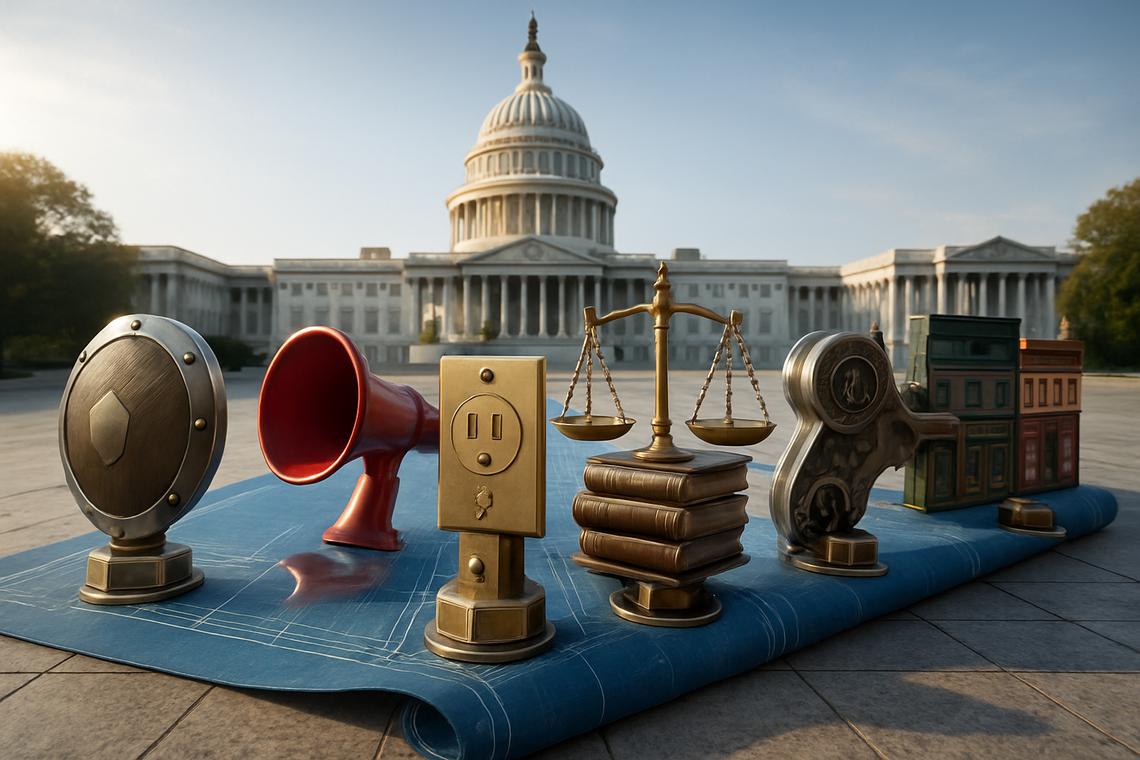
In a bid to reset Washington’s approach to artificial intelligence, the Trump Administration has released a detailed national AI framework that it says will guide long-term U.S. policy.
White House sets out six-part roadmap for U.S. AI law
The National AI Legislative Framework, unveiled by the Trump Administration on March 20, 2026, sets out six core policy objectives for AI development and governance. The White House framed the document as the starting point for a broad, enforceable national policy.
According to the administration, these objectives range from protecting children and local communities to accelerating innovation in American industries. Moreover, the White House is urging Congress to translate the framework into binding legislation rather than leaving AI rules to a patchwork of state measures.
The administration stressed that firm federal leadership is needed to maintain public trust in artificial intelligence. However, it also argued that overly restrictive or inconsistent rules could undermine U.S. competitiveness in the global AI race.
Child protection, online safety, and community impacts
One of the framework’s central pillars focuses on children’s safety in digital environments. The White House called on Congress to give parents stronger tools to protect children online, particularly as AI systems increasingly power platforms used by minors.
Those tools include enhanced account controls that allow parents to manage privacy settings and regulate device use for children. In addition, the administration urged AI platforms to deploy systems that meaningfully reduce the sexual exploitation of minors and other forms of AI-enabled abuse.
Beyond child safety, the framework extends to broader community protections and economic outcomes. The administration emphasized that AI development should support growth for small businesses and local communities, rather than concentrating benefits solely in large technology centers.
Energy use by data centers is another focal point. The White House argued that ratepayers should not be forced to shoulder the full cost of powering AI infrastructure. Therefore, it wants Congress to streamline permitting so data centers can generate on-site power and lessen the burden on public utilities.
The framework also calls for expanding federal capacity to combat AI-enabled scams and fraud. This reflects a growing concern among Americans over synthetic voices, deepfakes, and automated schemes powered by advanced models.
The administration framed these measures as essential to preserving community safety nationwide. Moreover, it said that addressing fraud, exploitation, and local impacts together creates a layered approach to public protection.
Free speech protections and political expression
Free speech is another area where the White House wants explicit statutory guidance. The framework proposes guardrails that would prevent AI systems and platforms from censoring lawful political expression or suppressing ideological dissent.
The administration is seeking federal protections to ensure that AI tools do not quietly tilt political debate by down-ranking or removing permissible content. That said, the White House also argued that AI must be able to pursue truth and accuracy without being constrained by opaque or biased moderation rules.
Removing barriers to AI innovation and IP balance
On the economic front, the framework places heavy weight on accelerating AI innovation policy across the U.S. Congress is being asked to dismantle outdated regulations that slow the deployment of AI systems in key sectors, from industry to services.
The administration wants to expand access to testing environments where companies and researchers can build and iterate world-class AI systems. Moreover, it argues that safe experimentation sandboxes are vital for keeping American firms competitive with rivals abroad.
Intellectual property is treated as a balancing act. The framework calls for strong respect for the creative works of American innovators, publishers, and content creators, including fair compensation where appropriate. However, it also acknowledges that advanced models must learn from existing content in ways that regulators deem fair and lawful.
According to the administration, this middle-ground approach is designed to avoid stifling either AI progress or creative industries. The national AI framework therefore positions IP policy as a negotiated space where both innovation and rights holders can be protected.
Workforce development and training for an AI economy
Workforce development forms another major pillar of the plan. The administration is pressing Congress to expand AI workforce development initiatives and training programs across U.S. industries so that workers can adapt to rapid technological change.
These programs are intended to equip American workers with skills needed in an AI-driven economy, from data literacy to operating advanced tools. Moreover, the White House expects that such investments will help workers access new job categories created by AI deployment rather than being displaced by automation.
The administration argues that targeted training will help spread the gains of AI more evenly across regions and demographics. That said, it also acknowledges that the transition could be disruptive without robust policy support and consistent funding.
Push for a uniform national AI policy
A central political objective of the framework is to avoid a fragmented regulatory landscape. The White House warned that a patchwork of conflicting state rules would weaken federal AI policy, confuse businesses, and slow innovation.
Instead, the administration is advocating for a uniform national AI approach centered on federal standards and enforcement. It says this consistency will give companies clearer guidance, reduce compliance costs, and strengthen America’s competitive position against global rivals.
The Trump Administration pledged to work closely with Congress in the coming months to convert the National AI Legislative Framework into final law. In its view, enacting a comprehensive nationwide regime is critical to securing both safety and leadership in artificial intelligence.
In summary, the framework outlines a sweeping federal agenda that links child protection, free speech, innovation, workforce training, and regulatory uniformity. If Congress adopts its core pillars, the U.S. could see one of its most far-reaching AI policy overhauls to date.
You May Also Like
SEC Approves Generic Listing Standards Clearing Path For Crypto ETPs

Layer Brett Picked As The Best Crypto To Buy Now By Experts Over Pi Coin & VeChain

