

5 African startups rethinking waste as raw material, job hunting, and cross-border payments
Startups On Our Radar spotlights African startups solving African challenges with innovation. In our previous edition, we featured five game-changing startups pioneering software development, fintech, education, and artificial intelligence. Expect the next dispatch on January 2, 2026.
This week, we explore five African startups in the agritech, fintech, HRTech, cleantech, and artificial intelligence sectors and why they should be on your watchlist. Let’s dive into it:
 Screenshot
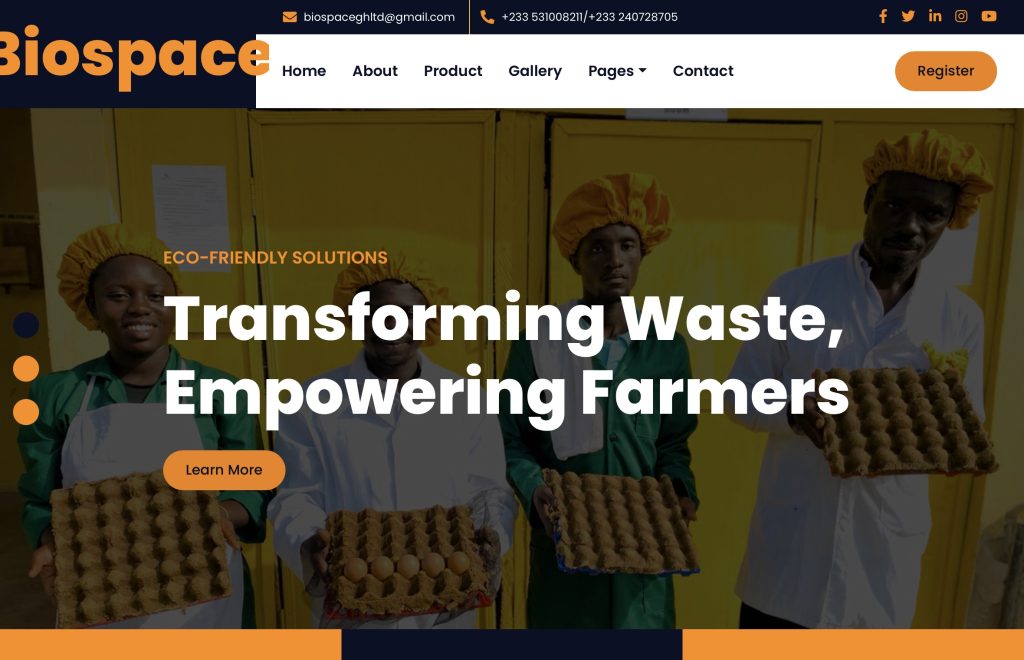
BioSPACE GH is turning plantain waste into egg cartons (AgriTech/CleanTech, Ghana)
Dominic Singban Ugai, founder of BioSPACE GH, observed that poultry farmers in Ghana face challenges in safely storing and transporting their eggs due to high costs, short shelf life , and an unreliable supply of egg trays. The startup sees egg packaging as a critical constraint to building a sustainable poultry business. Its solution is an eco-friendly egg tray made using plantain fibre and sawdust among other raw materials. The startup’s manufacturing process involves sourcing raw materials, which are then processed through chopping, boiling, pulping, moulding, and drying to create eco-friendly trays. This local production model enables the startup to offer a pack of egg crates, typically containing 100 pieces, at ₵70 ($6.19).
The startup claims to have aggregated 5,000 raw material supplies and reports 400 prospective customers. It says it has also formalised agreements with the Council for Scientific and Industrial Research (CSIR-IIR), the Ministry of Food and Agriculture (MoFA), and the Plantain Farmers Association in Ghana.
Why we’re watching: Globally, over 100 million tonnes of banana stems are discarded annually after harvest, which BioSPACE GH claims can produce over 800 million egg trays. By converting agricultural waste into packaging, BioSPACE GH positions itself as an import-substitution provider for poultry farmers in Ghana who still import egg crates from China. This matters in a sector with growing economic significance. In 2024, livestock production in Ghana contributed over $300 million to the country’s gross domestic product (GDP), nearly 13%, with poultry farming leading this charge. BioSPACE GH is betting that solving a basic but overlooked input, such as packaging, can unlock efficiency across Ghana’s poultry value chain.
 Screenshot
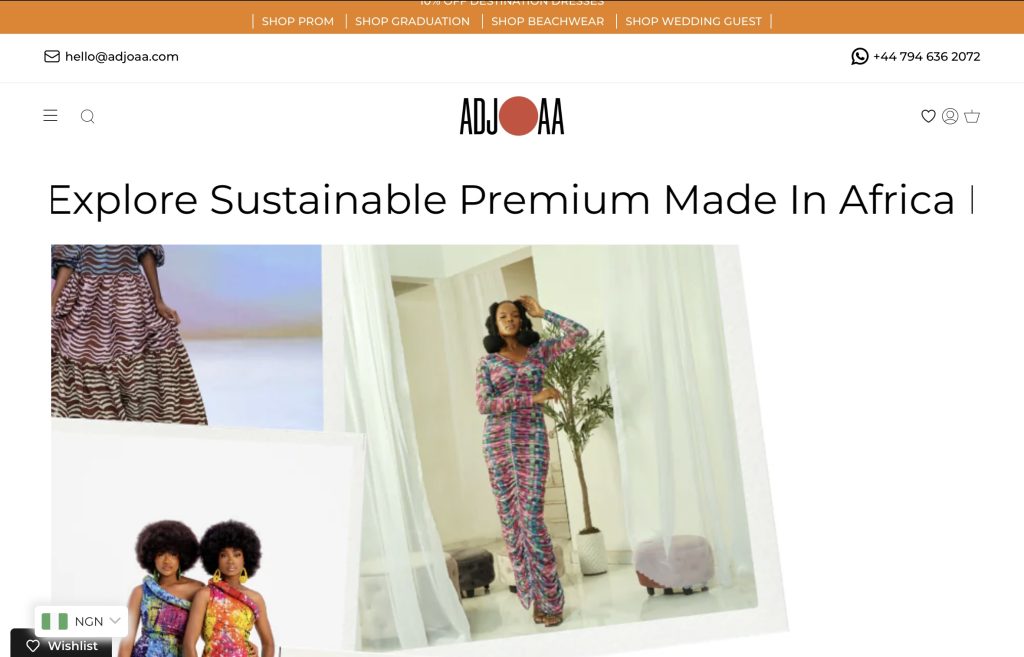
ADJOAA wants to make African fashion and lifestyle brands globally accessible (E-commerce, Pan-African)
ADJOAA is a web-based e-commerce platform founded by Pinaman Owusu, a Ghanaian entrepreneur and former New Zealand public policy official, to address the logistical and market-access barriers that prevent African designers from scaling globally. Owusu’s exposure to African designers while running the Africa Fashion Festival in New Zealand revealed a recurring challenge that international buyers faced wanting to purchase African-made products. Despite appetite, designers struggled with market access, payments, logistics, and the cost of shipping beyond their home countries.
ADJOAA focuses on giving African fashion and lifestyle brands access to global markets while handling the operational complexities that hinder cross-border trade. The platform combines marketplace access, integrated payments, logistics coordination, quality assurance, marketing support, and customer service into one offering.
Designers apply through a brand signup process that includes KYC and vetting. Acceptance is not automatic, as some brands are advised to improve operational readiness before joining. Once onboarded, ADJOAA creates dedicated brand landing pages that allow customers to shop by designer, country, or category. The platform supports fashion, accessories, beauty products, and homeware, with a strong emphasis on sustainable and ethical production, that is, brands that utilise traditional textiles (like Kente or Bogolan), deadstock fabrics, or artisanal craftsmanship.
ADJOAA claims to work with about 120 emerging and established brands, primarily from Nigeria, Ghana, and Côte d’Ivoire, and also includes some African diaspora brands based in the UK and the US that manufacture on the continent. Orders are shipped globally through a partnership with DHL, and most fashion items are made-to-order to reduce waste and overproduction. ADJOAA currently operates on a commission-based business model, acting as an intermediary where funds are held until successful delivery.
Why we’re watching: ADJOAA stands out by positioning itself as an operational extension of African fashion and lifestyle brands. Unlike typical dropshipping platforms, ADJOAA uses local partners on the ground in key markets like Nigeria and Ghana, such that when a customer places an order, the designer delivers the item to these local partners, who then perform quality assurance to ensure there are no defects before the package is handed over to DHL for global shipping. This process allows ADJOAA to combine shipments from multiple designers into one package for the customer, as opposed to fragmented dropshipping models.
Rather than focusing solely on high-end, established labels, ADJOAA prioritises emerging designers and multiple product categories beyond clothing. The startup’s approach to sustainability is also differentiated. Instead of focusing only on environmental metrics, ADJOAA emphasises cultural sustainability, preservation of traditional craftsmanship, and long-term income for artisans.
With ambitions to onboard up to 300 additional brands and expand beyond West Africa, ADJOAA is building infrastructure that could make African brands more competitive and visible on the global stage.
 Screenshot
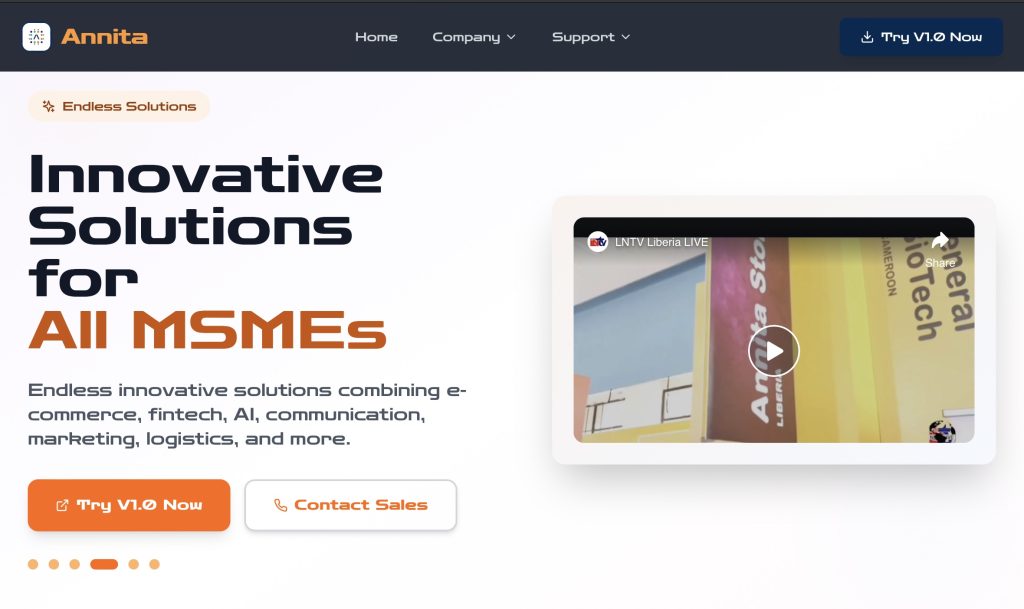
Annita wants to be the all-in-one digital operating system for African MSMEs (Super App, Liberia)
Founded by Christopher Fallah, Annita is addressing the fragmentation of business tools and financial exclusion that hampers the growth of African micro, small, and medium enterprises (MSMEs). Annita is a digital platform that integrates e-commerce, fintech, logistics, artificial intelligence, communication, marketing, social networking, ads management, lifestyle services, and vendor training into a single ecosystem.
The platform enables businesses to sell through the Annita Global Marketplace, a multivendor e-commerce platform supporting B2B, B2C, and B2G transactions with built-in product verification, inventory control, and order management, process payments through AnnitaPay, a digital wallet and payment gateway which supports offline payments, mobile money and cross-border transactions, and manage supply chains using Annita Logistics, a network integrating drones and electric bikes for last-mile delivery across urban and rural areas.
The app also includes: Annita AI for business automation, analytics, and personalised assistance for business growth and operations; Annita Connect, a social networking hub for entrepreneurs; Annita Marketing Hub for ad management and digital marketing and Annita Lifestyle Services, providing on-demand consumer and lifestyle offerings.
The startup operates multiple revenue models, primarily charging a 5% to 15% commission on marketplace transactions. It also offers tiered monthly or annual subscription plans, generates revenue from transaction fees on fintech services, logistics and fulfilment fees, and advertising income. Since its inception in August 2021, Annita claims to have onboarded over 3,000 MSMEs and 50,000 users.
Why we’re watching: Annita is attempting to consolidate services which are offered as standalone platforms into a single, Africa-focused super app. Annita positions itself against global and regional players such as Jumia, Flutterwave, Alibaba, and others by offering a fully integrated ecosystem with embedded fintech services, AI-powered business tools, and rural and offline access. The startup was recently onboarded onto Afreximbank’s MANSA Platform for cross-border trade.
 Screenshot
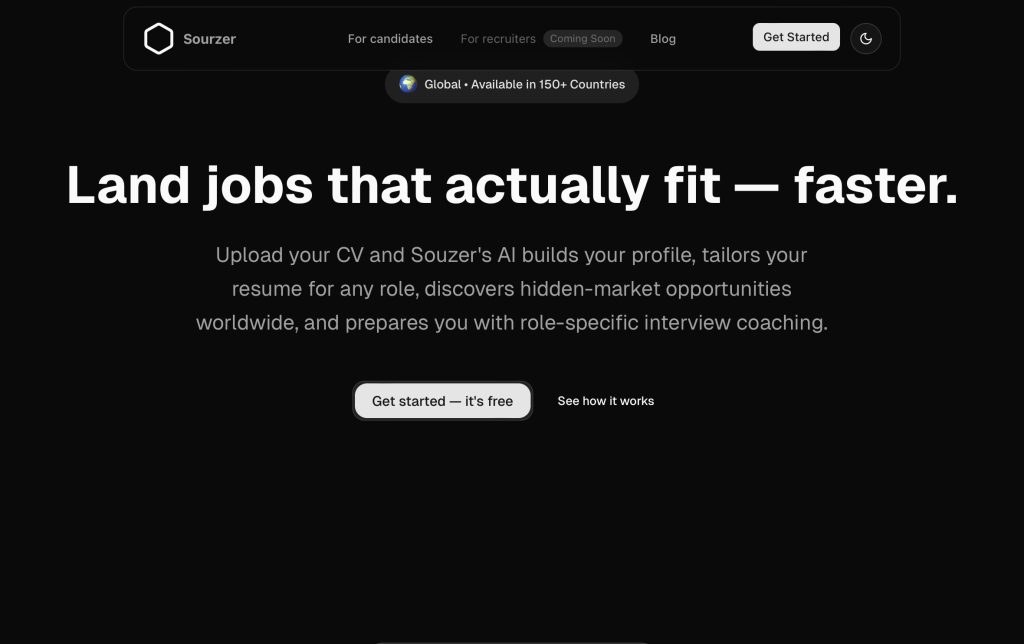
Sourzer is using AI to match recruiters and candidates in minutes (HRTech/AI, Nigeria)
Sourzer is an AI-powered hiring and job-matching platform founded by Tobiloba Odejinmi and Joshua Nwosu to address inefficiencies they observed on both sides of the recruitment market. The startup is tackling what it describes as a broken hiring process where hiring cycles are delayed due to poor sourcing, many applicants find online job applications frustrating, and recruiters spend a lot of their time screening irrelevant candidates. Sourzer’s solution is a real-time AI sourcing engine that acts like a talent agent for both recruiters and job seekers, instantly connecting the right candidates to the right roles.
On the recruiters’ side, they upload job descriptions and receive ranked candidate matches in seconds, which is supported by an AI chat copilot for role briefings and shortlisting, instant outreach templates, and ATS integrations. On the candidate side, users upload their resumes or LinkedIn profiles to receive job matches and have access to ATS-optimised resume rewrites, interview coaching, career roadmaps, and real-time job alerts.
Sourzer operates a dual-sided business model. For recruiters, it offers SaaS subscriptions ranging from a free tier to a $899 monthly Pro plan, with an optional 7% pay-per-hire success fee. For candidates, pricing ranges from free access with limited resume tailoring and coaching to a $79 monthly plan for unlimited features. The startup also plans to generate revenue from recruiting partners and integrating job boards.
Sourzer launched its MVP in August 2025 and reports early traction, including 126 recruiters and 807 candidates on a waiting list. The startup claims a 60% reduction in the time taken to shortlist candidates for recruiters and a 3-time increase in candidate resume-to-interview rates.
Why we’re watching: Sourzer differentiates itself as a two-sided AI copilot that simultaneously optimises the experience for both recruiters and candidates, unlike competitors such as Workable, which focuses on recruiter ATS, or Teal, which targets candidate tools. Sourzer argues it can significantly reduce hiring friction and wasted effort on both sides and is currently raising a $250,000 pre-seed round for product development, sales, partnerships, and hiring.
 Screenshot
AfricaCoach wants to make professional coaching instant and affordable in Francophone West Africa (EdTech, Benin)
AfricaCoach is built around a problem observed by the founder, Marius Chabi, that many early-career professionals in Francophone Africa lack access to affordable and instantly available private career coaching, which leads to career missteps and wasted time. The startup operates a digital platform that connects French-speaking African professionals, particularly those with less than seven years of experience, with human resource (HR) experts and specialised coaches for personalised 45-minute coaching sessions.
Users can book a session on the web-based platform instantly without mandatory registration, select a coach based on criteria, such as experience, language, or country and access services even on weekends. Coaching sessions are conducted on tools such as Zoom and Google Meet, while payments are processed through integrations with platforms including CinetPay and Stripe.
The startup charges a flat fee starting at $29 per session, with a satisfaction-or-money-back guarantee, which ensures that if a user is not satisfied, a refund is automatically granted to them. Additional revenue streams include ticket sales for online events and corporate coaching subscription plans for companies. Since its establishment in October 2020, AfricaCoach claims to have generated $15,000 in annual revenue and built a community of over 30,000 followers across West Africa.
Why we’re watching: AfricaCoach’s differentiation lies in its combination of affordability, instant availability, and weekend access. While competitors like Côte d’Ivoire’s Monrezo and Benin’s Entourage Africa offer networking or premium coaching, they are limited by weekday-only availability. They are also more expensive, as pricing for Entourage Africa starts at €200. The startup projects an impact of 129 direct jobs and 1,800 indirect jobs over the next three years.
That’s all for today. Expect our next dispatch on January 2nd. Know a startup we should feature next? Please nominate here.
You May Also Like

Ethereum unveils roadmap focusing on scaling, interoperability, and security at Japan Dev Conference

Where technology meets trust: Blockchain humanizes insurance
