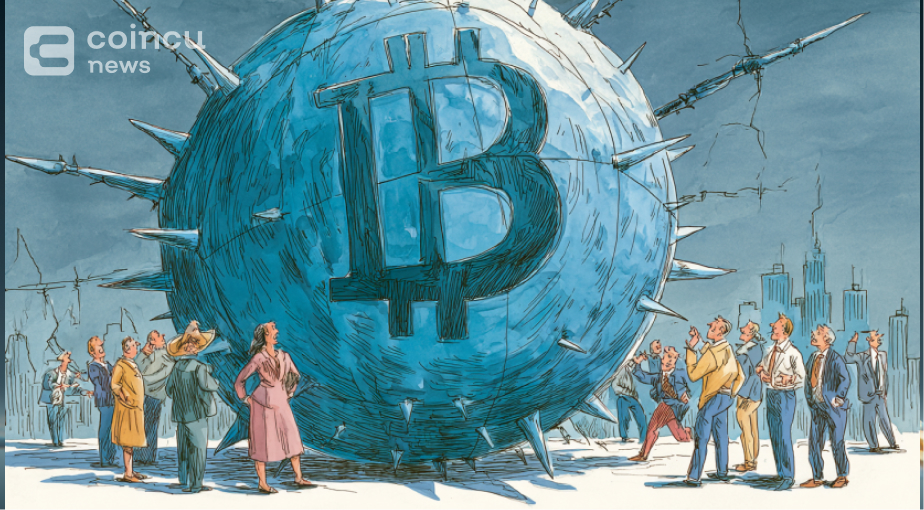
The DeFi industry recently experienced a cyclical high followed by a significant decline in token valuations. Total Value Locked (TVL) is a crucial metric for assessing DeFi protocols’ value. Crypto lending markets are sustainable due to their unique value proposition.
Key takeaways
- The DeFi industry recently experienced a cyclical high followed by a significant decline in token valuations.
- Total Value Locked (TVL) is a crucial metric for assessing DeFi protocols’ value.
- Crypto lending markets are sustainable due to their unique value proposition.
- This year has been marked by rapid capital formation in the crypto space.
- DeFi business models can be divided into instantaneous activities and evergreen capital formation.
- Lending remains a durable business in crypto due to the demand for turning nonproductive assets into productive ones.
- The decline of platforms like Celsius and BlockFi has benefitted DeFi lending platforms.
- The integration of Morpho with Coinbase has significantly boosted collateral borrowing against Bitcoin.
- Leveraged systems in crypto pose significant risks due to lack of traceability.
- Cross depositing vaults spread risk across multiple funds, which is dangerous.
- Many crypto assets may not be worth their claimed market cap due to low trading volumes.
- A fund of funds approach is sensible in crypto due to valuation challenges of illiquid assets.
- Most crypto platforms do not generate revenue that justifies their token valuations.
- Very few crypto startups are profitable at the time of investment.
- Venture capitalists are paying high premiums for talent in the current market.
Guest intro
Wyatt Khosrowshahi is an Investor at Castle Island Ventures, focusing on infrastructure and applications utilizing public blockchains. Prior to joining in July 2023, he served as an Investment Analyst at Shima Capital, evaluating companies leveraging blockchain to improve web2 industries. He co-authored the “Total Value Lost” report assessing DeFi markets, including lending protocols.
The cyclical nature of DeFi markets
- “The recent period marked a cyclical high in the DeFi industry, followed by a significant decline in token valuations.” – Wyatt
- The October 10 crash led to a marked decrease in crypto token valuations and DeFi metrics.
- “Total Value Locked (TVL) is a key metric for assessing the value of DeFi protocols.” – Wyatt
- TVL is often discussed as a measure of capital raising tools for DeFi protocols.
- Understanding the timeline of DeFi market performance is crucial for assessing protocol valuation.
- The DeFi market’s cyclical nature impacts both token valuations and protocol metrics.
- The decline in token valuations reflects broader market trends and volatility.
- Market participants must consider TVL and other metrics to evaluate DeFi protocols accurately.
Sustainability of crypto lending markets
- “Lending markets in crypto are sustainable because they serve a unique value proposition that cannot be replicated outside of crypto.” – Wyatt
- The demand for turning nonproductive assets into productive ones drives the durability of lending.
- “The current year has been characterized by rapid capital formation in the crypto space.” – Wyatt
- Crypto lending markets benefit from the rapid iteration of launchpads and capital formation.
- “The business models in DeFi can be categorized into two major types: instantaneous activities and evergreen capital formation.” – Wyatt
- The distinction between different business models highlights the role of lending markets.
- Lending markets are considered one of the most sustainable businesses in crypto.
- The unique value proposition of crypto lending cannot be replicated outside the digital asset space.
The rise of DeFi lending platforms
- “Lending is one of the more durable businesses in crypto due to the constant demand for turning nonproductive assets into productive ones.” – Wyatt
- The decline of centralized platforms like Celsius and BlockFi has created opportunities for DeFi lending platforms.
- “The need for users to unlock capital from long positions remains a persistent use case in lending markets.” – Wyatt
- DeFi lending platforms like Aave and Morpho have capitalized on the void left by centralized failures.
- The persistent demand for unlocking capital from long positions drives the lending market.
- DeFi lending platforms have grown due to the failures of centralized alternatives.
- Users continue to seek yield and unlock capital, supporting the durability of lending markets.
- The rise of DeFi lending reflects broader market dynamics and user motivations.
Leveraging and risk in crypto lending
- “The integration of Morpho with Coinbase has led to significant growth in collateral borrowing against Bitcoin.” – Wyatt
- The concept of looping allows users to leverage yield-bearing tokens for higher returns.
- “The lack of traceability in leveraged systems poses significant risks to the crypto market.” – Wyatt
- Leveraged systems in crypto are challenging to monitor, increasing market risk.
- The integration of Morpho with Coinbase has significantly impacted the borrowing market.
- Users can maximize returns through leveraging strategies like looping.
- Leveraged systems in crypto pose transparency and risk management challenges.
- The exponential growth in collateral borrowing against Bitcoin highlights market dynamics.
Risks and strategies in crypto lending
- “The strategy of cross depositing vaults is extremely dangerous as it spreads the same amount of risk across multiple funds.” – Wyatt
- Current lending strategies may not represent a bet on durable lending markets.
- “Composability in crypto has led to composable risk, where the insolvency of one yield-bearing stablecoin can create widespread issues.” – Wyatt
- Cross depositing vaults concentrate risk, posing significant dangers to investors.
- The concept of composable risk highlights systemic vulnerabilities in crypto lending.
- Current lending strategies may not be sustainable in the long term.
- Composability in crypto can lead to widespread issues if a stablecoin becomes insolvent.
- Risk concentration in vault strategies poses significant challenges to market stability.
Market dynamics and valuation challenges
- “Many crypto assets may not be worth their claimed market cap due to low trading volumes.” – Wyatt
- A fund of funds approach is sensible due to the challenges of valuing illiquid assets.
- “Funds need to be cautious about inflating their net asset value (NAV) to avoid overcharging fees.” – Wyatt
- Malicious or negligent fund managers can inflate asset values, impacting investor fees.
- Low trading volumes can lead to significant discrepancies in asset valuation.
- A fund of funds approach helps manage investment risk in a volatile market.
- Inflating NAV can lead to overcharging fees and ethical concerns in fund management.
- Valuation challenges in crypto highlight the need for transparency and due diligence.
The impact of macroeconomic factors on crypto
- “Crypto is highly sensitive to interest rates and operates as a macro trade.” – Wyatt
- The current environment of tightening interest rates presents a strong bull case for crypto.
- “Crypto thrives in hyperinflationary environments and when interest rates are low.” – Wyatt
- Interest rates significantly impact crypto markets due to their risk asset nature.
- Tightening monetary policies create potential growth opportunities for crypto.
- Crypto performs well in hyperinflationary environments and low interest rate conditions.
- The macroeconomic environment influences crypto’s performance and market dynamics.
- Understanding the relationship between interest rates and crypto is crucial for investors.
Lending market resilience and future trends
- “Lending markets can thrive in both high and low interest rate environments due to the dynamics of borrowing costs and market volume.” – Wyatt
- As interest rates decrease, borrowing volume in lending markets is expected to increase.
- “The lending markets may be underpriced, but this is not a universal truth and requires a long-term investment horizon.” – Wyatt
- Lending markets benefit from both high and low interest rate environments.
- A long-term investment perspective is necessary to realize potential value in lending markets.
- Decreasing interest rates may lead to a recovery in borrowing volume and market conditions.
- The resilience of lending markets highlights their adaptability to changing economic conditions.
- Future trends in lending markets depend on interest rate dynamics and investment horizons.
Valuation and investment strategies in crypto
- “The current valuations of DeFi protocols are not reflective of their total addressable market if they succeed.” – Wyatt
- The leap from early-stage protocols to monetization is a significant challenge for many teams.
- “Valuations in the crypto market are heavily influenced by the supply of capital rather than intrinsic value.” – Wyatt
- DeFi protocol valuations may not align with their potential market size.
- The transition from early-stage protocols to monetization poses operational challenges.
- Capital supply significantly influences crypto market valuations, impacting investment decisions.
- Understanding the total addressable market is crucial for evaluating DeFi protocol potential.
- Investment strategies must consider the disconnect between valuations and intrinsic value.
The evolving landscape of crypto sectors
- “The sector mapping in crypto has reached a consensus over the past two years, clarifying the different categories like lending and trading.” – Wyatt
- The process in crypto involves several stages: issuance, settlement, swapping, lending, and strategies.
- “The crypto industry is undergoing a discovery phase similar to traditional finance, where the valuation of companies is reassessed based on their business model.” – Wyatt
- Consensus on sector mapping has clarified the classification of crypto activities.
- The crypto industry is experiencing a discovery phase akin to traditional finance.
- Understanding the stages of crypto processes is essential for grasping ecosystem dynamics.
- Sector mapping and business model assessment influence valuation and investment strategies.
- The evolving landscape of crypto sectors impacts market understanding and classification.
Source: https://cryptobriefing.com/wyatt-defi-markets-face-cyclical-highs-and-lows-crypto-lending-proves-sustainable-amid-centralized-failures-and-risks-of-leveraged-systems-threaten-stability-on-the-brink-with-castle-island/