Strategic Move: Australia Will Release Up to 762 Million Litres from Domestic Fuel Reserves to Bolster Security
BitcoinWorld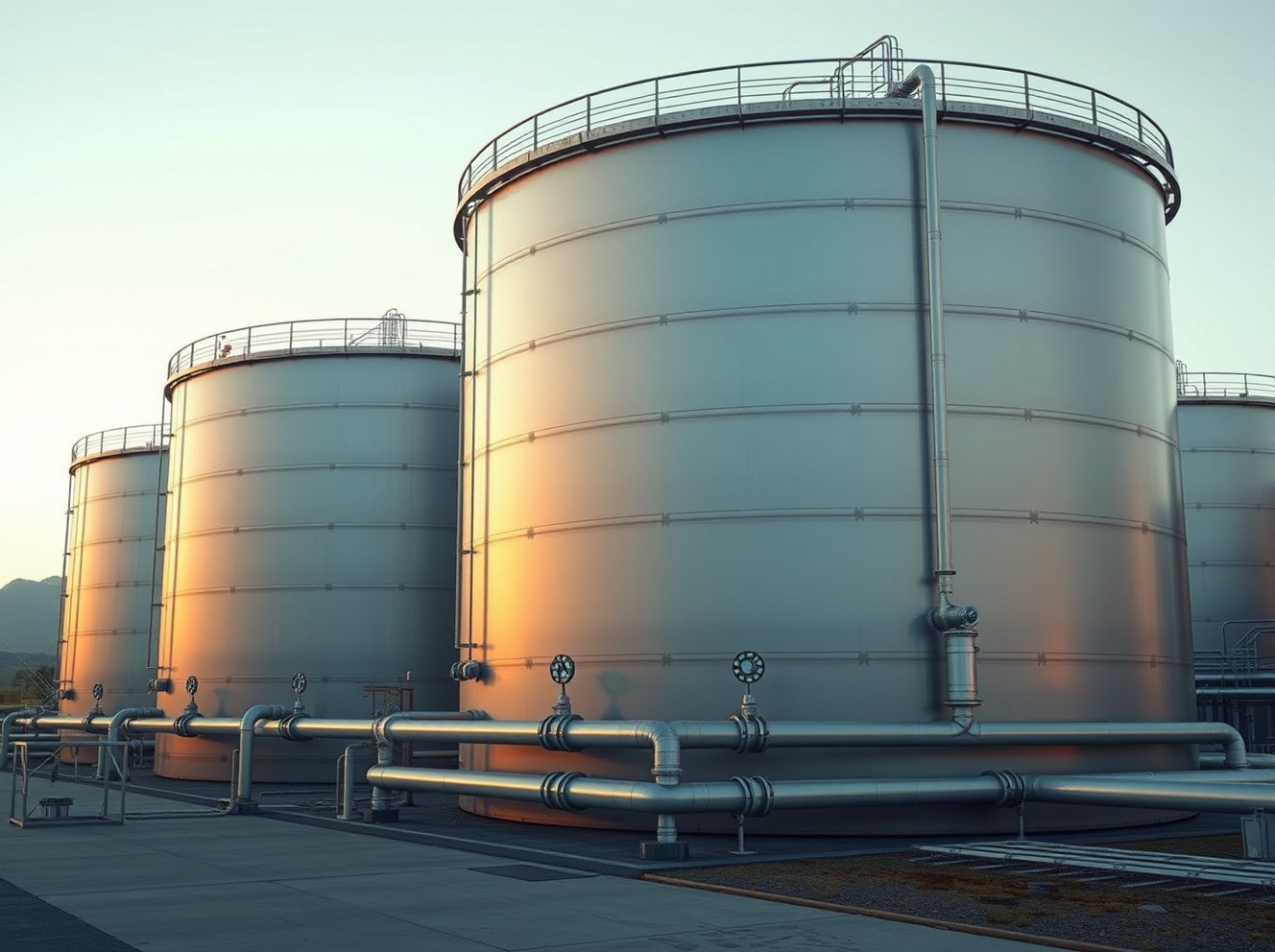
Strategic Move: Australia Will Release Up to 762 Million Litres from Domestic Fuel Reserves to Bolster Security
In a significant move to ensure national energy stability, the Australian government has authorized the release of up to 762 million litres of petrol and diesel from its domestic reserves. This decisive action, announced in Canberra on March 15, 2025, aims to mitigate supply chain pressures and stabilize the local fuel market. The release taps directly into the nation’s strategic petroleum stocks, a critical buffer maintained for exactly this type of scenario. Consequently, this intervention demonstrates a proactive approach to managing the complex global energy landscape. Industry analysts immediately noted the potential for this release to ease wholesale price pressures. Furthermore, it reassures consumers and businesses about the security of fuel supplies across the continent.
Australia’s Fuel Reserves Release: A Detailed Breakdown
The planned release involves a substantial volume from Australia’s strategic holdings. Specifically, the government will allow the drawdown of up to 762 million litres. This volume is equivalent to approximately three days of the nation’s total petrol and diesel consumption. The Department of Industry, Science and Resources will oversee the managed sale of these stocks to domestic refiners and wholesalers. This process will occur over the coming weeks to avoid market disruption. The release specifically targets both unleaded petrol and automotive diesel. These fuels are the lifeblood of the national transportation and logistics sectors. Therefore, the action directly supports economic continuity.
Australia maintains its strategic petroleum stocks through a combination of government-owned crude oil, refined product holdings, and tickets for oil stored overseas. The International Energy Agency (IEA) mandates that all member countries, including Australia, hold oil stocks equivalent to at least 90 days of net imports. This release represents a portion of those holdings. The following table outlines the approximate breakdown of the announced volume:
| Fuel Type | Estimated Volume (Million Litres) | Primary Use Sector |
|---|---|---|
| Unleaded Petrol | ~400 | Passenger vehicles, light transport |
| Automotive Diesel | ~362 | Heavy transport, mining, agriculture |
This calibrated approach ensures both major fuel streams receive support. Moreover, it addresses potential shortages in regional areas that rely heavily on road freight.
Context and Drivers Behind the Strategic Decision
Several converging global and domestic factors precipitated this decision. Firstly, ongoing geopolitical tensions in key oil-producing regions have created volatility in international crude markets. Secondly, unplanned outages at several major overseas refineries have tightened global supplies of refined products like petrol and diesel. Additionally, the Australian dollar’s relative position against the US dollar affects the local cost of imported fuel. These external pressures have translated into sustained high wholesale prices within Australia. The government’s move aims to inject additional supply into the domestic market. This injection should help moderate wholesale price spikes before they fully impact retail service stations.
Domestically, Australia’s refining capacity has undergone significant changes in recent years. The closure of some refineries has increased reliance on imports. While this makes the market efficient, it also increases exposure to international supply shocks. The strategic reserve acts as a crucial shock absorber. Historically, such releases are rare and signal a serious concern about market fundamentals. For instance, a similar but smaller-scale release was considered during the COVID-19 pandemic’s initial demand shock. The current action is notably larger and more targeted. It reflects a calculated response to a clear supply-side constraint rather than a demand collapse.
Expert Analysis on Market Impact and Energy Security
Energy market experts emphasize the psychological and practical importance of this decision. “A strategic stockpile release serves two primary functions,” explains Dr. Sarah Chen, a leading energy economist at the Australian National University. “First, it provides tangible, physical barrels to the market, easing a tight supply balance. Second, and just as importantly, it signals to traders and the market that the government is vigilant and willing to act. This can temper speculative trading that can exaggerate price moves.”
The timing of the release is also critical. It precedes the southern hemisphere winter, a period when diesel demand traditionally rises for heating and agricultural purposes. By acting now, the government aims to build inventory confidence ahead of this seasonal peak. The release is structured as an “allowance” or authorization, not an immediate dump of all volume. This managed approach allows market participants to draw the fuel as needed, integrating it smoothly into the supply chain. Consequently, it avoids flooding the market and causing unnecessary dislocation for local refiners.
Operational Mechanics and Logistics of the Release
Executing a release of this scale requires precise coordination. The fuel will be drawn from storage facilities located at major terminals. Key locations include:
- Port Botany (NSW): A major import and storage hub for the Sydney region.
- Port of Brisbane (QLD): Critical for supplying southeast Queensland.
- Kwinana (WA): The site of a major refinery and storage park.
- Geelong (VIC): Another key refining and distribution center.
The fuel will be sold to registered participants via a competitive process administered by the government’s portfolio manager. These participants include the remaining domestic refiners (Ampol and Viva Energy) and major fuel importers. The sales will occur at prevailing market prices, ensuring taxpayers receive fair value. However, the increased aggregate supply is expected to exert downward pressure on the benchmark wholesale price. This price is known as the Terminal Gate Price (TGP). Logistics companies will then transport the fuel via coastal tankers, pipelines, and road tankers to distribution depots nationwide. This entire process is designed to be transparent and market-neutral.
Long-Term Implications for Australia’s Fuel Security
This release will temporarily reduce the level of Australia’s strategic stockholdings. Therefore, a key question involves the replenishment strategy. Government policy mandates that any fuel drawn from the strategic reserve must be replaced. The replenishment will likely occur when market conditions normalize. This might involve purchasing refined product or crude oil in future periods. The government’s Fuel Security Service is tasked with managing this cycle. The event highlights the ongoing importance of the nation’s liquid fuel security framework. This framework includes the mandatory stockholding obligation for industry, the government’s owned stocks, and investments in domestic refining capability.
In the longer term, this event may accelerate discussions around diversifying energy sources for transport. These include biofuels, hydrogen, and electrification. Nevertheless, analysts agree that petrol and diesel will remain dominant for road freight, aviation, and heavy machinery for decades. Thus, maintaining robust physical fuel security mechanisms remains a non-negotiable pillar of national economic resilience. The 762-million-litre release is a practical demonstration of this principle in action. It shows the system working as intended during a period of stress.
Conclusion
The decision to allow the release of up to 762 million litres from Australia’s domestic fuel reserves is a strategic and measured response to global market pressures. This action directly supports energy security by stabilizing supply and moderating price pressures in the short term. The managed drawdown from strategic petroleum stocks underscores the importance of these reserves as a key policy tool. Furthermore, it highlights the complex interplay between global events and local energy affordability. As Australia navigates the global energy transition, maintaining and prudently managing these physical fuel buffers will continue to be essential for national economic stability. This release serves as a timely reminder of the critical infrastructure that underpins the daily functioning of the modern economy.
FAQs
Q1: How long will the 762 million litres last?
The volume is approximately equivalent to three days of Australia’s total petrol and diesel consumption. However, its market impact is more about easing a specific supply shortage than replacing total demand.
Q2: Will this release cause petrol prices to drop immediately at the pump?
Not immediately. The release affects the wholesale market first. It can take one to three weeks for sustained wholesale price changes to filter through to retail service station prices, depending on local competition.
Q3: Where is this fuel stored?
The strategic stocks are held in specialized storage terminals at major ports around Australia, including facilities in New South Wales, Queensland, Victoria, and Western Australia.
Q4: Does this mean Australia is running out of fuel?
No. This is a proactive measure to manage a tight global supply situation and prevent potential shortages. It utilizes reserves designed for this exact purpose.
Q5: Who is allowed to buy the fuel from the reserve?
The fuel will be sold to registered domestic market participants, primarily the country’s refiners (Ampol, Viva Energy) and major fuel importers, through a government-managed competitive process.
This post Strategic Move: Australia Will Release Up to 762 Million Litres from Domestic Fuel Reserves to Bolster Security first appeared on BitcoinWorld.
You May Also Like

Here’s How Consumers May Benefit From Lower Interest Rates

CryptoQuant: Unrealized profits of whales holding 10,000 to 100,000 ETH hit a new high in November 2021