Frore Systems Soars to $1.64B Unicorn Status with Revolutionary AI Chip Cooling Breakthrough

BitcoinWorld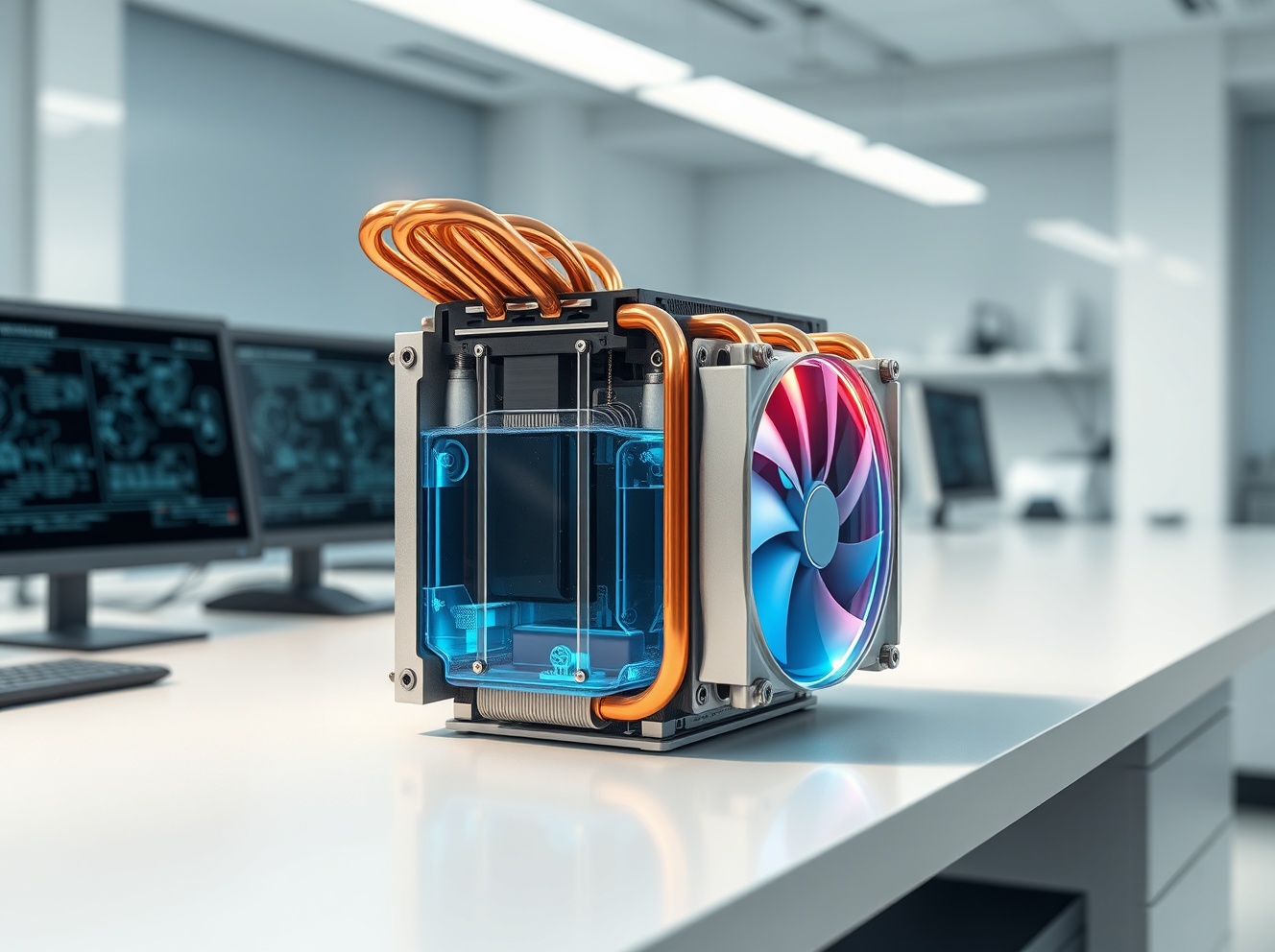
Frore Systems Soars to $1.64B Unicorn Status with Revolutionary AI Chip Cooling Breakthrough
In a significant development for the semiconductor industry, deep tech startup Frore Systems has achieved unicorn status with a $1.64 billion valuation following a substantial $143 million Series D funding round. The San Jose-based company, founded by former Qualcomm engineers, announced the milestone on Monday, March 16, 2026, marking a pivotal moment in the race to solve the critical thermal management challenges of next-generation AI hardware. This funding, led by MVP Ventures, brings Frore’s total capital raised to $340 million, underscoring intense investor confidence in its specialized liquid cooling technology for high-performance computing chips.
Frore Systems Pioneers Next-Generation Semiconductor Cooling
Frore Systems operates in a crucial but often overlooked niche within the semiconductor ecosystem. Unlike companies that design the chips themselves, Frore specializes in the advanced thermal management systems required to keep them running efficiently. The company’s journey began eight years ago with a focus on air-cooling solutions for compact, fanless electronics like smartphones. However, a strategic pivot two years ago, reportedly inspired by direct feedback from Nvidia CEO Jensen Huang, propelled the company into the red-hot market for AI chip liquid cooling. Consequently, Frore now develops sophisticated cooling modules that integrate directly with chips from industry giants, including Nvidia, Qualcomm, and AMD. This shift addresses a fundamental bottleneck in computing: as processing power increases exponentially, managing the resultant heat becomes a primary engineering constraint.
The Jensen Huang Catalyst and Strategic Pivot
According to a Bloomberg report, a demo presented to Nvidia’s Jensen Huang became the catalyst for Frore’s current trajectory. Huang identified liquid cooling not as a luxury but as a “new must-have” for AI chips and data center systems. Acting on this insight, Frore rapidly developed and released products compatible with Nvidia’s GPU architectures. This move positioned the company at the epicenter of the AI infrastructure boom. The technology works by employing active cooling chips that use high-frequency vibrations to move liquid through micro-channels, dissipating heat far more effectively than traditional passive heatsinks or standard fans. This innovation allows chipmakers to push performance boundaries without thermal throttling, a critical advantage for training large language models and running complex AI inference workloads.
Investment Surge in AI Semiconductor Infrastructure
Frore’s unicorn round is emblematic of a massive wave of capital flowing into AI semiconductor and infrastructure companies. The investment syndicate for this Series D includes heavyweight names like Fidelity, Mayfield, Addition, Qualcomm Ventures, and Alumni Ventures. This broad participation signals a consensus on the strategic importance of supporting the entire AI hardware stack, not just the processors. Furthermore, Frore is not an isolated case. The first quarter of 2026 has seen remarkable valuations in the sector:
- Positron: An emerging Nvidia competitor reached a $1 billion valuation in February.
- Recursive Intelligence: This startup landed an astonishing $4 billion valuation at its initial funding.
- Eridu: Launched with a $200 million Series A to develop novel AI networking chips.
This frenzy is driven by the insatiable demand for computational power. As AI models grow larger and more complex, the industry requires simultaneous breakthroughs in chip design, networking, and, as Frore demonstrates, thermal management. Investors are betting that companies solving these foundational physics and engineering problems will become indispensable partners to the dominant chip designers.
The Physics of Cooling and Market Necessity
The drive for advanced cooling is rooted in immutable physical laws. Modern AI chips, particularly GPUs and TPUs, can consume over 700 watts of power each, with dense server racks exceeding 50 kilowatts. This energy converts almost entirely into heat. Inadequate cooling leads to reduced performance, lower reliability, and higher operational costs for data centers. Frore’s technology aims to solve this by enabling higher thermal density, allowing more processing power in a smaller footprint. This is crucial for edge AI applications and next-generation data centers where space and power delivery are limited resources. The company’s solutions promise not only performance gains but also significant improvements in energy efficiency, a key metric for sustainable AI development.
Competitive Landscape and Future Trajectory
While Frore has gained early traction with major chipmakers, the thermal management space is competitive. Established players like CoolIT Systems and Asetek dominate the traditional liquid cooling market for data centers. However, Frore’s approach using solid-state, chip-scale cooling represents a potential paradigm shift. The company’s challenge will be scaling manufacturing and proving reliability at a data-center scale. The new capital will likely be deployed toward these goals, including expanding production capacity, funding ongoing R&D for next-generation products, and growing its engineering and sales teams. Success would mean Frore’s technology becomes a standard component in AI servers, much like power supplies or memory modules.
Expert Analysis on the Sector’s Evolution
Industry analysts note that the valuation reflects more than just current revenue; it represents a strategic bet on the future architecture of AI computing. “We are moving beyond the era where the CPU or GPU was the sole focus,” explains Dr. Anya Sharma, a semiconductor analyst at TechInsight. “The system-level design—encompassing power delivery, networking, and cooling—is now where critical innovation and value creation are happening. Companies like Frore that solve these systemic bottlenecks enable the entire industry to advance. Their valuation is a proxy for the market’s belief in the exponential growth of AI compute demand.” This perspective highlights how Frore’s success is intrinsically linked to the growth trajectories of its chip partners, creating a powerful symbiotic relationship within the AI ecosystem.
Conclusion
Frore Systems’ ascent to a $1.64 billion valuation underscores a critical trend in the technology sector: the rising strategic importance of semiconductor ancillary technologies. As artificial intelligence continues to demand more powerful and dense computing, innovations in areas like liquid cooling become paramount. Frore’s journey from a mobile cooling specialist to an AI infrastructure unicorn, catalyzed by industry feedback and backed by top-tier investors, positions it as a key enabler of the next wave of computational progress. The company’s success will be measured by its ability to scale its technology and become an embedded standard within the global AI hardware supply chain, cooling the engines of the intelligent future.
FAQs
Q1: What does Frore Systems actually manufacture?
Frore Systems does not manufacture the AI chips themselves. Instead, the company designs and produces advanced active liquid cooling systems specifically for high-performance semiconductors. These systems are integrated modules that manage the extreme heat generated by AI and data center chips from companies like Nvidia, AMD, and Qualcomm.
Q2: Why is liquid cooling so important for AI chips?
AI chips, particularly those used for training large models, consume immense amounts of electrical power, which is converted into heat. Traditional air cooling becomes insufficient at these power densities, leading to thermal throttling that reduces performance. Liquid cooling is far more efficient at transferring heat away from the chip, enabling sustained peak performance, higher reliability, and greater energy efficiency for data centers.
Q3: How did Nvidia’s CEO influence Frore’s business?
According to reports, Frore’s founders demonstrated their early cooling technology to Nvidia CEO Jensen Huang approximately two years ago. Huang advised them to focus on developing liquid-cooling solutions, which he identified as an essential future requirement for AI systems. This feedback prompted Frore to pivot its R&D toward creating cooling products compatible with Nvidia’s GPU architectures.
Q4: Who are Frore Systems’ main competitors?
The company operates in the specialized thermal management market. Its competitors include established liquid cooling providers for data centers like CoolIT Systems and Asetek, as well as other startups developing novel cooling technologies. Frore differentiates itself with its chip-scale, solid-state active cooling approach.
Q5: What will Frore use the $143 million in new funding for?
The capital from the Series D round will primarily be used to scale manufacturing capabilities to meet anticipated demand, invest in further research and development for next-generation cooling technologies, and expand its commercial and engineering teams to support partnerships with major semiconductor companies and data center operators.
This post Frore Systems Soars to $1.64B Unicorn Status with Revolutionary AI Chip Cooling Breakthrough first appeared on BitcoinWorld.
You May Also Like

Polygon Tops RWA Rankings With $1.1B in Tokenized Assets

US Dollar pulls back as markets assess Iran; Fed, ECB ahead