WTI Crude Oil Plummets Below $95 as Iran Risk Premium Evaporates
BitcoinWorld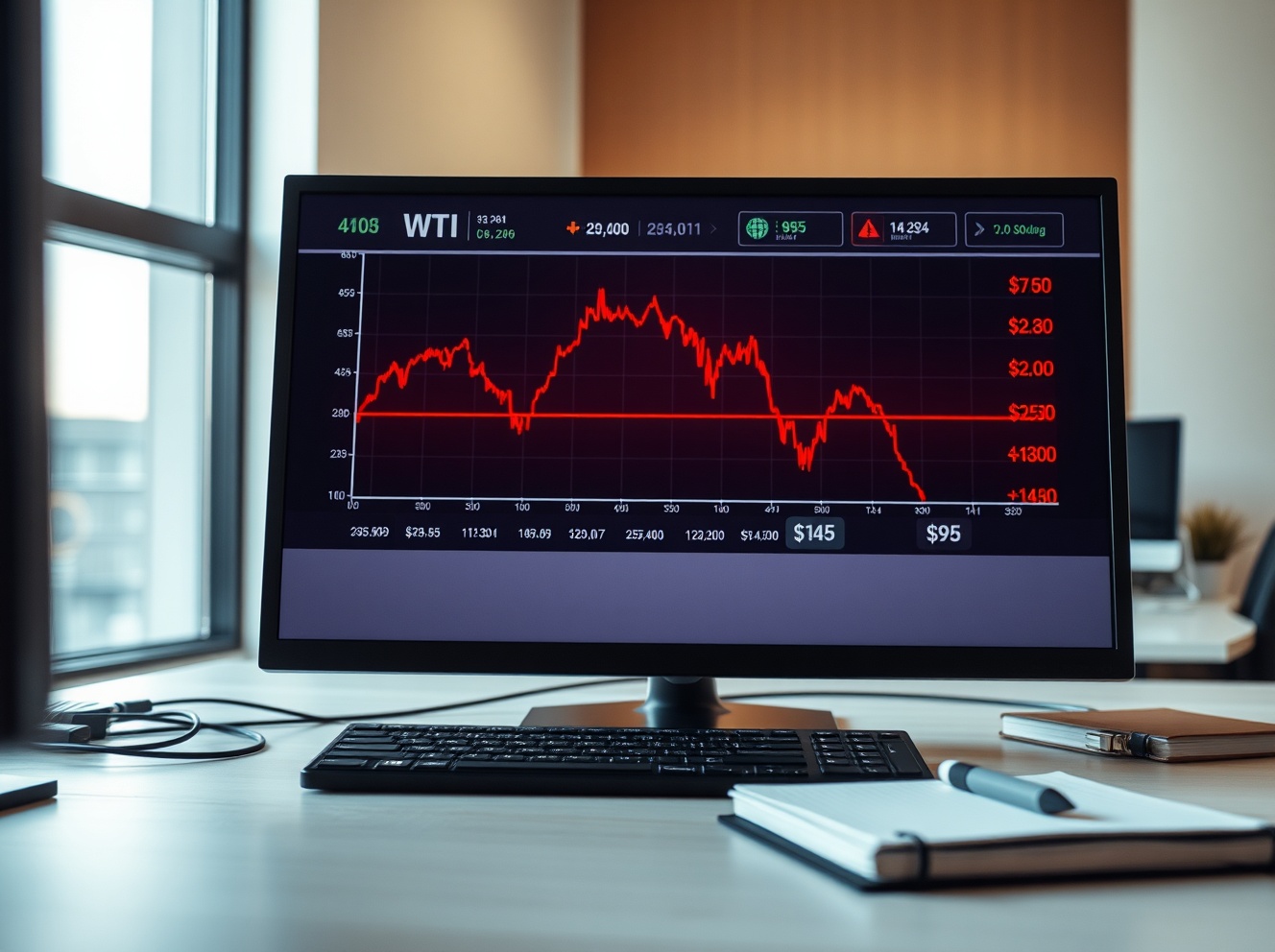
WTI Crude Oil Plummets Below $95 as Iran Risk Premium Evaporates
Global benchmark West Texas Intermediate (WTI) Crude Oil has decisively broken below the $95 per barrel threshold, a significant retreat driven primarily by a cooling geopolitical risk premium linked to tensions in the Middle East. This price action, observed in early October 2025, reflects a recalibration of market fears and a shifting supply-demand calculus. Consequently, analysts are now scrutinizing fundamental drivers as the immediate specter of a major supply disruption fades.
WTI Crude Oil Price Retreat: Analyzing the Chart Breakdown
The technical chart for WTI tells a clear story of reversal. After a sustained rally throughout the third quarter, prices faced formidable resistance near the $98-$100 zone. Subsequently, a series of lower highs and lower lows emerged, confirming a bearish trend. The break below the psychologically important $95 support level now opens the path toward testing the 100-day moving average, currently near $91.50. Market volume spiked during the decline, indicating strong conviction among sellers. Furthermore, key momentum indicators like the Relative Strength Index (RSI) have moved from overbought territory into neutral ground, signaling the exhaustion of the previous bullish impulse.
The Geopolitical Catalyst: Understanding the Iran Risk Premium
For months, oil markets priced in a significant ‘risk premium’ due to escalating tensions involving Iran. This premium represents the extra dollars traders willingly pay per barrel as insurance against potential supply shocks. Recent diplomatic developments, however, have altered the landscape. Notably, indirect talks between global powers and Iran have shown incremental progress, reducing the perceived probability of a confrontation that could block the Strait of Hormuz. Additionally, there have been no new, significant attacks on oil infrastructure in the region for several weeks. This relative calm has allowed traders to gradually unwind speculative long positions built on fear, thereby applying consistent downward pressure on prices.
Expert Analysis on Market Sentiment Shift
“The market is undergoing a classic repricing event,” notes Dr. Anya Sharma, Lead Commodities Strategist at Global Energy Insights. “The premium attached to Iranian geopolitical risk, which we estimated at $8-$12 per barrel at its peak, has effectively evaporated. Traders are now refocusing on tangible inventory data and demand signals. The latest API report showing a larger-than-expected build in U.S. crude stocks provided the fundamental confirmation for this technical breakdown.” This expert perspective underscores the interplay between sentiment and hard data currently governing the oil complex.
Fundamental Factors Exerting Downward Pressure
Beyond geopolitics, several concrete factors are contributing to the bearish pressure on WTI.
- Strategic Petroleum Reserve (SPR) Releases: The U.S. Department of Energy has continued its coordinated, albeit smaller, releases from the SPR, adding supply to the market.
- Slowing Global Demand Growth: Economic indicators from major economies, particularly in Europe and China, point to moderating industrial activity and fuel consumption.
- Strong U.S. Dollar: The dollar index (DXY) remains near multi-month highs, making dollar-denominated oil more expensive for holders of other currencies and dampening international demand.
- Rig Count Recovery: U.S. shale producers have steadily added drilling rigs, signaling an intent to increase production in the coming months.
Comparative Market Impact and Future Trajectory
The sell-off has not been uniform across all oil benchmarks. While WTI has broken below $95, Brent Crude, the international benchmark, has shown slightly more resilience, though it too has declined. This divergence highlights WTI’s sensitivity to domestic U.S. inventory data and pipeline logistics. Looking ahead, the market’s focus will likely shift to the upcoming OPEC+ meeting. The producer group faces a delicate decision: defend prices by announcing new output cuts or maintain production to reclaim market share. Most analysts anticipate a ‘wait-and-see’ approach unless prices fall precipitously further.
| Bullish Factors (Fading) | Bearish Factors (Strengthening) |
|---|---|
| Geopolitical Risk Premium | High U.S. Inventory Levels |
| OPEC+ Production Discipline | Moderating Global Demand |
| Limited Spare Capacity | Strategic Reserve Releases |
| Seasonal Demand | Strong U.S. Dollar |
Conclusion
The slide of WTI Crude Oil below $95 marks a pivotal moment for energy markets, signifying the removal of a substantial geopolitical risk premium. This move underscores a market transitioning from fear-driven trading to one more closely aligned with fundamental supply and demand metrics. While the long-term structural tightness in the oil market remains, the immediate path appears weighted to the downside as traders digest inventory builds and economic headwinds. The future trajectory of WTI will now hinge on tangible data from consumers and strategic decisions from producers, rather than headlines from the Persian Gulf.
FAQs
Q1: What is a ‘risk premium’ in oil trading?
A risk premium is the additional amount of money built into the price of a commodity, like oil, due to perceived threats of supply disruption from geopolitical events, conflicts, or other uncertainties.
Q2: Why is the $95 level significant for WTI Crude Oil?
The $95 per barrel level is a major psychological and technical support zone. A sustained break below it often triggers automated selling and signals a shift in market sentiment from bullish to bearish.
Q3: How does a strong U.S. Dollar affect oil prices?
Oil is priced globally in U.S. dollars. When the dollar strengthens, it becomes more expensive for buyers using euros, yen, or other currencies to purchase oil, which can reduce demand and put downward pressure on prices.
Q4: What is the difference between WTI and Brent crude oil?
WTI (West Texas Intermediate) is a lighter, sweeter crude primarily produced in the U.S. and priced in Cushing, Oklahoma. Brent is a blend from North Sea fields and serves as the global benchmark. The price difference, or spread, reflects regional supply-demand balances, transportation costs, and quality.
Q5: Could oil prices rebound quickly from this drop?
Yes, oil markets are volatile. A sudden escalation in geopolitical tensions, a surprise production cut from OPEC+, or a sharp drop in U.S. inventories could rapidly reverse the current bearish trend and send prices higher.
This post WTI Crude Oil Plummets Below $95 as Iran Risk Premium Evaporates first appeared on BitcoinWorld.
You May Also Like

Polygon Tops RWA Rankings With $1.1B in Tokenized Assets

US Dollar pulls back as markets assess Iran; Fed, ECB ahead