

Must Read
LENI. Bagong Team Naga candidates led by mayoral bet former vice president Leni Robredo rally supporters at Naga City People’s Mall to kick off their campaign forLENI. Bagong Team Naga candidates led by mayoral bet former vice president Leni Robredo rally supporters at Naga City People’s Mall to kick off their campaign for
[OPINION] The leader we need
For feedback or concerns regarding this content, please contact us at crypto.news@mexc.com
Mayor Leni Robredo is right: the Philippines does not need a political savior; it needs a genuine political leader.
A “savior” is imagined as a heroic figure capable of fixing complex national problems through sheer will or charisma. But such a figure does not exist—not in this country, not anywhere. Still, the allure of “savior politics” persists, especially in moments of crisis. It offers simplicity in the face of complexity, certainty in the face of doubt. Yet this mindset ultimately weakens democratic institutions. We have seen how it breeds dependency on personalities, sidelines institutions, and turns governance into spectacle rather than substance.
What the country needs instead is leadership grounded in accountability, competence, and long-term vision. A genuine political leader does not peddle impossible timelines or govern through grand promises—fixing EDSA traffic within three months, ending the drug problem within six, or resolving basic education problems within six years if provided with an additional budget of P100 billion. These are illusions, not plans.
Real leadership is far more demanding. It recognizes that meaningful change is slow, institutional, and collective. It works within democratic frameworks to build durable policies, strengthen local governments, and ensure that laws are applied fairly and consistently. It values transparency, invites scrutiny, and understands that criticism is not a threat but a necessary condition for accountability. Above all, it cultivates an engaged citizenry, encouraging participation, respecting dissent, and fostering a public capable of holding power to account.
This kind of leadership strengthens democracy because it builds trust not in individuals, but in processes and institutions. The Philippines’ enduring challenges—poverty, inequality, corruption, and polarization—cannot be solved by any single person. They require a leader who empowers citizens rather than eclipses them. Progress happens when institutions function, when communities organize, and when civil society is active. The role of a leader is not to dominate the national narrative, but to make space for others to shape it.
The country has never lacked alternatives. Democratic organizing, grassroots movements, policy reform, participatory governance, and institution-building are not abstract ideals—they are proven, working pathways. They are already alive in communities, in reform-oriented local governments, and in the daily work of civil society. What is absent is not the option, but the will to center it.
Instead, these paths are repeatedly sidelined—dismissed for being too slow, too complex, too unspectacular. In their place, we continue to indulge a dangerous fiction: that only force can produce order, and only confrontation can produce change.
A genuine leader refuses this false choice. They do not flirt with the language of violence or the shortcuts of authoritarianism. They insist, clearly and consistently, that real change is built and sustained, not imposed. And they elevate these democratic alternatives from the margins to the core of national discourse, where they belong.
But leadership alone is not enough. Without a movement, even the most principled leader is reduced to a temporary exception. What is needed are political organizations that are programmatic, principled, and accountable; institutions that outlast personalities and restrain ambition. The task is not to assemble a movement around a leader, but to produce leaders from within a movement.
Otherwise, we are simply recycling the same model under different names. We will continue to have parties and political alliances that function as personal and corporate platforms, tied to dynastic patrons rather than principles.
In the end, the question is not who will save the Philippines. That question is itself the problem. The real question is whether we are willing to do the harder, less glamorous work: to build a politics grounded in a united, program-based movement—not merely a temporary “united” opposition for the 2028 elections—capable of producing its own leaders, sustaining its own reforms, and freeing itself from the need for saviors altogether.
This path has been pushed aside time and again; the moment has come to place it firmly at the center. – Rappler.com
Market Opportunity
Manchester City Fan Price(CITY)
$0.6274
$0.6274$0.6274
USD
Manchester City Fan (CITY) Live Price Chart


Disclaimer: The articles reposted on this site are sourced from public platforms and are provided for informational purposes only. They do not necessarily reflect the views of MEXC. All rights remain with the original authors. If you believe any content infringes on third-party rights, please contact crypto.news@mexc.com for removal. MEXC makes no guarantees regarding the accuracy, completeness, or timeliness of the content and is not responsible for any actions taken based on the information provided. The content does not constitute financial, legal, or other professional advice, nor should it be considered a recommendation or endorsement by MEXC.
You May Also Like

Trump's scheme to get $10 billion from the IRS just hit a big snag
President Donald Trump is suing the IRS for $10 billion, roughly two-thirds of the agency’s annual budget. Yet because there is a conflict of interest in a sitting
Share
Alternet2026/04/30 09:53
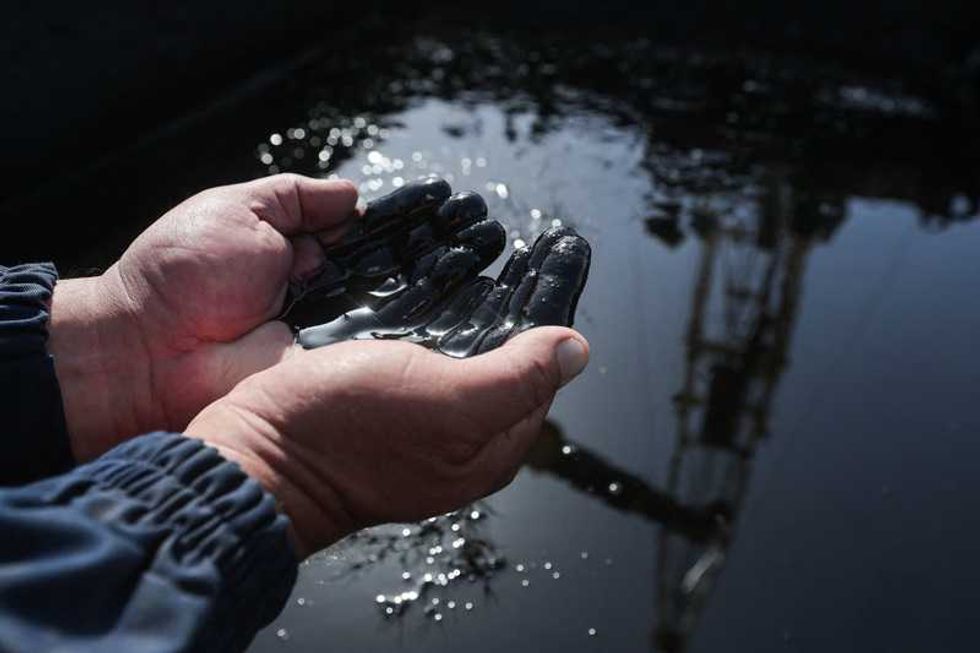
The world's most destructive industry is dying — and taking democracy with it
The fossil fuel industry is the most powerful and destructive industry in the history of the world. Right now the fate of our planet hangs on our ability to defeat
Share
Rawstory2026/04/30 10:20

World Liberty Financial Sells $19.3M in ETH: A Strategic Shift or Market Panic?
BitcoinWorld World Liberty Financial Sells $19.3M in ETH: A Strategic Shift or Market Panic? In a move that has sent ripples through the cryptocurrency market,
Share
bitcoinworld2026/04/30 10:10



