The post Vitalik Buterin Says AI May Speed Up Ethereum’s Roadmap While Raising Security Standards appeared first on Coinpedia Fintech News The future of EthereumThe post Vitalik Buterin Says AI May Speed Up Ethereum’s Roadmap While Raising Security Standards appeared first on Coinpedia Fintech News The future of Ethereum

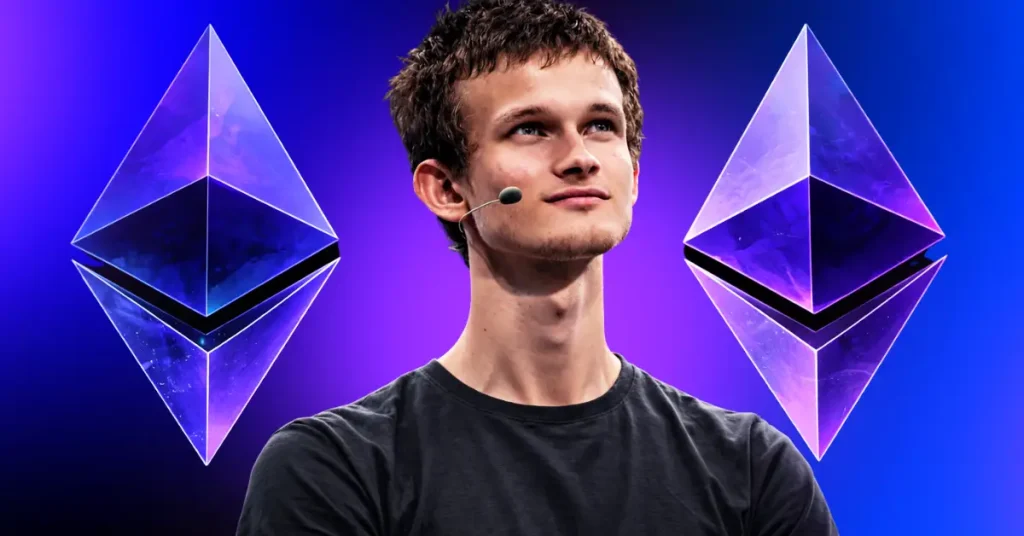
Vitalik Buterin Says AI May Speed Up Ethereum’s Roadmap While Raising Security Standards
2026/03/01 17:27
3 min read
Vitalik Buterin Draws the Line Ethereum Will Not Back ‘Just Any’ DeFi Project

The post Vitalik Buterin Says AI May Speed Up Ethereum’s Roadmap While Raising Security Standards appeared first on Coinpedia Fintech News

The future of Ethereum development may be arriving faster than many expected.

Vitalik Buterin recently described an experiment in which much of Ethereum’s proposed 2030 roadmap was “vibe-coded” within just a few weeks using artificial intelligence tools. While he cautioned that the results are far from production-ready, the broader message was clear: AI is rapidly transforming how blockchain infrastructure is built.

AI Coding Is Moving at Unprecedented Speed

According to Buterin, creating a rough version of such a complex roadmap in just two weeks would have seemed unrealistic only six months ago. He said that the AI-generated code likely contains critical bugs and incomplete sections. Some components may be placeholders rather than fully implemented features.

Still, the speed of development itself marks a shift.

Buterin also shared that he recently built a version of his blog software in about an hour using an open-source AI model running locally on his laptop. More advanced systems, he suggested, could potentially complete similar tasks even faster.

The takeaway is not that AI can instantly produce secure blockchain infrastructure. Rather, it shows how dramatically development timelines are shrinking.

Speed Is Only Half the Story

Buterin stressed that faster coding alone is not enough. In his view, the real opportunity lies in balancing speed with stronger security practices.

Instead of using AI only to write more code, developers can use it to:

  • Generate significantly more test cases
  • Run deeper security audits
  • Create multiple independent implementations of the same system
  • Formally verify critical components

One collaborator from the LeanEthereum initiative reportedly used AI to help produce a machine-verifiable proof for one of the complex mathematical theorems underlying STARK-based cryptography.

For Ethereum, which increasingly relies on advanced zero-knowledge systems, such verification tools are essential.

Formal Verification May Become Standard Practice

A core principle of LeanEthereum is to formally verify all components wherever possible. Formal verification means mathematically proving that code behaves exactly as intended.

In blockchain systems that secure billions of dollars in value, reducing even small vulnerabilities can have an outsized impact. Buterin suggested that AI is accelerating the ability to produce verified proofs and stress-test implementations at scale.

He was careful to add that no one should expect to enter a single prompt and receive perfectly secure code. Bugs, inconsistencies and design trade-offs will remain part of the process.

However, debugging and testing cycles could happen five times faster and far more thoroughly than before.

Could Ethereum’s Roadmap Finish Earlier Than Expected?

While Buterin did not make any firm predictions, he encouraged the community to stay open to the possibility that Ethereum’s long-term roadmap could be completed faster than many anticipate.

More importantly, he suggested that it could reach higher security standards than traditionally expected for complex distributed systems.

If AI continues improving at its current pace, development bottlenecks that once slowed blockchain upgrades may become less restrictive.

Market Opportunity
READY Logo
READY Price(READY)
$0.013685
$0.013685$0.013685
-2.24%
USD
READY (READY) Live Price Chart
Disclaimer: The articles reposted on this site are sourced from public platforms and are provided for informational purposes only. They do not necessarily reflect the views of MEXC. All rights remain with the original authors. If you believe any content infringes on third-party rights, please contact crypto.news@mexc.com for removal. MEXC makes no guarantees regarding the accuracy, completeness, or timeliness of the content and is not responsible for any actions taken based on the information provided. The content does not constitute financial, legal, or other professional advice, nor should it be considered a recommendation or endorsement by MEXC.

You May Also Like

Service sector continues to dive formal employment

Service sector continues to dive formal employment

THE NUMBER of workers in formal employment — those employed by establishments with 10 or more workers — numbered 6.14 million in August 2024, the Philippine Statistics
Share
Bworldonline2026/03/01 20:17
This Trump cover-up is appalling — and may have met its match

This Trump cover-up is appalling — and may have met its match

The federal judiciary has stiffened its resolve toward the Trump administration. The Supreme Court ruled 6-3 last week against the authority that President Donald
Share
Rawstory2026/03/01 21:08
CME Group to launch Solana and XRP futures options in October

CME Group to launch Solana and XRP futures options in October

The post CME Group to launch Solana and XRP futures options in October appeared on BitcoinEthereumNews.com. CME Group is preparing to launch options on SOL and XRP futures next month, giving traders new ways to manage exposure to the two assets.  The contracts are set to go live on October 13, pending regulatory approval, and will come in both standard and micro sizes with expiries offered daily, monthly and quarterly. The new listings mark a major step for CME, which first brought bitcoin futures to market in 2017 and added ether contracts in 2021. Solana and XRP futures have quickly gained traction since their debut earlier this year. CME says more than 540,000 Solana contracts (worth about $22.3 billion), and 370,000 XRP contracts (worth $16.2 billion), have already been traded. Both products hit record trading activity and open interest in August. Market makers including Cumberland and FalconX plan to support the new contracts, arguing that institutional investors want hedging tools beyond bitcoin and ether. CME’s move also highlights the growing demand for regulated ways to access a broader set of digital assets. The launch, which still needs the green light from regulators, follows the end of XRP’s years-long legal fight with the US Securities and Exchange Commission. A federal court ruling in 2023 found that institutional sales of XRP violated securities laws, but programmatic exchange sales did not. The case officially closed in August 2025 after Ripple agreed to pay a $125 million fine, removing one of the biggest uncertainties hanging over the token. This is a developing story. This article was generated with the assistance of AI and reviewed by editor Jeffrey Albus before publication. Get the news in your inbox. Explore Blockworks newsletters: Source: https://blockworks.co/news/cme-group-solana-xrp-futures
Share
BitcoinEthereumNews2025/09/17 23:55