Ethereum could serve as the economic layer for decentralized AI coordination and reputation. Local LLMs and ZK payments allow trustless AI interactions without Ethereum could serve as the economic layer for decentralized AI coordination and reputation. Local LLMs and ZK payments allow trustless AI interactions without

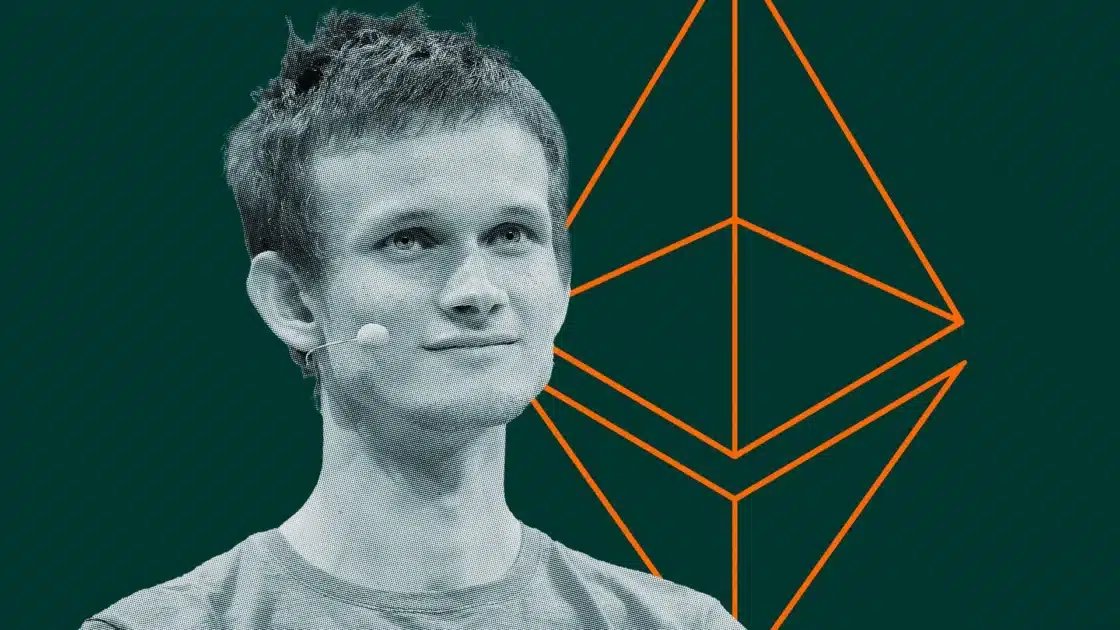
Ethereum, Not Big Tech, Could Power Trustless AI Interactions: Vitalik

2026/02/10 19:00
3분 읽기
  • Ethereum could serve as the economic layer for decentralized AI coordination and reputation.
  • Local LLMs and ZK payments allow trustless AI interactions without linking user identities.
  • AI models can audit dApp transactions, enabling verifiable cypherpunk-style application use.

Vitalik Buterin has shared fresh thoughts on merging Ethereum with artificial intelligence. 

The Ethereum co-founder argues against chasing “accelerationist AGI” development. Instead, he wants a path that protects human freedom and safety. His vision combines crypto principles with AI advancement to create trustworthy systems.

Buterin posted his updated views on social media, referencing his 2024 essay on the intersections of Ethereum and AI. He pushed back against suggestions to “work on AGI,” calling the framing fundamentally flawed. 

The approach feels undifferentiated to him, like describing Ethereum as simply “working in finance.” He believes civilization needs deliberate direction rather than blind acceleration toward artificial general intelligence.

Privacy and Trust in AI Interactions

Buterin outlined several tools for creating trustless AI interactions. Local LLM tooling tops his list of priorities. Users could run language models on their own devices without relying on centralized servers.

Zero-knowledge payments for API calls would let people access remote models anonymously. Each call wouldn’t link to a user’s identity. 

Cryptographic methods could enhance AI privacy across various applications. Client-side verification would confirm server-side assurances through cryptographic proofs and TEE attestations.

These tools mirror privacy features already being developed for other computing tasks. Buterin referred to his Ethereum privacy roadmap from 2024. The same principles apply to protecting LLM interactions.

Ethereum as AI’s Economic Foundation

The Ethereum network could serve as the economic layer for AI-related activities. 

Buterin envisions AI agents making API calls and hiring other bots for tasks. Smart contracts would handle security deposits and dispute resolution mechanisms.

Standards like ERC-8004 and reputation systems would track AI agent reliability. Economic coordination would enable decentralized AI architectures rather than centralized control. Organizations wouldn’t need to design and run all AI systems in-house.

This economic framework aims to distribute authority more widely. Buterin noted that economies serve as tools for decentralization, not ends in themselves.

Realizing the Cypherpunk Vision

Buterin wants to make the cypherpunk “mountain man” vision practical. The philosophy has always emphasized verification over trust. Humans couldn’t realistically verify all code themselves, making the vision unrealistic.

Language models change this dynamic completely. LLMs can handle the verification work that humans cannot manage. 

Users could interact with Ethereum apps without third-party interfaces. Local models would propose and verify transactions independently.

Smart contract auditing would become accessible to average users. AI assistants could interpret formal verification proofs and assess application trust models. The verification-first approach finally becomes practical at scale.

Better Markets Through AI Augmentation

Prediction markets and decentralized governance have strong theoretical foundations. Human attention limits have constrained their real-world effectiveness. 

Quadratic voting, combinatorial auctions, and universal barter economies face similar challenges.

AI removes the bottleneck by scaling human judgment. Decision markets become practical when LLMs handle complexity. Governance systems can process more information and make sophisticated choices.

Buterin described these developments as aligned with defensive acceleration principles. The focus stays on decentralized cooperation and improved defense mechanisms. 

He believes Ethereum can revisit successful ideas from 2014 with new AI and zero-knowledge tools.

Vitalik presented his vision as a comprehensive framework. Both crypto and AI perspectives need integration for meaningful progress. His approach puts human empowerment first over unchecked technological acceleration.

The post Ethereum, Not Big Tech, Could Power Trustless AI Interactions: Vitalik appeared first on Live Bitcoin News.

시장 기회
Notcoin 로고
Notcoin 가격(NOT)
$0.0003872
$0.0003872$0.0003872
+0.15%
USD
Notcoin (NOT) 실시간 가격 차트
면책 조항: 본 사이트에 재게시된 글들은 공개 플랫폼에서 가져온 것으로 정보 제공 목적으로만 제공됩니다. 이는 반드시 MEXC의 견해를 반영하는 것은 아닙니다. 모든 권리는 원저자에게 있습니다. 제3자의 권리를 침해하는 콘텐츠가 있다고 판단될 경우, service@support.mexc.com으로 연락하여 삭제 요청을 해주시기 바랍니다. MEXC는 콘텐츠의 정확성, 완전성 또는 시의적절성에 대해 어떠한 보증도 하지 않으며, 제공된 정보에 기반하여 취해진 어떠한 조치에 대해서도 책임을 지지 않습니다. 본 콘텐츠는 금융, 법률 또는 기타 전문적인 조언을 구성하지 않으며, MEXC의 추천이나 보증으로 간주되어서는 안 됩니다.

추천 콘텐츠

Young Republicans were more proud to be American under Obama than under Trump: data analyst

Young Republicans were more proud to be American under Obama than under Trump: data analyst

CNN data analyst Harry Enten sorts through revealing polls and surveys of American attitudes, looking for shifts, and his latest finding is an indictment of President
공유하기
Alternet2026/02/10 22:18
Vitalik Buterin Outlines Ethereum’s AI Framework, Pushes Back Against Solana’s Acceleration Thesis
Vitalik Buterin Outlines Ethereum’s AI Framework, Pushes Back Against Solana’s Acceleration Thesis

Ethereum co-founder Vitalik Buterin has reacted to Solana’s artificial general intelligence acceleration initiative. He did this through the establishment of his
공유하기
Thenewscrypto2026/02/10 18:40
Vitalik Buterin Reveals Ethereum’s Bold Plan to Stay Quantum-Secure and Simple!

Vitalik Buterin Reveals Ethereum’s Bold Plan to Stay Quantum-Secure and Simple!

Buterin unveils Ethereum’s strategy to tackle quantum security challenges ahead. Ethereum focuses on simplifying architecture while boosting security for users. Ethereum’s market stability grows as Buterin’s roadmap gains investor confidence. Ethereum founder Vitalik Buterin has unveiled his long-term vision for the blockchain, focusing on making Ethereum quantum-secure while maintaining its simplicity for users. Buterin presented his roadmap at the Japanese Developer Conference, and splits the future of Ethereum into three phases: short-term, mid-term, and long-term. Buterin’s most ambitious goal for Ethereum is to safeguard the blockchain against the threats posed by quantum computing.  The danger of such future developments is that the future may call into question the cryptographic security of most blockchain systems, and Ethereum will be able to remain ahead thanks to more sophisticated mathematical techniques to ensure the safety and integrity of its protocols. Buterin is committed to ensuring that Ethereum evolves in a way that not only meets today’s security challenges but also prepares for the unknowns of tomorrow. Also Read: Ethereum Giant The Ether Machine Takes Major Step Toward Going Public! However, in spite of such high ambitions, Buterin insisted that Ethereum also needed to simplify its architecture. An important aspect of this vision is to remove unnecessary complexity and make Ethereum more accessible and maintainable without losing its strong security capabilities. Security and simplicity form the core of Buterin’s strategy, as they guarantee that the users of Ethereum experience both security and smooth processes. Focus on Speed and Efficiency in the Short-Term In the short term, Buterin aims to enhance Ethereum’s transaction efficiency, a crucial step toward improving scalability and reducing transaction costs. These advantages are attributed to the fact that, within the mid-term, Ethereum is planning to enhance the speed of transactions in layer-2 networks. According to Butterin, this is part of Ethereum’s expansion, particularly because there is still more need to use blockchain technology to date. The other important aspect of Ethereum’s development is the layer-2 solutions. Buterin supports an approach in which the layer-2 networks are dependent on layer-1 to perform some essential tasks like data security, proof, and censorship resistance. This will enable the layer-2 systems of Ethereum to be concerned with verifying and sequencing transactions, which will improve the overall speed and efficiency of the network. Ethereum’s Market Stability Reflects Confidence in Long-Term Strategy Ethereum’s market performance has remained solid, with the cryptocurrency holding steady above $4,000. Currently priced at $4,492.15, Ethereum has experienced a slight 0.93% increase over the last 24 hours, while its trading volume surged by 8.72%, reaching $34.14 billion. These figures point to growing investor confidence in Ethereum’s long-term vision. The crypto community remains optimistic about Ethereum’s future, with many predicting the price could rise to $5,500 by mid-October. Buterin’s clear, forward-thinking strategy continues to build trust in Ethereum as one of the most secure and scalable blockchain platforms in the market. Also Read: Whales Dump 200 Million XRP in Just 2 Weeks – Is XRP’s Price on the Verge of Collapse? The post Vitalik Buterin Reveals Ethereum’s Bold Plan to Stay Quantum-Secure and Simple! appeared first on 36Crypto.
공유하기
Coinstats2025/09/18 01:22