USD/MXN: Banxico’s Critical Rate Cut Leaves Peso Dangerously Exposed – ING Analysis
BitcoinWorld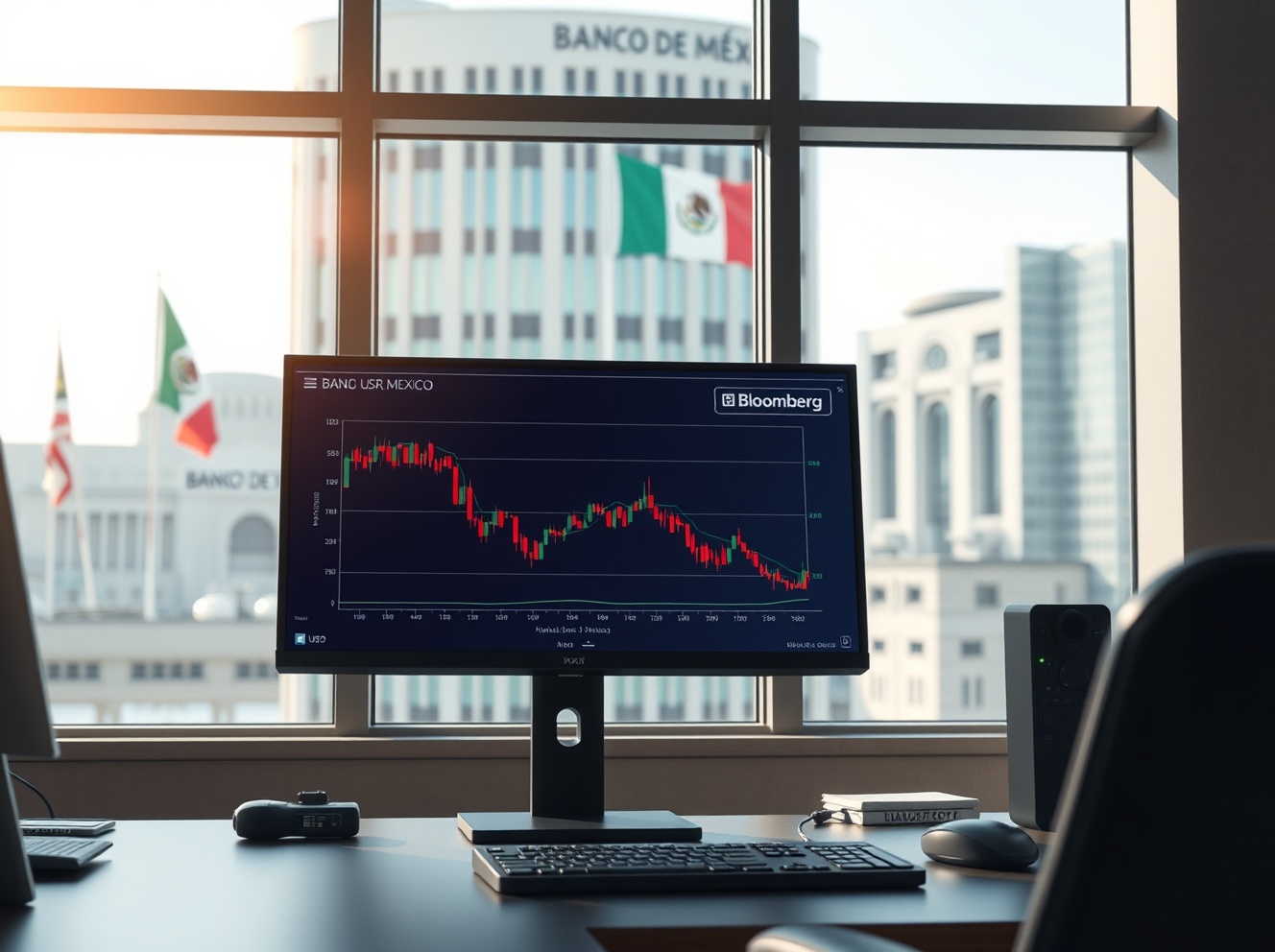
USD/MXN: Banxico’s Critical Rate Cut Leaves Peso Dangerously Exposed – ING Analysis
Mexico City, March 2025 – The Banco de México’s recent interest rate decision has sent shockwaves through currency markets, leaving the Mexican peso particularly vulnerable against the US dollar. Financial analysts at ING have identified significant exposure risks for the USD/MXN pair following Banxico’s unexpected policy shift. This development comes amid complex global monetary conditions and evolving inflation dynamics across North America.
USD/MXN Reacts to Banxico’s Monetary Policy Shift
Banco de México, the nation’s central bank, implemented a 25-basis-point reduction in its benchmark interest rate during its March 2025 meeting. Consequently, the monetary authority lowered the rate from 7.25% to 7.00%. This decision marks a pivotal moment in Mexico’s monetary policy trajectory. Market participants immediately reacted to this development. The USD/MXN exchange rate consequently experienced increased volatility throughout the trading session.
Historically, the Mexican peso has demonstrated sensitivity to interest rate differentials with the United States. The Federal Reserve currently maintains a more hawkish stance than many anticipated. Therefore, the narrowing rate differential between Mexico and the United States creates fundamental pressure on the peso. Financial institutions globally monitor this relationship closely. Currency traders particularly focus on these differentials for directional signals.
Analyzing the Peso’s Vulnerability Factors
Several interconnected factors contribute to the peso’s current exposure. Firstly, reduced interest rates typically decrease the currency’s yield appeal for international investors. Secondly, inflation dynamics in Mexico remain complex despite recent improvements. Thirdly, external factors including US monetary policy and global risk sentiment significantly influence emerging market currencies.
The following table illustrates key economic indicators relevant to the USD/MXN analysis:
| Indicator | Mexico | United States |
|---|---|---|
| Policy Rate | 7.00% | 5.50% |
| Inflation Rate | 4.2% | 2.8% |
| GDP Growth Forecast | 2.1% | 1.8% |
| Trade Balance | -$5.2B | -$85.3B |
Market analysts emphasize the importance of these comparative metrics. Additionally, capital flows between the two nations significantly impact exchange rate movements. Remittances from the United States to Mexico reached record levels in 2024. However, foreign direct investment patterns show some recent moderation.
ING’s Expert Assessment of Currency Risks
ING’s currency strategists published a comprehensive analysis following Banxico’s decision. Their report highlights several critical observations. The peso’s real effective exchange rate suggests some overvaluation relative to historical averages. Furthermore, technical indicators show the USD/MXN pair testing important resistance levels. The analysis incorporates multiple scenarios based on different Federal Reserve policy paths.
The financial institution’s models project potential exchange rate ranges under various conditions. These projections consider oil price fluctuations, manufacturing data, and political developments. Mexico remains a major oil exporter to the United States. Therefore, energy market dynamics directly influence currency valuations. Manufacturing sector performance also provides important signals about economic health.
Historical Context and Comparative Analysis
Banxico’s current policy approach differs significantly from previous cycles. During the 2018-2019 period, the central bank maintained a more aggressive tightening stance. That period coincided with different inflation dynamics and political conditions. The current administration pursues distinct economic priorities. These priorities influence monetary policy decisions and their implementation.
Comparative analysis with other Latin American central banks reveals interesting patterns. Brazil’s central bank began its easing cycle earlier than Mexico. However, Brazil faced different inflation challenges and economic conditions. Chile and Colombia implemented more gradual policy adjustments. Each nation’s unique circumstances dictate appropriate monetary responses.
Global central bank coordination has diminished in recent years. Consequently, emerging market policymakers must navigate increasingly independent paths. This independence creates both opportunities and challenges for currency management. Market participants must therefore analyze each central bank’s decisions within their specific national context.
Market Reactions and Trader Positioning
Futures market data reveals shifting positioning following Banxico’s announcement. Speculative accounts increased short positions on the Mexican peso. Institutional investors meanwhile adjusted their hedging strategies. Options market volatility indicators spiked temporarily before stabilizing. These movements reflect uncertainty about the policy path ahead.
Several key levels warrant monitoring according to technical analysts. The USD/MXN 18.50 level represents important psychological resistance. Support appears around the 17.80 level based on recent trading patterns. Breakouts in either direction could trigger accelerated movements. Market liquidity conditions remain adequate despite increased volatility.
Local Mexican businesses express concern about exchange rate stability. Importers face rising costs when the peso weakens significantly. Exporters conversely benefit from favorable exchange rates. The manufacturing sector particularly monitors these fluctuations closely. Many companies employ sophisticated hedging strategies to manage currency risks.
Inflation Dynamics and Policy Trade-offs
Banxico faces complex trade-offs between supporting economic growth and controlling inflation. Recent inflation data shows gradual improvement but remains above the central bank’s target. Core inflation measures indicate persistent underlying pressures. Service sector inflation proves particularly stubborn across multiple economies.
The central bank’s updated inflation projections will influence future policy decisions. Most analysts expect gradual additional easing throughout 2025. However, the pace and magnitude remain uncertain. External factors including US monetary policy significantly constrain Banxico’s options. Global commodity prices also impact domestic inflation trajectories.
Food and energy prices demonstrate particular volatility in the current environment. Agricultural production challenges affect food inflation across Latin America. Energy transition policies influence fuel price dynamics. These factors complicate inflation forecasting and policy responses. Central bankers must therefore maintain flexibility in their approach.
Conclusion
The USD/MXN exchange rate faces increased volatility following Banxico’s interest rate reduction. The Mexican peso’s exposure stems from narrowing interest rate differentials with the United States. ING’s analysis highlights significant vulnerability for the currency pair in coming months. Market participants should monitor several key indicators including inflation data, Federal Reserve communications, and technical levels. The evolving monetary policy landscape requires careful navigation by both policymakers and investors. Currency markets will likely test new equilibrium levels as these dynamics unfold throughout 2025.
FAQs
Q1: What exactly did Banxico decide in its March 2025 meeting?
Banco de México reduced its benchmark interest rate by 25 basis points from 7.25% to 7.00%, marking a shift toward monetary policy easing amid improving but still elevated inflation conditions.
Q2: Why does a Mexican interest rate cut affect the USD/MXN exchange rate?
Lower Mexican interest rates reduce the peso’s yield advantage against the US dollar, making peso-denominated assets less attractive to international investors seeking higher returns, which typically weakens the currency.
Q3: How does US Federal Reserve policy influence the Mexican peso?
The Federal Reserve’s interest rate decisions create interest rate differentials that drive capital flows between the two countries, with wider differentials favoring the higher-yielding currency and narrower differentials creating pressure on emerging market currencies like the peso.
Q4: What other factors besides interest rates affect the USD/MXN exchange rate?
Additional factors include trade balances, oil prices (Mexico is a major exporter), remittance flows from the US, foreign investment patterns, political developments, and global risk sentiment toward emerging markets.
Q5: What levels should traders watch for the USD/MXN pair according to technical analysis?
Technical analysts identify key resistance around USD/MXN 18.50 and support near 17.80, with breaks beyond these levels potentially triggering accelerated movements in the currency pair.
This post USD/MXN: Banxico’s Critical Rate Cut Leaves Peso Dangerously Exposed – ING Analysis first appeared on BitcoinWorld.
추천 콘텐츠

USD/MXN: Critical Warning for Peso After Banxico’s Surprising Rate Cut – Standard Chartered Analysis

OpenVPP accused of falsely advertising cooperation with the US government; SEC commissioner clarifies no involvement