

Federal Reserve’s Stark Warning: Barkin Urges Rate Pause as AI Disruption and Global Conflicts Cloud Economic Future
BitcoinWorld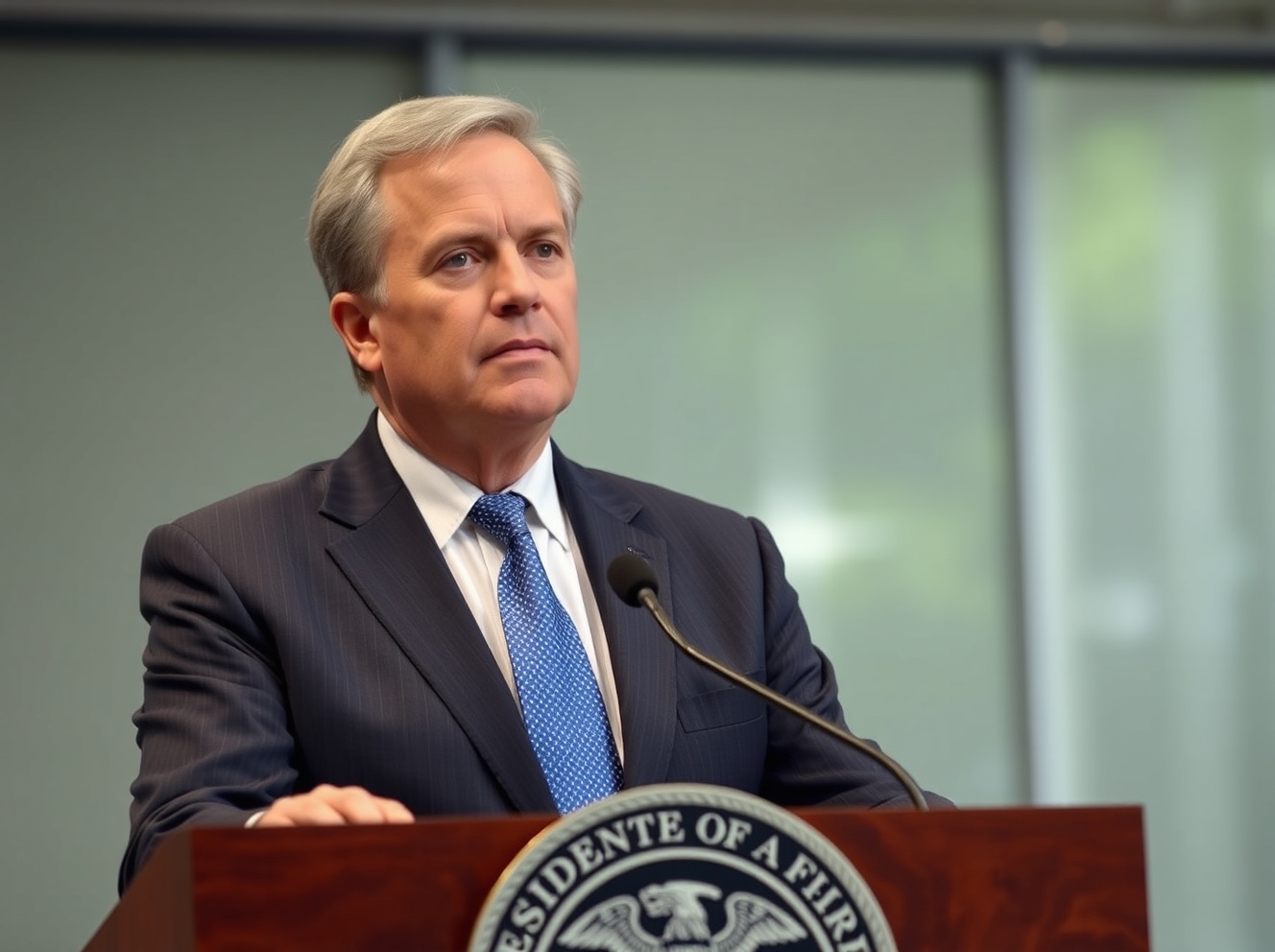
Federal Reserve’s Stark Warning: Barkin Urges Rate Pause as AI Disruption and Global Conflicts Cloud Economic Future
WASHINGTON, D.C. — Federal Reserve Bank of Richmond President Thomas Barkin delivered a significant policy statement today, emphasizing the necessity of maintaining current interest rates as unprecedented artificial intelligence developments and escalating geopolitical conflicts create substantial uncertainty in the economic outlook for 2025. His remarks come during a critical juncture for global monetary policy.
Federal Reserve’s Cautious Stance on Interest Rates
The Federal Reserve maintains a prudent approach to monetary policy adjustments. Consequently, policymakers carefully weigh multiple economic indicators. Thomas Barkin specifically highlighted the dual challenges facing central bankers. Furthermore, he noted that traditional economic models struggle to account for rapid technological transformation. The Federal Open Market Committee faces complex decisions ahead.
Recent inflation data shows mixed signals across different sectors. Meanwhile, employment figures remain relatively strong. However, productivity measurements face distortion from AI implementation. Barkin emphasized this point during his remarks to financial journalists. He stated that monetary policy requires exceptional patience currently.
Artificial Intelligence’s Economic Disruption
Artificial intelligence represents a fundamental economic transformation. Its implementation affects productivity measurements significantly. Additionally, AI impacts labor markets across multiple industries. The technology creates both deflationary and inflationary pressures simultaneously.
Expert Analysis of AI Economic Impact
Economists identify several key areas where AI influences monetary policy decisions. First, productivity gains from automation could suppress inflation. Second, investment surges in AI infrastructure might create inflationary pressures. Third, labor market displacement requires careful monitoring. Fourth, traditional economic indicators may become less reliable.
A comparative analysis reveals distinct patterns:
| Economic Factor | Pre-AI Era Impact | Current AI Influence |
|---|---|---|
| Productivity Growth | Gradual, predictable | Volatile, sector-specific |
| Labor Markets | Cyclical adjustments | Structural transformation |
| Investment Patterns | Traditional sectors | Technology concentration |
| Inflation Dynamics | Demand-driven primarily | Supply-side disruption |
Barkin referenced these complexities extensively. He noted that historical precedents offer limited guidance. Therefore, policymakers must exercise particular caution.
Geopolitical Risks and Monetary Policy
Global conflicts create additional uncertainty for central bankers. Trade disruptions affect supply chains significantly. Energy market volatility influences inflation directly. Furthermore, financial market stability faces geopolitical pressures.
Recent developments in multiple regions demonstrate this challenge:
- Trade route disruptions affecting global shipping patterns
- Energy market volatility creating inflationary pressures
- Financial sanctions impacting currency markets
- Defense spending increases affecting fiscal policy
- Commodity price fluctuations influencing production costs
Barkin emphasized that geopolitical events often unfold unpredictably. Consequently, monetary policy must maintain flexibility. The Federal Reserve cannot easily counteract supply shocks.
Historical Context of Policy Decisions
The current situation recalls previous policy challenges. The 1970s experienced oil price shocks. The 2008 financial crisis involved market failures. However, today’s combination of factors appears unique. Technological disruption compounds geopolitical instability.
Federal Reserve officials reference several historical periods for perspective. The dot-com bubble involved technology speculation. The COVID-19 pandemic caused supply chain disruptions. Yet neither period combined both technological and geopolitical pressures simultaneously.
Comparative Policy Responses
Central banks worldwide face similar dilemmas. The European Central Bank monitors energy dependencies. The Bank of Japan considers technological adoption rates. The Bank of England addresses trade pattern shifts. International coordination becomes increasingly important.
Barkin participated in recent international meetings. He reported broad consensus on caution. However, different economies face distinct challenges. Policy synchronization remains difficult to achieve.
Economic Data and Future Projections
Current economic indicators present a mixed picture. Inflation measures show gradual moderation. Employment data indicates labor market resilience. Consumer spending demonstrates cautious optimism. Business investment reflects technology focus.
The Federal Reserve’s dual mandate requires balanced consideration. Price stability remains the primary objective. Maximum employment represents the secondary goal. Both face unprecedented challenges currently.
Forward guidance becomes particularly important. Market participants seek policy predictability. However, excessive certainty seems inappropriate currently. Barkin emphasized this delicate balance repeatedly.
Market Reactions and Financial Stability
Financial markets responded cautiously to Barkin’s remarks. Equity indices showed limited movement initially. Bond markets reflected continued uncertainty. Currency markets demonstrated typical volatility patterns.
Analysts identified several key takeaways from the statement:
- Rate cuts appear unlikely in the near term
- Further rate increases require substantial justification
- Data dependence remains the guiding principle
- Flexibility represents the current policy priority
Market participants generally appreciated the transparency. However, uncertainty persists regarding timing. The path forward depends on evolving conditions.
Conclusion
Federal Reserve President Thomas Barkin’s remarks highlight the extraordinary complexity facing monetary policymakers in 2025. The convergence of artificial intelligence disruption and geopolitical instability creates unprecedented challenges for interest rate decisions. Consequently, maintaining current rates represents the most prudent approach currently. The Federal Reserve must navigate between technological transformation and global conflicts carefully. Future policy adjustments will depend heavily on evolving data across both domains. Barkin’s cautious stance reflects this new economic reality fundamentally.
FAQs
Q1: What specific AI developments concern the Federal Reserve?
Federal Reserve officials monitor AI’s impact on productivity measurement, labor market displacement, investment patterns, and inflation dynamics. The technology creates simultaneous deflationary and inflationary pressures that complicate traditional economic analysis.
Q2: How do geopolitical risks affect interest rate decisions?
Geopolitical conflicts disrupt trade routes, energy supplies, and financial markets. These disruptions create supply shocks that monetary policy cannot easily counteract, necessitating greater policy caution and flexibility.
Q3: What historical period compares to current economic conditions?
While aspects resemble the 1970s oil shocks or 2008 financial crisis, the combination of rapid technological transformation with widespread geopolitical instability represents a unique convergence without clear historical precedent.
Q4: How might AI influence inflation in different ways?
AI could suppress inflation through productivity gains and automation while simultaneously creating inflationary pressure through massive infrastructure investment, talent competition, and energy consumption increases.
Q5: What indicators will guide future Federal Reserve decisions?
The Fed will monitor traditional indicators like employment and inflation while developing new metrics for AI adoption rates, geopolitical stability measures, supply chain resilience, and technological disruption impacts across sectors.
This post Federal Reserve’s Stark Warning: Barkin Urges Rate Pause as AI Disruption and Global Conflicts Cloud Economic Future first appeared on BitcoinWorld.
추천 콘텐츠

Puppy Yoga USA: Locations, Sessions & What to Expect

NZD/USD Plummets: Middle East War and Weak NZ Confidence Crush Kiwi Dollar for Fourth Straight Day


