

USD1 Stablecoin Compliance Comprehensive Analysis: Regulatory Status, Legal Framework, and Investment Risk Assessment
Key Takeaways
- USD1 stablecoin is currently in an active phase of seeking compliance, though regulatory attitudes vary across countries
- USD1 adopts a fiat-collateralized model and publishes regular reserve audit reports, with relatively high transparency
- Regulatory frameworks for stablecoins in major global jurisdictions are rapidly evolving
- USD1's compliance status varies across different regions and requires jurisdiction-specific assessment
- Investors should focus on USD1's reserve asset transparency, audit quality, and regulatory licensing status
- Trading USD1 on regulated exchanges like MEXC can reduce compliance risks
- Stablecoin compliance is a dynamically evolving process requiring continuous monitoring of policy changes
1. USD1 Stablecoin Overview and Importance of Compliance
1.1 What is USD1 Stablecoin
USD1 stablecoin is an emerging USD-pegged cryptocurrency designed to provide the digital asset market with a stable, transparent, and compliant value storage tool. Similar to other mainstream stablecoins, USD1 employs a fiat-collateralized model, where each issued USD1 token is backed by an equivalent amount of US dollars or dollar equivalents as reserves. USD1's design aims to address cryptocurrency market price volatility while setting new industry standards for transparency and compliance.
USD1's operating mechanism is relatively straightforward: users or institutions can mint 1 USD1 token at a price of $1 USD through official channels, and can also redeem USD1 tokens for US dollars at any time. This two-way conversion mechanism ensures that USD1 price consistently fluctuates around $1 USD, typically maintaining between $0.98 and $1.02. USD1 is currently deployed on multiple mainstream blockchain networks, including ETH and Binance Smart Chain, among others. This multi-chain strategy enhances its accessibility and interoperability. Investors can conveniently acquire and trade USD1 on major cryptocurrency trading platforms like MEXC.
1.2 Why Stablecoin Compliance is Critical
The compliance of stablecoins has become a focal point for both global regulators and investors in recent years. This attention is not without reason—it stems from the growing importance and potential risks of stablecoins in the modern financial system. First, stablecoin market capitalization has exceeded $150 billion, making them a crucial bridge connecting traditional finance and the cryptocurrency world. Such massive market size means that stablecoin stability and security directly impact the asset security of millions of users globally.
Second, stablecoins involve sensitive areas including monetary sovereignty, financial stability, and consumer protection. If a large-scale stablecoin project experiences insufficient reserves or operational failure, it could trigger systemic financial risks and even threaten traditional financial system stability. The 2022 collapse of TerraUSD (UST) serves as a cautionary case, with this event resulting in over $40 billion in investor losses and triggering strict regulatory scrutiny of the entire stablecoin industry.
Third, compliant stablecoins can achieve broader application scenarios and stronger market trust. Stablecoins that meet regulatory requirements are more easily accepted by traditional financial institutions and can be used for legitimate commercial activities such as cross-border payments and corporate settlements. Conversely, non-compliant stablecoins may face risks of being delisted from exchanges, banned by regulators, or rejected by financial institutions. For investors, choosing compliant stablecoins means better legal protection, more transparent information disclosure, and lower asset loss risks. Therefore, assessing USD1 stablecoin's compliance is crucial for rational investment decisions.
1.3 Key Dimensions for Evaluating Stablecoin Compliance
Evaluating a stablecoin project's compliance requires comprehensive consideration across multiple dimensions. The first key dimension is regulatory licenses and permits. Compliant stablecoin issuers typically need to obtain appropriate financial service licenses in their operating jurisdictions, such as money transmission licenses, electronic money institution licenses, or banking licenses. These licenses demonstrate that the project is subject to regulatory supervision and must comply with specific operational standards and reporting requirements.
The second dimension is reserve asset transparency and management. Compliant stablecoins should clearly disclose reserve asset composition, custodial institutions, and management methods, and undergo regular independent third-party audits. Reserve asset quality and liquidity directly determine a stablecoin's redemption capability. The third dimension is anti-money laundering (AML) and know your customer (KYC) compliance. Compliant stablecoin projects should implement strict identity verification procedures to prevent their platforms from being used for illegal activities.
The fourth dimension is sufficiency and timeliness of information disclosure. Compliant projects should regularly report operational status, reserve conditions, and risk factors to users and regulators, maintaining high transparency. The fifth dimension is clarity of legal entity and governance structure. Compliant projects should have clear legal entities, defined responsible parties, and sound corporate governance mechanisms. Finally, the project's compliance status across different jurisdictions must be considered, as stablecoins often operate cross-border and need to comply with multiple countries' legal requirements. Through comprehensive evaluation across these dimensions, we can more fully assess USD1 stablecoin's compliance level.
2. Global Major Countries and Regions' Stablecoin Regulatory Frameworks
2.1 US Stablecoin Regulatory Status
As the world's largest financial market and cryptocurrency innovation center, the United States' stablecoin regulatory policies have significant global influence. Currently, the US stablecoin regulatory framework is still forming, presenting a situation where multiple regulatory agencies collaborate but have not yet fully unified. The US Securities and Exchange Commission (SEC) primarily regulates stablecoins from a securities law perspective; if a stablecoin is deemed a security, it must comply with strict securities issuance and trading rules. The US Commodity Futures Trading Commission (CFTC) regulates certain cryptocurrencies from a commodity perspective.
The US Treasury's Financial Crimes Enforcement Network (FinCEN) requires stablecoin issuers to register as money service businesses and comply with anti-money laundering and know-your-customer regulations. State regulators also have authority to regulate stablecoin businesses, with many stablecoin issuers needing to obtain money transmission licenses in multiple states. In 2021, the Biden Administration Working Group issued a report on stablecoins recommending that stablecoin issuers be regulated as banks, requiring them to obtain federal banking licenses and be subject to strict capital adequacy and liquidity management requirements.
From 2023 to 2024, the US Congress made multiple attempts to advance stablecoin regulatory legislation. Although unified federal law has not yet been formed, the legislative direction is becoming increasingly clear: requiring stablecoins to have sufficient high-quality reserve asset backing, regular independent audits, implementation of strict risk management, and imposing capital requirements on issuers. This trend means that stablecoin projects operating in the US, including USD1, need to gradually enhance compliance levels to develop long-term in this important market. For US investors, choosing stablecoins that comply with or actively seek to comply with US regulatory requirements can provide better legal protection.
2.2 EU's Markets in Crypto-Assets Regulation
The European Union is at the forefront of stablecoin regulation, formally passing the landmark Markets in Crypto-Assets Regulation (MiCA) in 2023. This regulation establishes a comprehensive regulatory framework for various crypto-assets including stablecoins, with phased implementation beginning in 2024. MiCA categorizes stablecoins into two types: E-Money Tokens and Asset-Referenced Tokens, with different regulatory requirements applying to each.
For e-money token stablecoins, MiCA requires issuers to obtain electronic money institution licenses from EU member states and comply with strict capital requirements, reserve asset management rules, and information disclosure obligations. Reserve assets must be equivalent to circulating tokens, primarily consisting of cash deposits or short-term high-quality government bonds, and must be segregated from the issuer's own assets. Issuers must undergo regular audits and report operational status to regulators.
MiCA also imposes additional strict requirements on large-scale stablecoins (i.e., "significant e-money tokens"), including higher capital buffers, stricter liquidity management, and direct supervision by the European Banking Authority (EBA). The regulation also grants regulators the power to restrict the use of large-scale stablecoins as payment instruments when necessary to protect financial stability. For USD1 stablecoin projects operating in the EU or serving EU users, compliance with MiCA requirements must be assessed or measures taken to achieve compliance. The EU's regulatory framework emphasizes consumer protection, market transparency, and financial stability, providing a relatively clear compliance path for the stablecoin industry and offering important reference for regulatory policy formulation in other regions.
2.3 Major Asian Countries' Regulatory Positions
Asian countries have significantly different regulatory attitudes toward stablecoins, ranging from actively embracing to cautiously observing or even strictly restricting. Singapore, as an important Asian financial and cryptocurrency hub, takes a relatively open but strict regulatory approach to stablecoins. The Monetary Authority of Singapore (MAS) treats stablecoins as digital payment tokens, requiring issuers to comply with the Payment Services Act and obtain appropriate payment service provider licenses. MAS has also issued a dedicated regulatory framework for single-currency stablecoins, requiring such stablecoins to maintain reserve assets of at least equivalent value to circulation in high-quality liquid assets, undergo regular audits, and meet redemption rights requirements.
Japan's stablecoin regulation is also gradually improving. The 2022 amendment to the Payment Services Act defines stablecoins as "electronic payment instruments," requiring issuers to be licensed banks, trust companies, or funds transfer operators. Japan's regulatory framework emphasizes that stablecoins must be redeemable at face value for fiat currency and that reserve assets must be segregated from the issuer's own assets. South Korea takes a more cautious regulatory stance, with the Financial Services Commission (FSC) developing a stablecoin regulatory framework expected to require issuers to obtain licenses and comply with strict reserve and transparency requirements.
Mainland China takes a strict restrictive policy toward cryptocurrencies, prohibiting any form of cryptocurrency trading and issuance activities, including stablecoins. The People's Bank of China and other regulators have repeatedly emphasized the illegality of cryptocurrency-related activities. This means USD1 stablecoin cannot legally operate and be promoted in mainland China. Hong Kong SAR has taken a different approach, with the Hong Kong Monetary Authority and Securities and Futures Commission establishing a relatively open crypto-asset regulatory framework, including regulatory rules for stablecoins, aiming to position Hong Kong as a global digital asset center. For Asian investors, understanding local regulatory policies' applicability to USD1 and other stablecoins is crucial.
2.4 Other Important Jurisdictions' Regulatory Trends
Besides the major markets mentioned above, other jurisdictions are also actively establishing stablecoin regulatory frameworks. The UK has accelerated its fintech and crypto-asset regulatory policy formulation post-Brexit. The UK Treasury and Bank of England have proposed bringing systemically important stablecoins under payment regulatory frameworks, requiring issuers to comply with rules similar to traditional payment institutions. The UK Financial Conduct Authority (FCA) is also developing crypto-asset promotion rules to restrict high-risk crypto-product promotion to retail investors.
Switzerland, as a traditional financial powerhouse and crypto-friendly country, has amended multiple laws through its Blockchain Act to accommodate digital asset development. The Swiss Financial Market Supervisory Authority (FINMA) treats stablecoins as payment tokens, requiring large-scale issued stablecoins to obtain payment system licenses or banking licenses. The UAE, particularly Dubai, is working to establish a blockchain and crypto-asset hub, with its Virtual Assets Regulatory Authority (VARA) establishing a relatively clear regulatory framework encouraging compliant projects to develop locally.
Canada, Australia, and other developed countries are all developing or improving stablecoin regulatory policies, with the general trend requiring sufficient reserve assets, regular audits, clear redemption mechanisms, and prudential supervision of issuers. Notably, international organizations such as the International Monetary Fund (IMF), Financial Stability Board (FSB), and Bank for International Settlements (BIS) have all issued policy recommendations on stablecoin regulation, promoting convergence of global regulatory standards. These international standards emphasize that stablecoins need clear legal foundations, sound governance, sufficient reserves, robust operations, and effective regulation. For USD1 stablecoin to achieve global compliant operations, attention must be paid to and adaptation made to these different jurisdictional requirements.
3. USD1 Stablecoin's Compliance Measures and Transparency
3.1 USD1's Issuance Mechanism and Reserve Asset Management
USD1 stablecoin adopts a fiat-collateralized model, which is currently the most widely recognized and relatively accepted stablecoin model by regulators. According to publicly available project information, each issued USD1 token requires corresponding US dollar or dollar equivalent reserves as backing, theoretically ensuring users can exchange USD1 for US dollars at a 1:1 ratio at any time. USD1's reserve assets primarily include bank deposits and highly liquid short-term treasury bills. This relatively conservative asset allocation strategy aims to minimize reserve asset value volatility risk.
USD1's minting and redemption mechanism is relatively transparent. Authorized users and institutions can mint USD1 with US dollars through official channels or burn USD1 to redeem US dollars. This two-way conversion mechanism is key to maintaining USD1 price stability near $1 USD. When market USD1 price exceeds $1, arbitrageurs will mint new USD1 and sell in the market, increasing supply and thereby suppressing price; when price falls below $1, arbitrageurs will purchase USD1 from the market and redeem for US dollars, reducing supply and thereby pushing up price.
Regarding reserve asset management, USD1 project statements adopt a segregated account system, separating reserve assets from operational funds to prevent reserve asset misappropriation. Reserve assets are custodied at regulated financial institution BitGo, which regularly provides proof of assets to the project team and auditors. USD1 also commits to regularly publishing reserve asset proof reports, detailing reserve asset composition, custodial institutions, and specific amounts, allowing users to verify that each token indeed has sufficient asset backing. This transparent reserve management approach is an important component of USD1's compliance, aligning with general requirements of regulators worldwide regarding stablecoin reserves.
3.2 Audit and Transparency Practices
USD1 project takes a relatively proactive stance on transparency, reflecting new-generation stablecoins' response to market skepticism. According to project commitments, USD1 regularly engages independent third-party audit firms to audit its reserve assets and publicly releases audit results. Although USD1's current audit frequency may be quarterly rather than monthly, this already represents significant progress compared to some stablecoin projects lacking regular audits.
Audit reports typically include reserve asset total value, asset type distribution, custodial institution information, and other key data. Professional audit firms verify whether reserve assets actually exist, match USD1 circulation, are segregated from issuer's own assets, and other critical issues. It should be noted that audit report quality and depth may vary by audit firm and audit type. Full independent audits provide higher assurance levels than simple attestation reports.
Besides formal audit reports, USD1 project regularly updates users on project progress, reserve conditions, and market dynamics through its official website and social media channels. This continuous information disclosure helps build and maintain user trust. The project has also publicly disclosed information about core team members, advisors, and partners, increasing project credibility and accountability. For investors, these public information sources can be consulted to assess USD1's transparency level, compare with other mainstream stablecoins' practices, and make more informed choices.
3.3 Anti-Money Laundering and Know Your Customer Compliance
Anti-money laundering (AML) and know your customer (KYC) are important components of stablecoin compliance. Global regulators generally require financial service providers to implement effective AML/KYC measures to prevent their platforms from being used for money laundering, or other illegal activities. USD1 project's practices in this area are reflected at several levels. First, users and institutions directly minting or redeeming USD1 through official channels need to complete strict identity verification procedures, including providing personal or corporate identity information, address proof, and fund source explanations.
Second, USD1 project may collaborate with third-party compliance service providers, utilizing advanced blockchain analysis tools to monitor on-chain transaction activities and identify suspicious transaction patterns. If transactions related to known illegal addresses or high-risk entities are discovered, project parties may take measures such as freezing assets, refusing service, or reporting to law enforcement agencies. This proactive compliance monitoring is not only a legal requirement but also helps maintain USD1's reputation and market position.
Third, exchanges and DeFi platforms cooperating with USD1 also implement their own AML/KYC procedures. For example, users trading USD1 on mainstream trading platforms like MEXC typically need to complete platform-required identity verification. This multi-layered compliance measure forms a relatively complete monitoring network. However, it should be noted that since USD1 is a token issued on public chains, peer-to-peer transfers between users are technically difficult to fully implement KYC control—this is a common challenge facing all blockchain-based stablecoins. Regulators and project parties are seeking solutions to balance user privacy rights and compliance requirements.
3.4 Legal Framework and Regulatory Licenses
USD1 stablecoin's legal framework and regulatory license status are core elements in assessing its compliance. As a relatively new stablecoin project, USD1 may be in the process of actively seeking and obtaining various regulatory licenses. Stablecoin projects typically need to obtain appropriate financial service licenses in major operating jurisdictions or target markets, such as money transmission licenses, electronic money institution licenses, or payment service provider licenses. The process of obtaining these licenses typically involves strict scrutiny, covering capital requirements, management team background checks, business plan assessments, compliance system audits, and multiple other aspects.
USD1's issuing entity should be an entity with clear legal status, registered in a specific jurisdiction and subject to local regulatory supervision. Clear legal entity structure is not only a regulatory compliance requirement but also provides a legal foundation for user rights protection. When problems arise, users can seek remedies through legal channels from clearly defined responsible parties. Project corporate governance structure is also important, including board composition, decision-making mechanisms, and risk management systems, all of which should comply with corporate governance best practices and regulatory requirements.
It's worth noting that since USD1 may operate in multiple global markets, its compliance status may vary across different jurisdictions. In some countries, it may have already obtained formal regulatory licenses; in others, it may still be in the application process; while in some countries with strict regulations or prohibitive attitudes toward cryptocurrencies, it may be unable to operate legally. Investors should understand USD1's compliance status locally according to their jurisdictional legal environment. Trading USD1 on regulated exchanges like MEXC can reduce compliance risks to some extent, as these platforms typically conduct compliance reviews of listed assets.
4. USD1 Compliance Comparison with Other Mainstream Stablecoins
4.1 USDC's Compliance Benchmark
USDC is widely regarded as the compliance benchmark in the stablecoin industry, with its issuer Circle investing significant resources in regulatory compliance and achieving notable results. Circle has obtained money transmission licenses in multiple US states and applied for a federal banking license in 2023, marking its advancement toward higher-level financial regulatory compliance. USDC's reserve assets consist entirely of cash and short-term US treasury bills, representing the most conservative and regulatory-compliant asset allocation.
Circle publishes monthly reserve proof reports issued by top accounting firms (such as Deloitte), detailing reserve asset composition and custody arrangements. This high-frequency, high-quality audit disclosure is unique in the stablecoin industry, far exceeding competitors. USDC also actively communicates with regulators and participates in stablecoin regulatory policy formulation discussions. In the EU, Circle is working to make USDC compliant with MiCA regulation requirements, including obtaining electronic money institution licenses.
USDC's compliance advantages make it the preferred stablecoin for institutional investors and corporate users. Many DeFi protocols and centralized exchanges position USDC as their primary stablecoin choice. However, USDC's compliance also brings certain centralization characteristics—Circle retains address freezing and blacklist functionality, which in some cases may trigger discussions about censorship and decentralization. For USD1 stablecoin, USDC provides a clear compliance path reference, but balance must be found between compliance requirements and user needs.
4.2 USDT's Compliance Controversies and Improvements
USDT (Tether), as the largest stablecoin by market capitalization, has long faced compliance controversies. USDT's issuer Tether Limited has long been criticized regarding transparency and auditing. Early on, Tether claimed each USDT was backed by $1 in bank accounts, but later acknowledged that reserve asset composition was more complex, including commercial paper, loans, and other investment forms, without detailed disclosure of these assets' specific information and risk ratings.
In 2021, the New York Attorney General's Office investigation found that Tether lacked sufficient reserve backing during certain periods in 2017-2018 and concealed this fact from the market. As part of the settlement, Tether agreed to pay an $18.5 million fine and committed to improving transparency by regularly disclosing reserve asset composition. Since then, Tether has begun regularly publishing reserve proof reports, but these reports are typically "attestation reports" from accounting firms rather than full independent audits, with significant differences in rigor and disclosure requirements.
Despite transparency issues, USDT has never experienced redemption failures throughout its years of operation, which to some extent maintains market confidence. USDT's regulatory license status is also unclear, potentially operating in regulatory gray areas in many jurisdictions. However, due to its first-mover advantage and network effects, USDT remains the stablecoin with the strongest liquidity and widest usage in the market. For USD1, USDT's case serves as both warning and opportunity: the warning being that lack of transparency may bring long-term regulatory risks and trust crises; the opportunity being that by providing higher transparency and compliance, emerging stablecoins can attract users concerned about USDT's compliance.
4.3 USD1's Compliance Positioning Analysis
Based on currently available public information, USD1 stablecoin takes a relatively proactive compliance stance, attempting to find a balance between USDC's high compliance standards and USDT's pragmatic path. USD1 emphasizes transparency, committing to regularly publish reserve audit reports, approaching USDC's practices. USD1 adopts a relatively conservative reserve asset allocation strategy, primarily holding cash and short-term treasury bills, avoiding controversies arising from USDT's holding of complex assets like commercial paper.
USD1 as an emerging project emphasizes compliance building from the outset, which may make it easier to adapt to changing regulatory environments. Project parties state commitment to obtaining necessary regulatory licenses in major markets and maintaining active communication with regulators. This proactive compliance attitude is an important characteristic distinguishing USD1 from some earlier stablecoins. However, as a relatively new project, USD1 cannot yet compare with mature projects like USDC in terms of market recognition, audit history, and regulatory licensing.
USD1's multi-chain deployment strategy enhances its accessibility but also brings cross-chain compliance complexity. Different blockchain networks may be subject to different regulatory scrutiny, requiring project parties to ensure compliance on all deployed chains. USD1's listing on regulated trading platforms like MEXC itself represents a degree of compliance recognition, as these platforms typically conduct compliance reviews of listed assets. Overall, USD1's compliance positioning can be summarized as "next-generation compliant stablecoin," attempting to win market trust through high transparency and proactive compliance, but still needing time to prove its long-term compliance performance and stability.
4.4 Emerging Stablecoins' Compliance Challenges
USD1 and other emerging stablecoins face a series of common challenges in pursuing compliance. First is the cost issue. Establishing a comprehensive compliance system requires substantial investment, including fees for obtaining regulatory licenses, costs of regular audits, compliance personnel salaries, and legal consulting expenses. These costs represent a significant burden for emerging projects and may affect their market competitiveness. In contrast, stablecoins like USDT that have already established market dominance can amortize compliance costs through economies of scale.
Second is regulatory uncertainty. Global stablecoin regulatory frameworks are still rapidly evolving, with requirements across different jurisdictions potentially differing or even conflicting. Emerging stablecoins need to continuously track regulatory dynamics and timely adjust compliance strategies, requiring professional legal and compliance teams. Third is balancing technology and compliance. Stablecoins are based on blockchain technology, emphasizing decentralization and user autonomy, but strict compliance requirements (such as AML/KYC) may require some degree of centralized control. How to balance between technical characteristics and regulatory requirements is an important issue facing emerging stablecoins.
Fourth is building market trust. New projects lack long-term operating records, and users may have doubts about their stability and reliability. Even if USD1 adopts strict compliance measures, it needs time to win market trust and prove its ability to maintain stability and redemption capability under various market conditions. Finally is the contradiction between innovation and compliance. Overemphasis on compliance may limit innovation space, causing stablecoins to lose advantages over traditional finance; but ignoring compliance may bring legal risks and regulatory crackdowns. Emerging stablecoins need to find appropriate balance between these two, both meeting regulatory requirements and maintaining innovation vitality.
5. USD1 Stablecoin's Potential Risks and Considerations
5.1 Reserve Asset-Related Risks
Although USD1 adopts a fiat-collateralized model and claims to have sufficient reserve asset backing, reserve asset management still presents some potential risks. First is reserve asset quality risk. While USD1 states it primarily holds high-quality assets like cash and short-term treasury bills, specific asset allocation details, credit ratings, and maturity structures may affect actual reserve value and liquidity. If reserves include certain proportions of commercial paper or other credit instruments, default risks of these assets need careful assessment.
Second is custodial risk. USD1's reserve assets are custodied at regulated financial institutions, but these institutions themselves may face operational risks. The March 2023 Silicon Valley Bank collapse is a typical case—at that time USDC experienced brief significant price drops due to holding approximately $3.3 billion in reserves at that bank. Although the US government timely intervened to protect depositors and USDC price quickly recovered, this event highlighted custodial risk reality. If USD1 concentrates large reserves in few financial institutions, it may face similar risks.
Third is liquidity risk. In extreme market situations, if large numbers of users simultaneously request USD1 redemptions, project parties need to quickly liquidate reserve assets to meet redemption demands. If reserve asset liquidity is insufficient or market environment deteriorates, this may lead to redemption delays or even inability to complete redemptions, triggering trust crises and price de-pegging. Fourth is operational risk, including human errors, fraud, or system failures in reserve asset management. Although USD1 commits to adopting segregated accounts and strict internal controls, operational risk can never be completely eliminated. Investors should pay attention to USD1's risk management measures, including reserve asset diversification degree, insurance arrangements, and contingency plans.
5.2 Regulatory Policy Change Risks
The stablecoin industry's regulatory environment is rapidly changing, bringing policy uncertainty risks to USD1 and similar projects. First, new regulatory regulations may raise compliance thresholds, requiring stablecoin issuers to obtain more licenses, meet stricter capital requirements, or implement more complex risk management measures. If USD1 cannot timely adapt to these new requirements, it may face risks of being prohibited from operating or having service scope restricted. For example, if the US formally legislates requiring stablecoin issuers to obtain banking licenses, this would substantially raise entry barriers.
Second, regulatory policies across different jurisdictions may diverge or even conflict. A stablecoin compliant in one country may be considered illegal or restricted in another. USD1 as a global project needs to maintain compliance in multiple markets simultaneously, increasing complexity and costs. If an important market prohibits or strictly restricts USD1 usage, this will affect its global liquidity and user base.
Third, regulators may take enforcement actions against specific stablecoin projects. If USD1 is found violating certain laws and regulations, it may face fines, business restrictions, or even forced closure risks. Even if ultimately proven compliant, the investigation and litigation process itself will damage project reputation and market confidence. Fourth, tightening regulation of cryptocurrency exchanges and DeFi platforms may indirectly affect stablecoin usage. If major trading platforms delist certain stablecoins due to regulatory pressure, or if DeFi protocols are required to implement strict KYC affecting user experience, this will reduce stablecoin utility. Investors need to closely monitor regulatory dynamics and assess potential impacts of policy changes on USD1.
5.3 Technology and Security Risks
As a blockchain technology-based digital asset, USD1 faces a series of technology and security risks. First is smart contract risk. USD1 is deployed on multiple blockchains, with each deployment involving smart contract code. If smart contracts contain vulnerabilities or design flaws, hackers may exploit these vulnerabilities to steal funds or disrupt system operations. Although project parties typically conduct code audits, no audit can guarantee 100% security. Historically, multiple DeFi projects have suffered major losses due to smart contract vulnerabilities.
Second is cross-chain bridge security issues. USD1 is deployed on multiple blockchains, and users may need to use cross-chain bridges to transfer assets between different chains. Cross-chain bridges have become prime targets for hacker attacks, with multiple major cryptocurrency theft incidents involving cross-chain bridge vulnerabilities. If cross-chain bridges used by USD1 experience security problems, this may result in user asset losses. Third are blockchain network risks themselves, including network congestion, upgrade failures, and 51% attacks. Although mainstream public chains like Ethereum and Binance Smart Chain are relatively secure, technical failures or attacks cannot be completely ruled out.
Fourth is private key management risk. Users holding USD1 need to properly safeguard their private keys or seed phrases—once lost or stolen, assets cannot be recovered. This differs from traditional bank accounts that can be recovered through identity verification. Fifth is phishing and scam risk. Criminals may create fake USD1 websites or social media accounts to trick users into revealing private keys or transferring funds. Investors should raise security awareness, only access USD1 services through official channels, use security tools like hardware wallets, and remain vigilant about operations involving transfers.
5.4 Market Liquidity and Price Stability Risks
USD1 as a relatively emerging stablecoin may have market liquidity and price stability inferior to mature projects like USDT and USDC. Liquidity risk manifests in several aspects. First, USD1's market capitalization and trading volume are relatively small, and there may be significant bid-ask spreads in certain trading pairs, with users facing noticeable price slippage when executing large transactions. This increases trading costs and reduces user experience.
Second, USD1's exchange listing range and DeFi protocol integration degree may be limited. If investors need to operate on platforms not supporting USD1, they must first convert USD1 to other stablecoins, adding conversion costs and risks. Third, in extreme market situations, liquidity may rapidly dry up. When market experiences panic selling, buyers may significantly decrease, causing USD1 price to deviate substantially from $1 USD or even making it impossible to sell at reasonable prices.
Regarding price stability, although USD1 employs reserve asset backing and minting-redemption arbitrage mechanisms to maintain price stability, significant deviations may still occur under stress scenarios. Historical data shows that even mainstream stablecoins like USDC and USDT have experienced brief significant price volatility during specific events. USD1 as a new project still lacks sufficient stress testing of its price stability mechanisms. Market confidence is also a key factor affecting price stability. If negative news or rumors emerge, this may trigger user confidence crises and redemption rushes, leading to price de-pegging and forming self-reinforcing negative feedback loops. Investors, especially large holders, should pay attention to USD1's liquidity conditions and avoid large operations during market volatility periods.
5.5 Investor Protection and Rights Defense Challenges
When USD1 or other stablecoins experience problems, investor rights protection and remedies may face challenges. First, consumer protection legal frameworks in the cryptocurrency space remain incomplete—in many jurisdictions, stablecoin users may enjoy far less legal protection than users of traditional financial products. If USD1's issuer experiences operational problems or reserve insufficiency, users may find it difficult to fully recover losses through legal channels.
Second is cross-border rights defense complexity. USD1 as a global project may have its issuing entity, reserve custodial institutions, and users distributed across different countries. When disputes arise, determining applicable law and jurisdictional courts is already difficult. Cross-border litigation is costly and time-consuming, often not feasible for ordinary investors. Third is difficulty of proof. Although blockchain transactions are transparent, linking on-chain addresses to real identities may be very difficult. If fraud or theft is involved, tracking and recovering assets faces technical and legal obstacles.
Fourth is lack of deposit insurance mechanisms. Traditional bank deposits typically have government-backed deposit insurance (such as FDIC in the US), providing protection for small depositors when banks fail. But stablecoins lack similar insurance mechanisms, with reserve asset risk entirely borne by holders. Fifth is limited liability of project parties. USD1's issuing entity may exist in limited liability company form—if reserve asset losses exceed company capital, investors may not receive full compensation. Therefore, investors should maintain risk awareness when using USD1, not invest funds exceeding their capacity to bear, and consider diversifying holdings across multiple stablecoins to reduce single-project risk. Trading on regulated platforms like MEXC, while not completely eliminating risks, can provide an additional safety layer through platform compliance reviews and user protection measures.
6. How Investors Should Evaluate and Use USD1 Stablecoin
6.1 Key Points for Comprehensive Due Diligence
Before deciding whether to use USD1 stablecoin, investors should conduct thorough due diligence. First, verify basic project information, including issuing entity's legal entity, registration location, core team member backgrounds, etc. Information can be obtained and cross-verified through official websites, blockchain explorers, professional cryptocurrency information platforms, and other channels. Be wary of projects with opaque team information or frequent changes.
Second, thoroughly understand reserve asset conditions. Review USD1's latest reserve proof reports, focusing on reserve asset composition, custodial institutions, and auditor qualifications. Compare reports from different periods to observe whether reserve asset quality and management methods show abnormal changes. If possible, study detailed audit report contents to understand audit scope and limitations. Third, assess regulatory compliance status. Investigate USD1's regulatory license status in major markets and understand whether it faces regulatory investigations or legal proceedings. Pay attention to warning information issued by regulators and industry organizations.
Fourth, analyze market performance. Observe USD1 price historical volatility, especially performance during market stress periods. Review trading volume, market capitalization, and liquidity indicators to assess market acceptance. Fifth, research technical implementation. Understand blockchain networks where USD1 is deployed, whether smart contract code has been audited, and whether known technical vulnerabilities exist. Pay attention to project technical updates and security announcements. Finally, read community feedback and independent assessments. Reference other users' usage experiences, industry expert analysis opinions, and media coverage to form comprehensive understanding. Remember not to rely solely on project's own promotions—seek independent information sources.
6.2 Choosing Appropriate Stablecoins Based on Use Cases
Different use cases have different stablecoin requirements, and investors should choose the most suitable stablecoin, including USD1, based on specific needs. If primary use is frequent cryptocurrency trading, liquidity is the most important consideration. In this case, USDT may still be the most practical choice due to having the broadest trading pair support and deepest market depth. USD1 can serve as a complementary choice, particularly as it may offer better prices or lower fees in certain specific trading pairs.
If primary use is long-term value storage, security and compliance should be primary considerations. USDC is preferred for its high transparency and strong regulatory compliance; USD1, if able to demonstrate its compliance and stability, is also a worthy consideration. For users participating in DeFi activities, check whether target protocols support USD1. If USD1 offers higher yields or special incentives on certain emerging DeFi platforms, allocate some funds to try, but fully understand related risks.
For cross-border payment and remittance scenarios, consider transaction fees, confirmation speed, and recipient acceptance. USD1 performance may vary across different blockchains—Ethereum version has higher security but more expensive fees, while Binance Smart Chain version has lower fees but relatively weaker network security. Institutional users and corporate clients typically have stricter compliance requirements, needing to choose stablecoins that meet audit, tax, and regulatory requirements. In this case, prioritize options with clear regulatory licenses and complete audit reports.
6.3 Risk Management and Asset Allocation Strategies
Even when deciding to use USD1, avoid concentrating all funds in a single stablecoin. Diversification is a basic strategy for reducing risk. A reasonable stablecoin allocation might be: allocate majority of funds (50-60%) to the safest, most compliant stablecoin like USDC as core protection; allocate 30-40% to USDT to maintain liquidity and trading convenience; allocate 10-20% to USD1 and other emerging stablecoins, exploring potential high-yield opportunities or supporting innovative projects while controlling risk.
Adjust strategy based on fund size. Small amounts (hundreds to thousands of dollars) can accept higher risk, with higher proportions trying emerging stablecoins. Medium-scale funds (tens of thousands of dollars) should adopt balanced strategies, balancing safety and opportunity. Large amounts (hundreds of thousands of dollars or more) should prioritize safety, allocating over 80% to most compliant options like USDC, only trying USD1 with small portions.
Dynamic adjustment strategy is also important. Regularly (e.g., quarterly) review each stablecoin's performance, compliance status, and market changes, timely adjusting allocation. When a stablecoin shows negative signals, decisively reduce holdings or exit, transferring funds to safer choices. During stable market periods, moderately increase allocation to high-yield options; when market volatility intensifies or systemic risk signals appear, concentrate on safest stablecoins.
Set stop-loss and monitoring mechanisms. For example, if USD1 price deviates from $1 USD by more than 3% and continues for over 24 hours, consider reducing holdings. Monitor project announcements, audit report releases, and regulatory news, as this information may indicate risk changes. Use tools and services to monitor held stablecoins—some professional platforms provide stablecoin health scores and warning services.
6.4 Best Practices for Secure Usage
When using USD1, following security best practices can effectively reduce loss risks. First is wallet security. For large holdings, recommend using hardware wallets (such as Ledger or Trezor) rather than exchange custody or software wallets. Hardware wallets store private keys in physical devices, preventing theft even if computers are hacked. Properly safeguard seed phrases, preferably recording on physical media (such as fire and waterproof metal plates) and storing in secure locations—never photograph or save seed phrases on internet-connected devices.
Second, use official channels and verified platforms. Only access USD1 services through official website or well-known exchanges like MEXC, being wary of phishing websites and fake applications. Carefully verify URLs and application sources before any operations involving private keys or transfers. Enable all available security features, such as two-factor authentication (2FA), whitelist addresses, and transaction confirmations.
Third, exercise extra caution when conducting cross-chain operations or using DeFi protocols. Cross-chain bridges and smart contracts are security weak points—only use services that have undergone sufficient auditing and long-term verification. When first using new protocols, test with small amounts, confirming correctness before investing more funds. Pay attention to contract authorization permissions, regularly checking and revoking unnecessary authorizations.
Fourth, stay informed and continue learning. Follow USD1 project's official social media and announcements to understand latest developments and security tips. Learn basic blockchain security knowledge and understand common scam tactics. Don't easily trust investment advice or "insider information" from unknown sources, especially those promising high returns and requiring urgent action.
Finally, prepare contingency plans. Record all important account information, transaction records, and contact information for quick response when problems occur. Understand how to contact USD1 project's customer support and used trading platform support teams. If suspicious activity is discovered or losses are suffered, promptly report to relevant parties and law enforcement agencies. Consider purchasing cryptocurrency insurance (if available) to provide additional protection for large holdings.
6.5 Continuous Monitoring and Dynamic Assessment
USD1 stablecoin's compliance and security are not static but evolve with project development, market environment, and regulatory policy changes. Therefore, investors need to establish continuous monitoring and dynamic assessment mechanisms. Set regular review schedules, such as monthly or quarterly reevaluation of USD1's various indicators, including price stability, reserve asset reports, regulatory dynamics, and market liquidity.
Establish information collection systems. Monitor USD1's official channels, major cryptocurrency news websites, regulatory announcements, and community discussions. Set keyword alerts to receive timely notifications when important news about USD1 emerges. Participate in USD1's official community (such as Telegram or Discord groups) to understand other users' feedback and project team responses.
Establish assessment indicator systems. Besides price stability, also monitor trading volume changes, market cap rankings, new partnerships, and technical updates. If negative trends are discovered, such as continuously declining trading volume, frequent significant price volatility, or increasing negative news, heighten vigilance and consider adjusting positions.
Flexibly adjust strategies. Based on continuous monitoring results, timely adjust USD1 allocation and usage methods. If USD1's compliance and stability are continuously verified, moderately increase allocation; if concerning signals appear, decisively reduce holdings or completely exit. Don't fall victim to sunk cost fallacy due to previous investments—investment decisions should be based on current and future assessments, not past inputs.
Share experiences and learn from others. Under secure conditions, exchange USD1 usage experiences with other investors, mutually remind of risks and share opportunities. Pay attention to professional analysts and research institutions' evaluations of USD1, but maintain independent judgment without blindly following. Record your own decision-making processes and outcomes, summarize lessons learned, and continuously improve assessment capabilities and risk management levels.
Frequently Asked Questions (FAQ)
1. In which countries and regions is USD1 stablecoin legal?
USD1 stablecoin's legality varies by country and region. In jurisdictions with relatively crypto-friendly attitudes or clear regulatory frameworks, such as the US, most EU member states, UK, Singapore, and Japan, USD1 can typically be legally used, provided it complies with local legal requirements such as KYC/AML regulations. In these regions, stablecoins are viewed as digital assets or payment instruments—as long as project parties and users comply with regulatory requirements, they are not considered illegal.
However, in mainland China, all cryptocurrency-related activities including stablecoin trading and usage are explicitly prohibited, making USD1 unable to operate legally in that region. In some countries with unclear regulatory attitudes, USD1 may be in legal gray areas, neither explicitly permitted nor explicitly prohibited. Investors should understand USD1's legality status according to their jurisdictional laws and regulations. Consulting local legal professionals is recommended to ensure USD1 usage doesn't violate local laws. Note that even in countries allowing cryptocurrencies, there may be restrictions or special requirements for specific stablecoin uses (such as payment instruments).
2. Are USD1's reserve assets truly sufficient? How to verify?
USD1 claims to adopt a full reserve model, meaning each issued token has equivalent US dollar or dollar equivalent backing. The primary way to verify this is to review reserve proof reports published by the project. USD1 commits to regularly (typically quarterly) publishing reserve proofs issued by independent third-party audit firms, detailing reserve asset totals, composition, and custody arrangements.
Investors can find and download latest audit reports through USD1's official website, verifying report dates, auditor qualifications, and whether reserve totals match USD1 circulation among key information. Simultaneously, total USD1 supply can be queried on blockchain explorers and compared with figures in audit reports. Note that reserve proof reports typically only reflect conditions at a specific point in time and cannot guarantee reserves are sufficient at all times. Additionally, audit depth and scope matter—full independent audits provide higher assurance levels than simple attestation reports.
Investors can also monitor third-party institution and researcher analyses and evaluations of USD1 reserves, while noting information source reliability. If USD1 cannot provide clear audit reports long-term, or if report quality significantly declines, this may be a risk signal. For large holders, consider attempting small-scale redemption tests to verify USD1's actual redemption capability, though note such tests themselves may trigger project risk management measures.
3. How does USD1's compliance compare to USDC and USDT?
Based on currently available information, USD1 takes a relatively proactive compliance stance, attempting to find balance between USDC's high standards and USDT's pragmatism. USDC is generally considered the compliance benchmark, with its issuer Circle obtaining money transmission licenses in multiple states, publishing monthly high-quality audit reports, reserve assets consisting entirely of cash and short-term US treasury bills, and applying for federal banking licenses. USDC's transparency and regulatory compliance degree are industry-leading.
USDT, despite having the largest market cap and widest usage, has long faced transparency and compliance controversies. Tether's audit report quality and disclosure frequency are inferior to USDC, and reserve asset composition is more complex, including higher-risk assets like commercial paper and loans. USDT was also investigated and fined by New York State regulators for transparency issues. However, USDT's long-term operating record and never-failed redemption history also provide some trust foundation.
USD1 as an emerging stablecoin emphasizes transparency and compliance, regularly publishes reserve audit reports, and adopts relatively conservative reserve asset allocation. Project parties state they value communication with regulators and obtaining necessary licenses. However, USD1 lacks long-term historical records, and whether its compliance commitments can be long-term honored requires time verification. Overall, USD1's compliance positioning is between USDC and USDT—more transparent than USDT but not yet reaching USDC's maturity and market recognition. Investors should make choices or combination allocations among the three based on their different needs for security, liquidity, and innovation.
4. Does trading USD1 on MEXC mean it is compliant?
USD1's ability to trade on regulated mainstream cryptocurrency trading platforms like MEXC does reflect a degree of compliance recognition. Major exchanges typically conduct compliance reviews of listed assets, including assessing project legal compliance, reserve asset conditions, technical security, and team backgrounds. Only after passing exchange review standards can projects be approved for listing. Therefore, USD1's ability to trade on MEXC indicates it at least meets that platform's listing requirements.
However, it should be made clear that exchange listing does not equal official regulatory agency formal licensing or endorsement. MEXC as an enterprise sets its own listing standards, but these standards may differ from various countries' regulatory requirements. Different exchanges' review standards also vary—a stablecoin listing on one exchange doesn't mean it can list on all exchanges, nor that it's legal in all jurisdictions.
Additionally, continued post-listing monitoring by exchanges is important. If USD1 subsequently experiences compliance issues or risk signals, exchanges may take measures such as suspending trading, delisting, or risk warnings. Investors shouldn't assume an asset is completely simply because it trades on well-known exchanges. Comprehensive assessment should combine multiple information sources, including regulatory licenses, audit reports, and market performance. The benefit of trading USD1 on regulated platforms like MEXC is that platforms provide some compliance review and user protection mechanisms, but ultimate investment decisions and risk management remain investors' own responsibility.
5. What should be done when USD1 price deviates from $1 USD?
USD1 price deviating from $1 USD is not uncommon—minor fluctuations (such as between $0.98-$1.02) are normal phenomena and typically self-correct through arbitrage mechanisms. Such small deviations don't require particular concern. However, if deviation amplitude is large (such as below $0.95 or above $1.05) or deviation duration is long, serious situation assessment is needed.
First, understand deviation reasons. Is it due to overall market panic causing liquidity issues, or USD1's own reserve or credit problems? Check whether other mainstream stablecoins (like USDC and USDT) also show similar deviations—if so, this suggests possible overall market issues rather than USD1-specific problems. Review USD1 official announcements and reliable news sources to understand project responses and explanations.
Second, assess your own risk tolerance and capital needs. If short-term trading capital with low risk tolerance, consider converting to safer stablecoins like USDC even at small loss to avoid further loss risk. If long-term investment with project confidence, can choose to wait for price recovery. Historical experience shows that as long as reserves are sufficient and project operations normal, stablecoin prices typically return to near $1 USD.
Third, take appropriate actions. If deciding to exit, don't blindly sell during panic—consider selling in batches to reduce price impact. Consider using limit orders rather than market orders to obtain better execution prices. If liquidity is very poor preventing reasonable price sales, also try direct redemption for US dollars through official channels, though this may require KYC processes and some time.
Finally, learn from events and reevaluate USD1 allocation. If frequent price instability occurs, this suggests the stablecoin may have fundamental issues—consider long-term reduction or stopping usage. Diversifying funds across multiple stablecoins can reduce single-project risk.
6. How can ordinary investors obtain USD1 compliance information?
Primary channels for obtaining USD1 stablecoin compliance information include: First is the project's official website and whitepaper, where these documents typically introduce project legal structure, issuance mechanisms, reserve management, compliance measures, and other basic information. Regularly check official website updates, particularly audit reports, announcements, and legal documents sections.
Second are official social media and community channels, such as Twitter, Telegram, and Discord. Project teams typically publish latest updates and answer user questions on these platforms. But be careful to distinguish between official accounts and fake accounts, only trusting verified official channels.
Third are independent cryptocurrency information and analysis platforms like CoinMarketCap, CoinGecko, and Messari, which typically aggregate stablecoin basic information, market data, and ratings. Some professional blockchain analysis companies also publish in-depth research reports on stablecoins.
Fourth are regulatory agency announcements and databases. For example, US FinCEN's money service business registration database, various states' money transmission license databases, and EU financial service institution registration information can be queried to check whether USD1 issuers have obtained corresponding licenses.
Fifth are media reports and industry commentary. Follow authoritative cryptocurrency news websites (such as CoinDesk, The Block, Cointelegraph) and mainstream financial media (such as Bloomberg, Wall Street Journal) reports on USD1 to understand external evaluations of its compliance.
Finally, consider consulting professionals. If involving large investments, hire lawyers or advisors familiar with cryptocurrency and financial regulation for professional due diligence. Attend industry conferences and seminars to exchange experiences with peers. Remember not to rely on single information sources—obtain information from multiple independent channels and cross-verify to form comprehensive objective judgments.
7. What are USD1's future compliance prospects?
USD1 stablecoin's future compliance prospects depend on multiple factors, with both opportunities and challenges. From the positive side, global stablecoin regulatory frameworks are gradually improving and becoming clearer, providing clear development paths for compliant projects. EU's MiCA regulation, ongoing US stablecoin legislation, Singapore and Japan's regulatory frameworks are all creating conditions for stablecoin legalization and standardization. If USD1 can actively adapt to these regulatory requirements, obtain necessary licenses, and provide high-quality information disclosure, it has opportunities to gain development space in the industry's compliance trend.
Emerging stablecoins' advantage over mature projects is being able to design operating models from the start according to latest regulatory standards, without needing painful reforms like some projects with heavier historical baggage. USD1's positioning emphasizing transparency and compliance, if able to consistently honor commitments, may potentially become representative of next-generation compliant stablecoins.
However, challenges are also substantial. First, regulatory requirements may continuously increase, particularly for systemically important stablecoins, potentially requiring banking licenses, meeting higher capital requirements and liquidity management standards. These requirements are costly for emerging projects. Second, market competition is intense—USD1 needs to find its position in a market dominated by mature projects like USDC and USDT, requiring not only compliance but also competitiveness in liquidity, use cases, and user experience.
Third, regulatory policies across different jurisdictions may diverge—models compliant in some regions may not be accepted in others, increasing global operation complexity. Fourth, the stablecoin industry may see consolidation trends, with rising regulatory costs and compliance barriers potentially eliminating small projects or leading to acquisitions by large financial institutions.
Overall, USD1's future compliance prospects depend on project team execution capability, flexibility in adapting to regulatory changes, and whether it can provide differentiated value based on compliance. Investors should continuously monitor USD1's development, observing whether it can honor compliance commitments, obtain regulatory licenses in key markets, and establish long-term trust and market position.
8. Is using USD1 for cross-border payments or transfers legal?
Using USD1 for cross-border payments or transfers' legality depends on relevant countries' laws and regulations. In many countries allowing cryptocurrency transactions, using stablecoins for cross-border transfers is not illegal per se, but compliance with relevant foreign exchange controls, anti-money laundering, and tax reporting regulations is required. For example, in the US and EU, individuals and enterprises can use stablecoins for international transfers, but large transactions may require reporting to regulators and corresponding tax payments.
However, in some countries implementing strict foreign exchange controls, using any means to circumvent official exchange rates or evade foreign exchange restrictions may be considered illegal. In these regions, using USD1 or other stablecoins for cross-border transfers may face legal risks. Particularly in mainland China, all cryptocurrency-related activities including using stablecoins for cross-border payments are explicitly prohibited.
Additionally, even in countries allowing stablecoin usage, related transactions may involve tax reporting obligations. Many countries require residents to report all overseas financial accounts and large cross-border transactions—failure to report may result in fines or other legal consequences. Using USD1 for commercial payments also requires considering transaction counterparty acceptance and accounting treatment issues.
Recommend consulting professionals familiar with relevant countries' laws before using USD1 for cross-border payments to ensure transactions are legal and compliant. If primary use is legitimate commercial payments or personal transfers between jurisdictions where legally permitted, using compliant stablecoins like USD1 is typically feasible and may be faster and cheaper than traditional bank transfers. But be sure to maintain complete transaction records for providing proof to tax or regulatory authorities when needed.
9. Are USD1 reserve asset custodial institutions safe?
USD1 reserve asset security partly depends on custodial institution quality and reliability. According to project disclosure, USD1's reserve assets are custodied at regulated financial institution BitGo. Ideally, these custodial institutions should be banks or trust companies with good reputation, strict regulation, sufficient capital, and sound risk management systems. USD1 project parties should clearly state custodial institution names and qualifications in audit reports or other disclosure documents.
However, even regulated financial institutions may face risks—the 2023 Silicon Valley Bank collapse is a warning. At that time, USDC experienced brief significant price drops due to holding large reserves at that bank, only recovering after US government intervention to protect depositors. This event highlighted custodial risk reality. To reduce custodial risk, best practice is diversifying reserve assets across multiple institutions to avoid concentration risk.
When evaluating USD1, investors should focus on the following: First, are custodial institutions clearly disclosed and subject to public oversight? Projects unwilling to reveal custodial institution names may have issues. Second, is diversified custody strategy adopted? If reserves are overly concentrated in few or even single institutions, risk is higher. Third, do custodial institutions operate in financially sound jurisdictions under strict regulation? Some offshore jurisdictions may have weaker regulation.
Fourth, are there deposit insurance or other protection mechanisms? While large deposits typically aren't covered by standard deposit insurance, certain custody arrangements may provide additional protection. Fifth, are legal arrangements between project parties and custodial institutions clear? Particularly whether reserve assets are truly segregated from project parties' own assets, and whether reserves can be excluded from bankruptcy estate if project parties go bankrupt. Unfortunately, such detailed information is often not easily available—investors may need to understand through audit reports, legal documents, or directly inquiring project parties.
10. Is participating in USD1 liquidity mining or yield activities safe?
USD1 may offer liquidity mining, staking yields, or other incentive activities on certain DeFi platforms or exchanges (like MEXC) to attract users to hold and use USD1. These activities can provide additional yields for investors but also carry specific risks requiring careful assessment.
First, understand yield sources. If yields come from real economic activities (such as trading fee sharing, lending interest), they're relatively sustainable and lower risk. If yields primarily come from project token incentives (such as distributing project governance tokens), assess these tokens' value and sustainability. Excessively high yield rates are often unsustainable, potentially indicating high risk or unstable business models.
Second, assess platform risk. Participating in liquidity mining requires depositing USD1 into smart contracts or third-party platforms, facing smart contract vulnerability, platform security, and management risks. Choosing well-known platforms with sufficient audits and good operating records can reduce these risks. Participating in yield activities on centralized platforms like MEXC involves relatively centralized risk management but also means trusting the platform.
Third, understand lock-up periods and liquidity impacts. Some yield activities may require locking USD1 for a period during which withdrawal is impossible. If USD1 experiences problems during lock-up or market environment deteriorates, investors may be unable to exit timely. Even without lock-up periods, participating in liquidity pools may face "impermanent loss" risk, particularly during price volatility.
Fourth, consider tax implications. Interest and token rewards obtained through yield activities typically need to be reported as taxable income, potentially creating tax burdens. Fifth, control risk exposure—don't invest all USD1 in high-risk yield activities, retaining some in safer, more liquid forms.
Recommend starting with small amounts to try, gradually increasing investment after familiarizing with platform operations and risk characteristics. Carefully read activity rules and risk warnings to understand possible losses in worst-case scenarios. Diversify across multiple platforms and activities without concentrating all assets in single opportunities. Continuously monitor activity performance and platform dynamics, withdrawing promptly upon discovering abnormalities. Remember, while pursuing yields, don't neglect principal safety—choosing reputable platforms and relatively conservative strategies enables steady long-term returns.
How to Buy and Trade USD1 Stablecoin on MEXC
Register MEXC Account
Investors wanting to buy and trade USD1 on MEXC trading platform first need to register a MEXC account. Visit MEXC official website or download MEXC mobile app, click "Register" button, follow prompts to enter email address or phone number, set secure password, and complete email or SMS verification to finish basic registration.
To obtain higher trading limits and more comprehensive platform features, recommend completing KYC identity verification. Submit identity proof documents (such as passport or ID card) and address proof according to platform requirements—verification typically completes within hours. After completing identity verification, also enable two-factor authentication (2FA) to enhance account security.
Deposit Funds
After registering and verifying account, need to deposit funds into MEXC account to purchase USD1. MEXC supports multiple deposit methods: can purchase cryptocurrencies via bank transfer, credit/debit card, or transfer existing cryptocurrency assets from other exchanges or wallets. If choosing direct purchase, can use fiat currency (such as USD, EUR, etc.) through quick buy feature to rapidly obtain USDT and other mainstream cryptocurrencies.
If already holding other cryptocurrencies, can select "Deposit" function, choose corresponding cryptocurrency type, copy deposit address provided by MEXC, and transfer from external wallet or exchange to that address. Please ensure blockchain network type matches transfer network to avoid asset loss. Deposit arrival time varies by blockchain network, typically ranging from minutes to tens of minutes.
Purchase USD1
After funds arrive, can purchase USD1 on MEXC. Search for "USD1/USDT trading pair" or other USD1-related trading pairs on MEXC platform. Upon entering trading page, can see real-time USD1 price, trading depth, transaction records, and other information. Investors can choose limit orders or market orders to purchase.
Market orders are simplest purchase method—just enter desired USD1 quantity and system immediately executes trade at current optimal market price. Limit orders allow investors to set desired purchase price, only executing when market price reaches set price—this method may obtain better execution prices but risks non-execution. For novice investors, recommend starting with small transactions to familiarize with platform operations.
Detailed purchase tutorials can reference How to Buy USD1 on MEXC guide, which provides complete illustrated step-by-step instructions.
Participate in USD1-Related Activities for Additional Yields
Besides directly buying and trading USD1, MEXC also provides users with multiple ways to participate in USD1-related yield activities. Currently MEXC is holding "Stake USD1 on MEXC to Share 15M WLFI" event, where users only need to stake held USD1 to receive World Liberty Financial (WLFI) token rewards proportionally.
According to event page information, this event has total prize pool of 15 million WLFI tokens—during event period, the more USD1 users stake and the longer staking time, the higher reward proportion received. Participation method is very simple: log into MEXC account, enter Launchpool section, find USD1 staking event, select desired USD1 staking quantity, and confirm. During staking period, USD1 will be temporarily locked in smart contracts—after event ends, can redeem principal and receive WLFI rewards.
Note that while participating in staking activities can obtain additional yields, it also means USD1 liquidity is restricted during staking period. Investors should reasonably allocate funds participating in staking based on their own capital planning and risk tolerance. Recommend retaining some USD1 in wallet to maintain liquidity for addressing unexpected trading or usage needs. Additionally, WLFI token value fluctuates with market—investors should rationally view potential yields and practice good risk management.
For specific information about event details, reward calculation rules, and participation conditions, please visit official event page for latest updates. MEXC regularly launches various USD1-focused activities including trading competitions, airdrops, and new user rewards—investors can monitor platform announcements to seize more participation opportunities.
Security Tips
When buying and trading USD1 on MEXC, please note the following security matters: First, only access MEXC through official channels (official website or official app), being wary of phishing websites and fake applications. Second, properly safeguard account password and two-factor authentication device, not disclosing to anyone. Third, carefully verify addresses and network types when depositing and withdrawing to avoid asset loss from operational errors.
For large assets, recommend diversified storage without keeping all assets on exchanges long-term. Can keep short-term trading assets on exchange, transferring remainder to personally controlled hardware wallets or cold wallets. If encountering any issues during usage, can promptly contact MEXC customer service for help. MEXC provides 24/7 multilingual customer support, capable of timely answering user questions and handling technical issues.
Conclusion
USD1 stablecoin as an emerging participant in the stablecoin market demonstrates proactive attitude and efforts regarding compliance. The project adopts a fiat-collateralized model, commits to regularly publishing reserve audit reports, emphasizes transparency and regulatory communication—all important characteristics of compliant stablecoins. Reserve assets are custodied by well-known institution BitGo, with founders including Donald Trump family members Eric Trump, Barron Trump, and real estate investor's son Zach Witkoff, demonstrating project's high-level background and resource support. However, as a relatively new project, USD1's long-term compliance performance and stability still require more time and market testing for verification.
Global stablecoin regulatory environment is rapidly evolving, with major jurisdictions establishing or improving relevant legal frameworks. USD1 and other stablecoin projects all face challenges and opportunities in adapting to these regulatory requirements. For investors, assessing USD1's compliance cannot focus solely on one point in time but should continuously monitor project development, regulatory policy changes, and market performance.
From current circumstances, USD1 is superior to some historically longer but less transparent stablecoins regarding transparency and compliance willingness, but falls short of mature projects like USDC in market recognition, operating history, and regulatory licensing. Investors can include USD1 as part of stablecoin portfolio, moderately allocating based on full risk understanding, but shouldn't concentrate all funds in this emerging choice.
Most importantly, stablecoin selection and usage should be based on comprehensive information gathering, objective risk assessment, and individual specific needs. Whether choosing USD1 or other stablecoins, maintain risk awareness, adopt appropriate security measures, and timely adjust strategies based on market and regulatory environment changes. Trading and using stablecoins on compliant, regulated platforms like MEXC can provide additional safety assurance and legal protection.
As global stablecoin regulatory frameworks continuously improve, compliance will become a key factor determining stablecoin project survival and development. If USD1 can consistently honor its compliance commitments, actively adapt to regulatory requirements, and provide stable reliable services, it has opportunities to occupy a position in the competitive market. Investors should maintain open and cautious attitudes, supporting innovation while protecting their own asset security, making wise choices.
Participating in USD1 trading and staking activities through compliant trading platforms like MEXC not only conveniently acquires and uses USD1 but also enables obtaining additional yields through platform-provided various activities. But regardless, investors should fully understand related risks, practice good asset allocation and risk management, and rationally participate in cryptocurrency markets.
Popular Articles
View More
The Relationship Between USD1 and the Trump Family: A Comprehensive Analysis of the Trump Family's Cryptocurrency Strategy
Key Takeaways USD1 is a fiat-backed stablecoin issued by World Liberty Financial (WLFI), designed to maintain a 1:1 peg with the US dollar The Trump family is deeply involved in the USD1 project
Stablecoin Depegging History: From UST to USD1, a Safer Evolution
In the development history of the cryptocurrency market, stablecoin depegging events serve as a mirror, reflecting the difficult balance between pursuing innovation and ensuring safety in the digital
Complete Guide to Profiting with USD1 Stablecoin: 7 Proven Money-Making Methods and Practical Strategies
Key Takeaways USD1 stablecoin offers multiple profit pathways, including staking yields, liquidity mining, arbitrage trading, and lending Through mainstream trading platforms like MEXC, investors can
Are USD and USD1 the Same? An In-Depth Analysis of the Essential Differences Between USD1 Stablecoin and Traditional US Dollar
Key Takeaways USD1 is a cryptocurrency stablecoin issued by World Liberty Financial, while USD (US Dollar) is the legal tender of the United States - they are completely different USD1 stablecoin
Hot Crypto Updates
View More
KPI (KPI) Best Crypto Futures Trading Platform Comparison
When searching for the best crypto futures trading platform to trade KPI (KPI), MEXC stands out among the competitive landscape. This comprehensive comparison examines why MEXC offers superior
Molten (MOLTEN) Cryptocurrency Converter Calculator - Convert Crypto to Fiat Instantly
Converting Molten (MOLTEN) to your preferred fiat currency or other cryptocurrencies has never been easier with a reliable cryptocurrency converter calculator. Whether you're tracking portfolio
Trending News
View More
Michael Saylor’s Strategy added 13,927 bitcoin for $1 billion
The post Michael Saylor’s Strategy added 13,927 bitcoin for $1 billion appeared on BitcoinEthereumNews.com. Michael Saylor’s Strategy (MSTR) added 13,927 bitcoin

Donald Trump backed World Liberty Financial mints $25 million in fresh USD1
The post Donald Trump backed World Liberty Financial mints $25 million in fresh USD1 appeared on BitcoinEthereumNews.com. WLFI$0.07883, the Trump-linked crypto
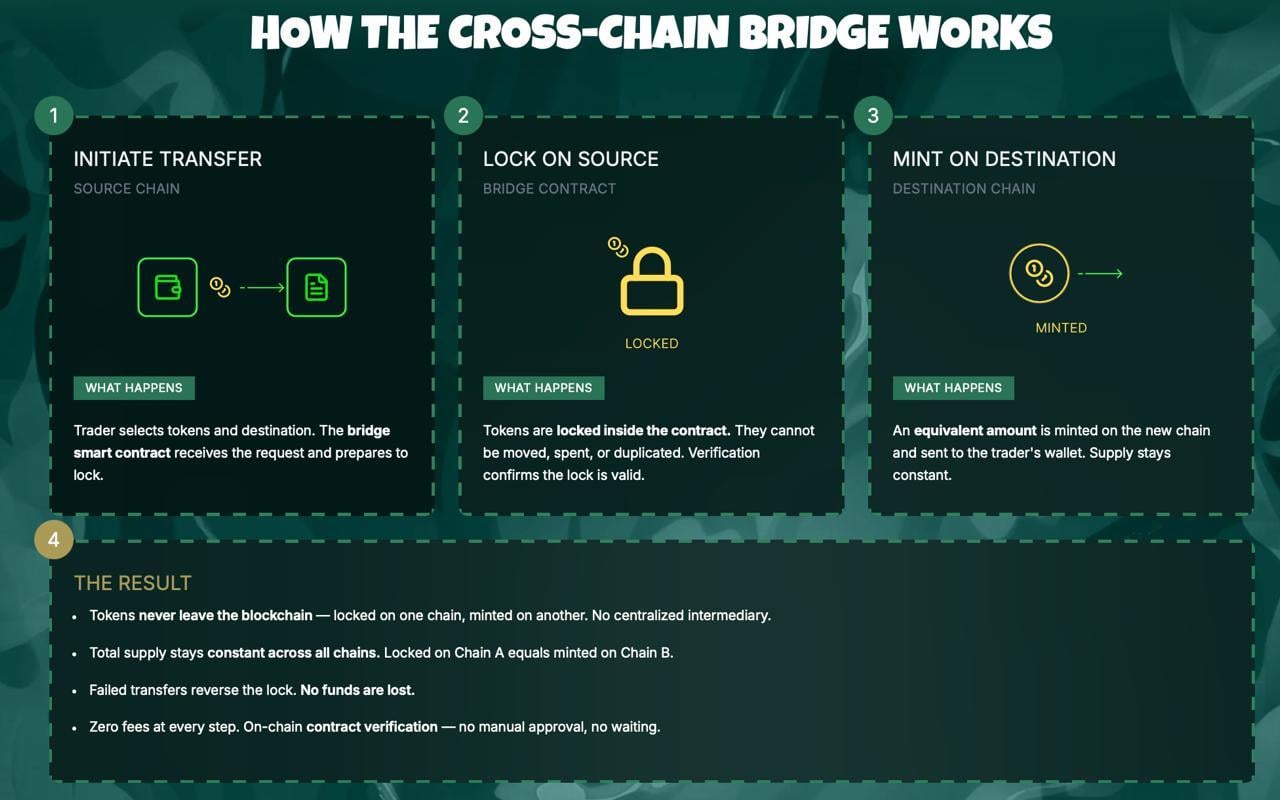
Related Articles
View MoreThe Relationship Between USD1 and the Trump Family: A Comprehensive Analysis of the Trump Family's Cryptocurrency Strategy
Key Takeaways USD1 is a fiat-backed stablecoin issued by World Liberty Financial (WLFI), designed to maintain a 1:1 peg with the US dollarThe Trump family is deeply involved in the USD1 project throug
What is XChat? Comprehensive Analysis of X's End-to-End Encrypted Messaging App
Key Takeaways XChat is a standalone encrypted messaging app launched by X (formerly Twitter), offering end-to-end encrypted messaging, audio and video calls, and other featuresThe app will launch firs
The Real Story Behind MYX's 200% Price Surge: In-Depth Analysis of the April 14, 2026 Anomaly
Key Takeaways On April 14, 2026, MYX price on the MEXC platform surged from approximately 0.2 USDT to over 0.6 USDT, representing a single-day increase exceeding 200%MYX is a decentralized perpetual c
USD1 Stablecoin In-Depth Comparison: Comprehensive Analysis of Differences and Similarities with USDC, USDT, and USDS
Key Takeaways USD1, USDC, USDT, and USDS are all stablecoins pegged to the US dollar, designed to maintain a 1:1 price anchorThese four stablecoins differ significantly in issuance mechanisms, reserve
