U.S. Military Maritime Blockade on Iran Escalates with Critical New Restrictions
BitcoinWorld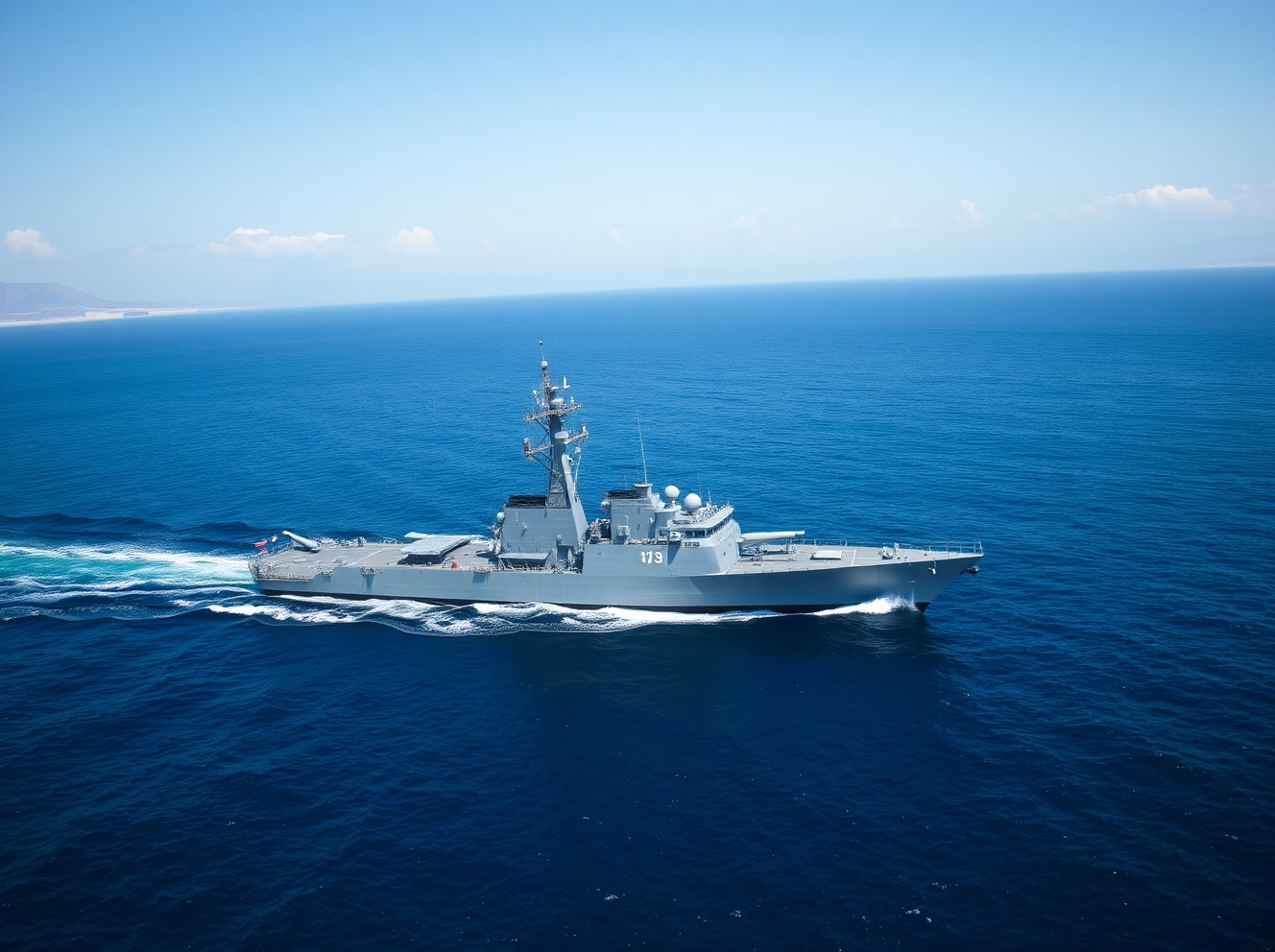
U.S. Military Maritime Blockade on Iran Escalates with Critical New Restrictions
WASHINGTON, D.C., April 16, 2025 — The United States military has significantly expanded the scope of its maritime blockade against Iran, a decisive move that immediately intensifies pressure on Tehran’s economy and military capabilities. According to an official statement confirmed by Reuters, the blockade now explicitly prohibits the maritime transport of weapons, ammunition, crude oil, petroleum products, steel, and aluminum to and from Iranian ports. This expansion marks a substantial escalation in the long-standing U.S. campaign to curb Iran’s regional influence and nuclear ambitions through economic and military means.
U.S. Military Maritime Blockade Details and Strategic Rationale
The Pentagon formally announced the expanded U.S. military maritime blockade on Iran in a detailed press release. Consequently, U.S. Naval forces, primarily from the Fifth Fleet headquartered in Bahrain, now possess enhanced authority to intercept and inspect vessels suspected of carrying the newly listed contraband. The blockade specifically targets items with dual civilian-military use. For instance, steel and aluminum are crucial for both construction and weapons manufacturing. Similarly, petroleum products fuel both the civilian economy and military vehicles.
Military analysts immediately recognized the strategic intent behind the new categories. Firstly, targeting crude oil and petroleum products directly attacks Iran’s primary source of foreign currency. Secondly, restricting steel and aluminum aims to cripple domestic production lines for missiles and drones, which Iran has supplied to proxy groups across the Middle East. Finally, the explicit ban on weapons and ammunition closes potential loopholes for arms shipments. This comprehensive approach demonstrates a calculated shift from broad sanctions to a focused, militarily-enforced interdiction strategy.
Historical Context and Escalating Tensions
This latest action does not occur in a vacuum. Instead, it represents the most aggressive enforcement of sanctions since the U.S. withdrawal from the Joint Comprehensive Plan of Action (JCPOA) in 2018. For years, the U.S. has maintained a complex web of economic sanctions on Iran. However, a maritime blockade enforced by naval assets constitutes a more direct and physical form of pressure. Previously, U.S. efforts focused on financial systems and secondary sanctions on companies doing business with Iran.
The strategic geography of the region makes this blockade particularly potent. Over 20% of the world’s oil supply transits through the Strait of Hormuz, a narrow chokepoint between the Persian Gulf and the Gulf of Oman. The U.S. Navy’s Fifth Fleet, tasked with enforcing this policy, routinely patrols these waters. Therefore, any expansion of its rules of engagement carries significant risk for global shipping and regional stability. Recent months have seen increased skirmishes between Iranian fast-attack craft and U.S. warships, highlighting the persistent danger of miscalculation.
Expert Analysis on Economic and Security Impacts
Security experts warn the expanded blockade will have immediate and profound effects. “This moves the conflict from the treasury department to the deck of a warship,” stated Dr. Anya Petrova, a senior fellow at the Center for Naval Analyses. “It transforms an economic policy into a direct military challenge. The U.S. Navy must now physically stop and board vessels, which inherently raises the risk of a violent incident.” Furthermore, global energy markets reacted swiftly to the news. Oil prices experienced volatility as traders assessed potential disruptions to shipments.
The impact on Iran’s economy could be severe. The National Iranian Oil Company (NIOC) relies heavily on maritime exports, often using tactics like ship-to-ship transfers and disabling transponders to evade detection. The new blockade empowers U.S. forces to disrupt these clandestine operations more aggressively. A comparison of key blocked items shows the strategy’s breadth:
| Item Category | Primary Use | Strategic Rationale for Blockade |
|---|---|---|
| Crude Oil & Petroleum | Energy export, state revenue | Deprives regime of critical foreign currency funding |
| Steel & Aluminum | Construction, manufacturing | Restricts materials for missile/drone production |
| Weapons & Ammunition | Military/Proxy group supply | Directly limits capacity to arm regional allies |
International reactions have been mixed. Key U.S. allies in the Gulf, like Saudi Arabia and the United Arab Emirates, have quietly supported stronger measures against Iran. Conversely, European nations, while critical of Iran’s activities, have expressed concern about the potential for escalation and the impact on diplomatic efforts. China and Russia, major economic partners of Iran, condemned the move as an illegal use of force and a violation of international maritime law.
Operational Challenges and Legal Framework
Enforcing this expanded U.S. military maritime blockade presents formidable operational hurdles. The U.S. Navy must balance assertive interception with the need to avoid sparking a broader conflict. Rules of Engagement (ROE) for boarding parties will be strict and heavily scrutinized. Additionally, the Navy faces the challenge of monitoring a vast maritime area with finite resources. They will likely prioritize chokepoints like the Strait of Hormuz and the Bab el-Mandeb Strait.
The legal justification for the blockade rests on a combination of United Nations Security Council resolutions pertaining to non-proliferation and the U.S. government’s designation of Iran’s Islamic Revolutionary Guard Corps (IRGC) as a Foreign Terrorist Organization. The U.S. argues that, under international law, it has the right to intercept contraband destined for a designated terrorist entity. However, legal scholars debate the applicability of blockade law outside a declared war, setting the stage for potential disputes in international forums.
Potential Consequences for Global Shipping and Trade
The global shipping industry now navigates a more complex and dangerous landscape. Insurance premiums for vessels operating in the Persian Gulf are expected to rise sharply. Shipping companies may reroute cargoes, adding time and cost to global supply chains. Key impacts include:
- Increased Insurance Costs: War risk premiums for the Gulf region will climb.
- Route Diversion: Some carriers may avoid the Strait of Hormuz entirely, using longer alternate routes.
- Enhanced Due Diligence: Shippers must meticulously document cargo origins and destinations to avoid interception.
- Legal Liability: Companies found violating the blockade face severe U.S. sanctions and asset freezes.
Moreover, Iran has historically threatened to close the Strait of Hormuz in response to extreme pressure. While a full closure remains a complex military operation, even harassment of commercial shipping or attacks on individual tankers could trigger a severe international crisis. The U.S. has repeatedly stated it will ensure freedom of navigation, setting the conditions for a potential standoff.
Conclusion
The expansion of the U.S. military maritime blockade on Iran represents a pivotal hardening of American strategy. By moving beyond financial sanctions to active naval interdiction of key commodities, the U.S. aims to apply maximum pressure on Tehran’s economic and military infrastructure. This policy carries high stakes, increasing the risk of naval confrontations in the world’s most critical oil transit route while testing the limits of international maritime law. The success or failure of this expanded blockade will significantly influence regional power dynamics, global energy markets, and the future of non-proliferation efforts for years to come. All eyes now turn to the Persian Gulf, where U.S. Navy ships stand as the physical enforcers of this new phase of geopolitical confrontation.
FAQs
Q1: What exactly did the U.S. military announce regarding Iran?
The U.S. military announced it has expanded its maritime blockade on Iran. The blockade now explicitly prohibits the sea transport of weapons, ammunition, crude oil, petroleum products, steel, and aluminum to or from Iranian ports.
Q2: What is the strategic goal of adding items like steel and aluminum to the blockade?
Steel and aluminum have dual civilian and military uses. By blocking these materials, the U.S. aims to restrict Iran’s domestic production capacity for missiles, drones, and other military hardware, which it often provides to regional proxy groups.
Q3: Which U.S. military unit is responsible for enforcing this blockade?
Enforcement falls primarily to the U.S. Navy’s Fifth Fleet, which is based in Bahrain and operates throughout the Persian Gulf, the Strait of Hormuz, and the Arabian Sea.
Q4: How might this affect global oil prices and shipping?
The blockade introduces new risks in the Strait of Hormuz, a vital oil chokepoint. This can lead to increased volatility in oil prices and higher insurance costs for shipping companies. Some carriers may choose longer alternate routes to avoid the area.
Q5: What has been the international reaction to this move?
Reactions are divided. U.S. Gulf allies generally support stronger measures against Iran. European nations express concern about escalation. China and Russia have condemned the blockade as an illegal use of force and a violation of international law.
This post U.S. Military Maritime Blockade on Iran Escalates with Critical New Restrictions first appeared on BitcoinWorld.


You May Also Like
Trump team now wants three massive arches built across Washington, D.C.

Spartans Hits Global Top 14 During Beta Stage, While XRP Rallies on Rakuten News & Tron Maintains Network Strength