Ethereum co-founder Vitalik Buterin has unveiled Fusaka as the network’s most ambitious scaling upgrade, set to activate on December 3 with revolutionary technology that eliminates the need for any single computer to download complete blockchain data. The upgrade introduces PeerDAS, allowing validator nodes to verify information by checking small random pieces rather than entire data blocks. Buterin described the technology as “unprecedented” for live blockchains, as it enables massive scalability improvements while maintaining security. Each network participant downloads only small “chunks” to probabilistically verify that sufficient data exists for complete reconstruction when needed. The upgrade addresses mounting pressure on Ethereum’s base layer amid criticism that Layer 2 solutions create fragmented user experiences.Source: X/@hildobby Current network congestion forces over 2 million ETH into exit queues, facing 43-day delays, while entry processing completes in just 7 days. Fusaka will more than double blob capacity within two weeks through automated parameter-only forks, expanding from the current limits of 6/9 blobs to 14/21.Source: X/@hildobby The phased approach begins with conservative increases before becoming more aggressive as the technology proves stable. The upgrade comes as Ethereum’s revenue fell 44% to $14.1 million in August despite ETH reaching new all-time highs above $4,950. Layer 2 adoption has reduced base layer fee generation, creating sustainability concerns about the network’s economic model. Revolutionary Data System Changes Everything As reported earlier, the Fusaka Upgrade is scheduled to go live on December 3, and PeerDAS will fundamentally alter how the blockchain networks handle information by distributing data verification across thousands of computers, rather than requiring complete downloads. Traditional systems force every participant to store entire blocks, creating bottlenecks as networks grow larger. The new approach uses mathematical probability to ensure data availability. If more than 50% of data chunks remain accessible across the network, any computer can theoretically download those pieces and reconstruct missing information using erasure coding techniques. Initially, complete data blocks must still exist in one location for broadcasting new information and emergency reconstruction when publishers provide incomplete data. However, these roles remain untrusted, requiring only one honest participant among potentially hundreds of dishonest actors. Future developments will eliminate even these centralized functions through cell-level messaging and distributed block building. Different computers can handle these tasks for different blocks, which further decentralizes the entire process. Notably, Buterin emphasized the cautious testing approach core developers have adopted despite years of development work. The conservative blob count initially increases and will become more aggressive as real-world performance validates the technology’s stability and security. Ethereum Battles Revenue Crisis With Infrastructure Focus The Fusaka upgrade addresses Ethereum’s growing economic challenges as Layer 2 networks reduce mainnet transaction demand. August revenue of $14.1 million marked one of the weakest months since early 2021, which has raised concerns about sustainability. Witnessing this, Buterin recently proposed low-risk DeFi protocols as Ethereum’s potential revenue anchor, comparing the model to Google Search funding broader company operations. He suggested protocols offering 5% yields on blue-chip stablecoins could provide economic stability without compromising ethical foundations. These protocols include mainstream lending platforms like Aave, where users can earn stable returns by supplying USDT and USDC to borrowers without speculative risks. Fusaka’s infrastructure improvements will reduce transaction costs for such applications, making them accessible to everyday users who previously faced prohibitive gas fees when interacting with DeFi protocols. The upgrade includes 11-12 Ethereum Improvement Proposals targeting scalability and node efficiency improvements. Blob parameter-only forks will activate automatically based on predetermined schedules rather than requiring separate network upgrades. Additionally, recent controversies in the validator queue also add to the ongoing scalability pressures. However, Buterin defended the current 43-day exit delays as essential security features, comparing validator commitments to military service, which requires “friction in quitting.” The upgrade follows May’s successful Pectra implementation, which introduced account abstraction and increased validator staking limits from 32 ETH to 2,048 ETH. That upgrade delivered infrastructure improvements for social recovery wallets and smart contract execution capabilities. For Fusaka, the improvements in data availability will support the next growth phase of Ethereum, while maintaining the security guarantees that distinguish Ethereum from its competitorsEthereum co-founder Vitalik Buterin has unveiled Fusaka as the network’s most ambitious scaling upgrade, set to activate on December 3 with revolutionary technology that eliminates the need for any single computer to download complete blockchain data. The upgrade introduces PeerDAS, allowing validator nodes to verify information by checking small random pieces rather than entire data blocks. Buterin described the technology as “unprecedented” for live blockchains, as it enables massive scalability improvements while maintaining security. Each network participant downloads only small “chunks” to probabilistically verify that sufficient data exists for complete reconstruction when needed. The upgrade addresses mounting pressure on Ethereum’s base layer amid criticism that Layer 2 solutions create fragmented user experiences.Source: X/@hildobby Current network congestion forces over 2 million ETH into exit queues, facing 43-day delays, while entry processing completes in just 7 days. Fusaka will more than double blob capacity within two weeks through automated parameter-only forks, expanding from the current limits of 6/9 blobs to 14/21.Source: X/@hildobby The phased approach begins with conservative increases before becoming more aggressive as the technology proves stable. The upgrade comes as Ethereum’s revenue fell 44% to $14.1 million in August despite ETH reaching new all-time highs above $4,950. Layer 2 adoption has reduced base layer fee generation, creating sustainability concerns about the network’s economic model. Revolutionary Data System Changes Everything As reported earlier, the Fusaka Upgrade is scheduled to go live on December 3, and PeerDAS will fundamentally alter how the blockchain networks handle information by distributing data verification across thousands of computers, rather than requiring complete downloads. Traditional systems force every participant to store entire blocks, creating bottlenecks as networks grow larger. The new approach uses mathematical probability to ensure data availability. If more than 50% of data chunks remain accessible across the network, any computer can theoretically download those pieces and reconstruct missing information using erasure coding techniques. Initially, complete data blocks must still exist in one location for broadcasting new information and emergency reconstruction when publishers provide incomplete data. However, these roles remain untrusted, requiring only one honest participant among potentially hundreds of dishonest actors. Future developments will eliminate even these centralized functions through cell-level messaging and distributed block building. Different computers can handle these tasks for different blocks, which further decentralizes the entire process. Notably, Buterin emphasized the cautious testing approach core developers have adopted despite years of development work. The conservative blob count initially increases and will become more aggressive as real-world performance validates the technology’s stability and security. Ethereum Battles Revenue Crisis With Infrastructure Focus The Fusaka upgrade addresses Ethereum’s growing economic challenges as Layer 2 networks reduce mainnet transaction demand. August revenue of $14.1 million marked one of the weakest months since early 2021, which has raised concerns about sustainability. Witnessing this, Buterin recently proposed low-risk DeFi protocols as Ethereum’s potential revenue anchor, comparing the model to Google Search funding broader company operations. He suggested protocols offering 5% yields on blue-chip stablecoins could provide economic stability without compromising ethical foundations. These protocols include mainstream lending platforms like Aave, where users can earn stable returns by supplying USDT and USDC to borrowers without speculative risks. Fusaka’s infrastructure improvements will reduce transaction costs for such applications, making them accessible to everyday users who previously faced prohibitive gas fees when interacting with DeFi protocols. The upgrade includes 11-12 Ethereum Improvement Proposals targeting scalability and node efficiency improvements. Blob parameter-only forks will activate automatically based on predetermined schedules rather than requiring separate network upgrades. Additionally, recent controversies in the validator queue also add to the ongoing scalability pressures. However, Buterin defended the current 43-day exit delays as essential security features, comparing validator commitments to military service, which requires “friction in quitting.” The upgrade follows May’s successful Pectra implementation, which introduced account abstraction and increased validator staking limits from 32 ETH to 2,048 ETH. That upgrade delivered infrastructure improvements for social recovery wallets and smart contract execution capabilities. For Fusaka, the improvements in data availability will support the next growth phase of Ethereum, while maintaining the security guarantees that distinguish Ethereum from its competitors

Ethereum Co-Founder Vitalik Buterin Introduces Fusaka: Ethereum’s Most Ambitious Scaling Solution Yet

2025/09/25 19:09
4 min read

Ethereum co-founder Vitalik Buterin has unveiled Fusaka as the network’s most ambitious scaling upgrade, set to activate on December 3 with revolutionary technology that eliminates the need for any single computer to download complete blockchain data.

The upgrade introduces PeerDAS, allowing validator nodes to verify information by checking small random pieces rather than entire data blocks.

Buterin described the technology as “unprecedented” for live blockchains, as it enables massive scalability improvements while maintaining security.

Each network participant downloads only small “chunks” to probabilistically verify that sufficient data exists for complete reconstruction when needed.

The upgrade addresses mounting pressure on Ethereum’s base layer amid criticism that Layer 2 solutions create fragmented user experiences.
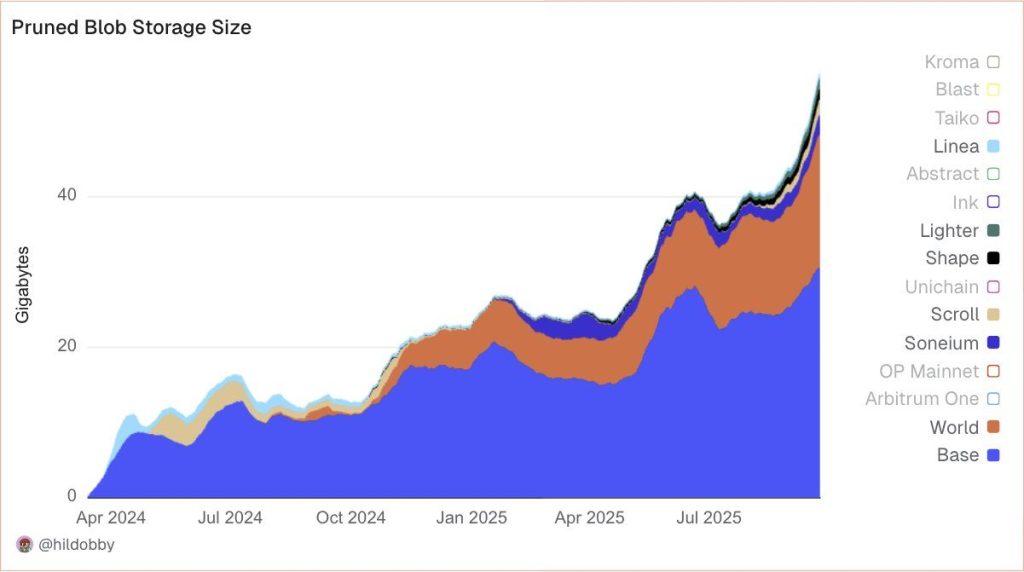
Ethereum Co-Founder Vitalik Buterin Introduces Fusaka: Ethereum's Most Ambitious Scaling Solution YetSource: X/@hildobby

Current network congestion forces over 2 million ETH into exit queues, facing 43-day delays, while entry processing completes in just 7 days.

Fusaka will more than double blob capacity within two weeks through automated parameter-only forks, expanding from the current limits of 6/9 blobs to 14/21.

Ethereum Co-Founder Vitalik Buterin Introduces Fusaka: Ethereum's Most Ambitious Scaling Solution YetSource: X/@hildobby

The phased approach begins with conservative increases before becoming more aggressive as the technology proves stable.

The upgrade comes as Ethereum’s revenue fell 44% to $14.1 million in August despite ETH reaching new all-time highs above $4,950.

Layer 2 adoption has reduced base layer fee generation, creating sustainability concerns about the network’s economic model.

Revolutionary Data System Changes Everything

As reported earlier, the Fusaka Upgrade is scheduled to go live on December 3, and PeerDAS will fundamentally alter how the blockchain networks handle information by distributing data verification across thousands of computers, rather than requiring complete downloads.

Traditional systems force every participant to store entire blocks, creating bottlenecks as networks grow larger.

The new approach uses mathematical probability to ensure data availability. If more than 50% of data chunks remain accessible across the network, any computer can theoretically download those pieces and reconstruct missing information using erasure coding techniques.

Initially, complete data blocks must still exist in one location for broadcasting new information and emergency reconstruction when publishers provide incomplete data.

However, these roles remain untrusted, requiring only one honest participant among potentially hundreds of dishonest actors.

Future developments will eliminate even these centralized functions through cell-level messaging and distributed block building.

Different computers can handle these tasks for different blocks, which further decentralizes the entire process.

Notably, Buterin emphasized the cautious testing approach core developers have adopted despite years of development work.

The conservative blob count initially increases and will become more aggressive as real-world performance validates the technology’s stability and security.

Ethereum Battles Revenue Crisis With Infrastructure Focus

The Fusaka upgrade addresses Ethereum’s growing economic challenges as Layer 2 networks reduce mainnet transaction demand.

August revenue of $14.1 million marked one of the weakest months since early 2021, which has raised concerns about sustainability.

Witnessing this, Buterin recently proposed low-risk DeFi protocols as Ethereum’s potential revenue anchor, comparing the model to Google Search funding broader company operations.

He suggested protocols offering 5% yields on blue-chip stablecoins could provide economic stability without compromising ethical foundations.

These protocols include mainstream lending platforms like Aave, where users can earn stable returns by supplying USDT and USDC to borrowers without speculative risks.

Fusaka’s infrastructure improvements will reduce transaction costs for such applications, making them accessible to everyday users who previously faced prohibitive gas fees when interacting with DeFi protocols.

The upgrade includes 11-12 Ethereum Improvement Proposals targeting scalability and node efficiency improvements.

Blob parameter-only forks will activate automatically based on predetermined schedules rather than requiring separate network upgrades.

Additionally, recent controversies in the validator queue also add to the ongoing scalability pressures.

However, Buterin defended the current 43-day exit delays as essential security features, comparing validator commitments to military service, which requires “friction in quitting.”

The upgrade follows May’s successful Pectra implementation, which introduced account abstraction and increased validator staking limits from 32 ETH to 2,048 ETH.

That upgrade delivered infrastructure improvements for social recovery wallets and smart contract execution capabilities.

For Fusaka, the improvements in data availability will support the next growth phase of Ethereum, while maintaining the security guarantees that distinguish Ethereum from its competitors.

Disclaimer: The articles reposted on this site are sourced from public platforms and are provided for informational purposes only. They do not necessarily reflect the views of MEXC. All rights remain with the original authors. If you believe any content infringes on third-party rights, please contact service@support.mexc.com for removal. MEXC makes no guarantees regarding the accuracy, completeness, or timeliness of the content and is not responsible for any actions taken based on the information provided. The content does not constitute financial, legal, or other professional advice, nor should it be considered a recommendation or endorsement by MEXC.

You May Also Like

Jerome Powell’s Press Conference: Crucial Insights Unveiled for the Market’s Future

Jerome Powell’s Press Conference: Crucial Insights Unveiled for the Market’s Future

BitcoinWorld Jerome Powell’s Press Conference: Crucial Insights Unveiled for the Market’s Future The financial world, including the dynamic cryptocurrency market, often hangs on every word from the Federal Reserve. Recently, Jerome Powell’s press conference following the Federal Open Market Committee (FOMC) meeting concluded, leaving investors and analysts dissecting his remarks for clues about the future economic direction. This event is always a pivotal moment, shaping expectations for inflation, interest rates, and the overall stability of global markets. What Were the Key Takeaways from Jerome Powell’s Press Conference? During Jerome Powell’s press conference, the Fed Chair provided an update on the central bank’s monetary policy decisions and its economic outlook. His statements often reiterate the Fed’s dual mandate: achieving maximum employment and stable prices. This time was no different, with a strong emphasis on managing persistent inflation. Key points from the recent discussion included: Inflation Control: Powell emphasized the Fed’s unwavering commitment to bringing inflation back down to its 2% target. He reiterated that the fight against rising prices remains the top priority, even if it entails some economic slowdown. Interest Rate Policy: While the Fed’s stance on future interest rate adjustments was discussed, the path remains data-dependent. Powell indicated that decisions would continue to be made meeting-by-meeting, based on incoming economic data. Economic Projections: The updated Summary of Economic Projections (SEP) offered insights into the Fed’s forecasts for GDP growth, unemployment, and inflation. These projections help market participants gauge the central bank’s expectations for the economy’s trajectory. Quantitative Tightening (QT): The ongoing process of reducing the Fed’s balance sheet, known as quantitative tightening, was also a topic. This reduction in liquidity in the financial system has broad implications for asset prices. How Did Jerome Powell’s Remarks Impact Cryptocurrency Markets? The conclusion of Jerome Powell’s press conference often sends ripples through traditional financial markets, and cryptocurrencies are increasingly sensitive to these macroeconomic shifts. Digital assets, once thought to be uncorrelated, now frequently react to the Fed’s monetary policy signals. Higher interest rates, for instance, tend to make riskier assets like cryptocurrencies less attractive. This is because investors might prefer safer, interest-bearing investments. Consequently, we often see increased volatility in Bitcoin (BTC) and Ethereum (ETH) prices immediately following such announcements. The tightening of financial conditions, driven by the Fed, reduces overall liquidity in the system, which can put downward pressure on asset valuations across the board. However, some argue that this growing correlation signifies crypto’s increasing integration into the broader financial ecosystem. It suggests that institutional investors and mainstream finance are now paying closer attention to digital assets, treating them more like other risk-on investments. Navigating the Economic Landscape After Jerome Powell’s Press Conference For cryptocurrency investors, understanding the implications of Jerome Powell’s press conference is crucial for making informed decisions. The Fed’s policy trajectory directly influences the availability of capital and investor sentiment, which are key drivers for crypto valuations. Here are some actionable insights for navigating this environment: Stay Informed: Regularly monitor Fed announcements and economic data releases. Understanding the macroeconomic backdrop is as important as analyzing individual crypto projects. Assess Risk Tolerance: In periods of economic uncertainty and tighter monetary policy, a reassessment of personal risk tolerance is wise. Diversification within your crypto portfolio and across different asset classes can mitigate potential downsides. Focus on Fundamentals: While market sentiment can be swayed by macro news, projects with strong fundamentals, clear use cases, and robust development teams tend to perform better in the long run. Long-Term Perspective: Cryptocurrency markets are known for their volatility. Adopting a long-term investment horizon can help weather short-term fluctuations driven by macro events like Fed meetings. The challenges include potential continued volatility and reduced liquidity. However, opportunities may arise from market corrections, allowing strategic investors to accumulate assets at lower prices. In summary, Jerome Powell’s press conference provides essential guidance on the Fed’s economic strategy. Its conclusions have a profound impact on financial markets, including the dynamic world of cryptocurrencies. Staying informed, understanding the nuances of monetary policy, and maintaining a strategic investment approach are paramount for navigating the evolving economic landscape. The Fed’s actions underscore the interconnectedness of traditional finance and the burgeoning digital asset space. Frequently Asked Questions (FAQs) Q1: What is the Federal Open Market Committee (FOMC)? A1: The FOMC is the monetary policy-making body of the Federal Reserve System. It sets the federal funds rate target and directs open market operations, influencing the availability of money and credit in the U.S. economy. Q2: How do the Fed’s interest rate decisions typically affect cryptocurrency markets? A2: Generally, when the Fed raises interest rates, it makes borrowing more expensive and reduces liquidity in the financial system. This often leads investors to shy away from riskier assets like cryptocurrencies, potentially causing prices to decline. Conversely, lower rates can stimulate investment in riskier assets. Q3: What does “data-dependent” mean in the context of Fed policy? A3: “Data-dependent” means that the Federal Reserve’s future monetary policy decisions, such as interest rate adjustments, will primarily be based on the latest economic data. This includes inflation reports, employment figures, and GDP growth, rather than a predetermined schedule. Q4: Should I change my cryptocurrency investment strategy based on Jerome Powell’s press conference? A4: While it’s crucial to be aware of the macroeconomic environment shaped by Jerome Powell’s press conference, drastic changes to a well-researched investment strategy may not always be necessary. It’s recommended to review your portfolio, assess your risk tolerance, and consider if your strategy aligns with the current economic outlook, focusing on long-term fundamentals. If you found this analysis helpful, please consider sharing it with your network! Your insights and shares help us reach more readers interested in the intersection of traditional finance and the exciting world of cryptocurrencies. Spread the word! To learn more about the latest crypto market trends, explore our article on key developments shaping Bitcoin price action. This post Jerome Powell’s Press Conference: Crucial Insights Unveiled for the Market’s Future first appeared on BitcoinWorld.
Share
Coinstats2025/09/18 16:25
Shiba Inu Price Forecast for Feb 9: Here’s Key Overhead Resistance for Any Move Upwards

Shiba Inu Price Forecast for Feb 9: Here’s Key Overhead Resistance for Any Move Upwards

Shiba Inu remains under pressure as resistance cap rebounds, while falling open interest and weak momentum continue to limit upside potential. The Shiba Inu (SHIB
Share
Coinstats2026/02/09 18:10
Australian regulators ease regulations on stablecoin intermediaries

Australian regulators ease regulations on stablecoin intermediaries

PANews reported on September 18th that, according to Decrypt, the Australian Securities and Investments Commission (ASIC) has granted a regulatory exemption to stablecoin intermediaries, allowing them to distribute cryptocurrencies issued by licensed Australian institutions without having to hold a separate financial services license. The exemption, published Thursday, states that intermediaries distributing stablecoins issued by Australian Financial Services (AFS) licensed issuers no longer need to apply for separate AFS, market, or clearing facility licenses. This measure, effective upon registration of federal legislation, is a significant step forward in addressing Australia's regulatory challenges in the stablecoin market. Blockchain APAC CEO Steve Vallas stated that this move is a temporary transition before broader reforms and is consistent with financial services law. The exemption does not change the determination of whether stablecoins are financial products, but simply "suspends the secondary licensing requirement for distributors of licensed issuers," allowing distribution through licensed channels while maintaining issuer liability and requiring intermediaries to provide product disclosure statements to ensure transparency.
Share
PANews2025/09/18 13:25