Bitcoin Magazine Europol, Swiss Police Dismantle ‘Cryptomixer’ in Major Bitcoin Laundering Crackdown Swiss and German authorities, backed by Europol, shut down the Cryptomixer bitcoin-laundering service in Zurich, seizing servers, the domain, EUR 25 million in BTC and 12 terabytes of data linked to major cybercrime networks. This post Europol, Swiss Police Dismantle ‘Cryptomixer’ in Major Bitcoin Laundering Crackdown first appeared on Bitcoin Magazine and is written by Micah Zimmerman.Bitcoin Magazine Europol, Swiss Police Dismantle ‘Cryptomixer’ in Major Bitcoin Laundering Crackdown Swiss and German authorities, backed by Europol, shut down the Cryptomixer bitcoin-laundering service in Zurich, seizing servers, the domain, EUR 25 million in BTC and 12 terabytes of data linked to major cybercrime networks. This post Europol, Swiss Police Dismantle ‘Cryptomixer’ in Major Bitcoin Laundering Crackdown first appeared on Bitcoin Magazine and is written by Micah Zimmerman.

Europol, Swiss Police Dismantle ‘Cryptomixer’ in Major Bitcoin Laundering Crackdown

Bitcoin Magazine

Europol, Swiss Police Dismantle ‘Cryptomixer’ in Major Bitcoin Laundering Crackdown

Law enforcement agencies in Switzerland and Germany have shut down Cryptomixer.io, one of Europe’s largest illicit Bitcoin-mixing operations. 

The takedown unfolded between Nov. 24 and 28 in Zurich, with Europol coordinating cross-border support.

Authorities seized three servers, the cryptomixer.io domain, more than EUR 25 million in bitcoin and over 12 terabytes of data. A seizure banner (see below) now replaces the site. Investigators say the disruption will fuel new leads tied to ransomware groups, dark-web marketplaces and cross-border money-laundering schemes.

Cryptomixer launched in 2016. It quickly became a go-to service for cybercriminals who needed to hide their tracks, Europol said. The platform operated on both the clear web and dark web. Its hybrid design attracted users from ransomware crews, underground forums and online drug markets.
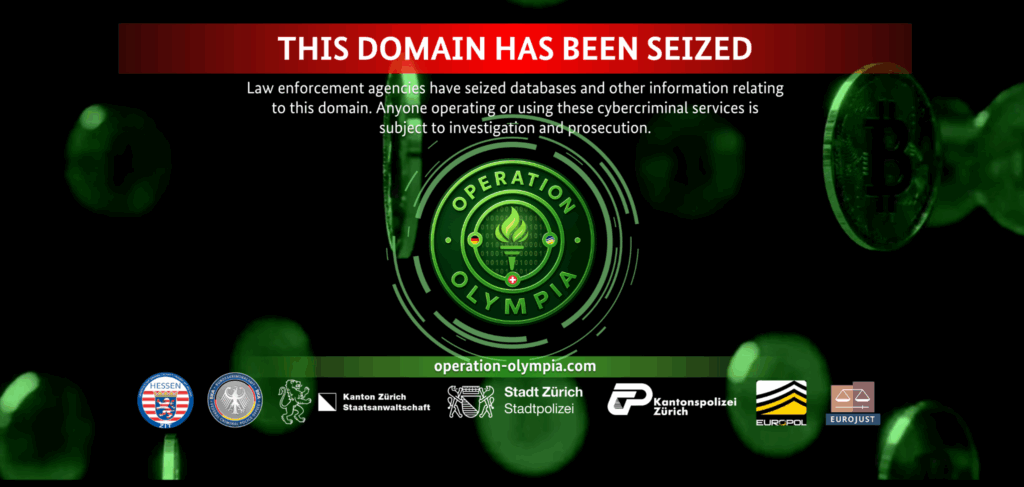
Cryptomixer

Mixers work by pooling user deposits, shuffling them for long, randomised intervals and redistributing them to new addresses. The process breaks the on-chain trail, making it difficult for analysts to trace specific coins. 

Authorities say Cryptomixer moved more than EUR 1.3 billion worth of bitcoin for clients seeking to wash criminal proceeds. The service was frequently used before funds were pushed to exchanges, ATMs or bank accounts.

German federal investigators said the operation generated “billions of euros in revenues,” much of it tied to illegal activity. The Frankfurt Prosecutor General’s Office and the German Federal Criminal Police Office (BKA) worked alongside Zurich city and cantonal police to lead the on-site action. 

Europol and Eurojust had support from The Hague.

Details of the cryptomixer shutdown

On the action day, Europol deployed cybercrime specialists to Zurich for forensic assistance and real-time coordination. The agency said its Joint Cybercrime Action Taskforce played a central role in connecting investigators across borders. 

Europol also noted similarities to its 2023 takedown of ChipMixer, at the time the largest mixer ever dismantled.

Swiss authorities said the volume of data seized—over 12 terabytes—will be crucial for mapping wider criminal networks. Investigators believe it contains transaction logs, operational documentation and communication records that may link multiple cybercrime groups.

Cryptomixing services have long drawn scrutiny for enabling ransomware payouts, drug sales, weapons trafficking and payment-card fraud.

Regulators and agencies across the EU and U.S. have increasingly targeted mixers that advertise anonymity. High-profile precedents include sanctions and criminal charges against Tornado Cash founders in the U.S. and Netherlands.

Germany’s BKA said the findings from Cryptomixer “will contribute to the investigation of further cybercrimes.” Both countries signaled that more actions against crypto-laundering infrastructure may follow as forensic teams dig through the seized servers and blockchain data.

This post Europol, Swiss Police Dismantle ‘Cryptomixer’ in Major Bitcoin Laundering Crackdown first appeared on Bitcoin Magazine and is written by Micah Zimmerman.

Market Opportunity
Major Logo
Major Price(MAJOR)
$0.11593
$0.11593$0.11593
+0.24%
USD
Major (MAJOR) Live Price Chart
Disclaimer: The articles reposted on this site are sourced from public platforms and are provided for informational purposes only. They do not necessarily reflect the views of MEXC. All rights remain with the original authors. If you believe any content infringes on third-party rights, please contact service@support.mexc.com for removal. MEXC makes no guarantees regarding the accuracy, completeness, or timeliness of the content and is not responsible for any actions taken based on the information provided. The content does not constitute financial, legal, or other professional advice, nor should it be considered a recommendation or endorsement by MEXC.

You May Also Like

What We Know (and Don’t) About Modern Code Reviews

What We Know (and Don’t) About Modern Code Reviews

This article traces the evolution of modern code review from formal inspections to tool-driven workflows, maps key research themes, and highlights a critical gap
Share
Hackernoon2025/12/17 17:00
X claims the right to share your private AI chats with everyone under new rules – no opt out

X claims the right to share your private AI chats with everyone under new rules – no opt out

X says its Terms of Service will change Jan. 15, 2026, expanding how the platform defines user “Content” and adding contract language tied to the operation and
Share
CryptoSlate2025/12/17 19:24
Michael Saylor Pushes Digital Capital Narrative At Bitcoin Treasuries Unconference

Michael Saylor Pushes Digital Capital Narrative At Bitcoin Treasuries Unconference

The post Michael Saylor Pushes Digital Capital Narrative At Bitcoin Treasuries Unconference appeared on BitcoinEthereumNews.com. The suitcoiners are in town.  From a low-key, circular podium in the middle of a lavish New York City event hall, Strategy executive chairman Michael Saylor took the mic and opened the Bitcoin Treasuries Unconference event. He joked awkwardly about the orange ties, dresses, caps and other merch to the (mostly male) audience of who’s-who in the bitcoin treasury company world.  Once he got onto the regular beat, it was much of the same: calm and relaxed, speaking freely and with confidence, his keynote was heavy on the metaphors and larger historical stories. Treasury companies are like Rockefeller’s Standard Oil in its early years, Michael Saylor said: We’ve just discovered crude oil and now we’re making sense of the myriad ways in which we can use it — the automobile revolution and jet fuel is still well ahead of us.  Established, trillion-dollar companies not using AI because of “security concerns” make them slow and stupid — just like companies and individuals rejecting digital assets now make them poor and weak.  “I’d like to think that we understood our business five years ago; we didn’t.”  We went from a defensive investment into bitcoin, Saylor said, to opportunistic, to strategic, and finally transformational; “only then did we realize that we were different.” Michael Saylor: You Come Into My Financial History House?! Jokes aside, Michael Saylor is very welcome to the warm waters of our financial past. He acquitted himself honorably by invoking the British Consol — though mispronouncing it, and misdating it to the 1780s; Pelham’s consolidation of debts happened in the 1750s and perpetual government debt existed well before then — and comparing it to the gold standard and the future of bitcoin. He’s right that Strategy’s STRC product in many ways imitates the consols; irredeemable, perpetual debt, issued at par, with…
Share
BitcoinEthereumNews2025/09/18 02:12