Choosing the best way to buy cryptocurrency depends on what you value: low fees, quick settlement, control of private keys, or easy access in your region. This Choosing the best way to buy cryptocurrency depends on what you value: low fees, quick settlement, control of private keys, or easy access in your region. This

What is the best method to buy crypto?

2026/01/29 05:57
10 min read
Choosing the best way to buy cryptocurrency depends on what you value: low fees, quick settlement, control of private keys, or easy access in your region. This article lays out the main on-ramp types, the regulatory backdrop that shapes verification steps, and a clear checklist you can use to pick an option that fits your needs.

FinancePolice aims to explain these basics in plain language so you can compare practical tradeoffs, verify platform details, and act with a clearer sense of risk and convenience.

Most licensed on-ramps require identity checks, so verification is the norm rather than an exception.
Card payments are fast but often more expensive; bank transfers are cheaper but slower.
For larger holdings, consider verified self-custody with a hardware wallet rather than leaving funds on an exchange.

What the best way to buy cryptocurrency means and why it matters

Common user goals: speed, cost, custody, and liquidity

When people ask what the best way to buy cryptocurrency is, they usually mean which on-ramp balances fees, speed, custody, and local availability to match their goals.

An on-ramp is the payment path that converts fiat money into digital assets, and that path matters because payment choice drives cost and settlement speed (see onramp API guide).

Global guidance has made identity checks a normal part of most fiat-to-crypto on-ramps, so expect verification steps when you use a licensed platform FATF guidance on virtual assets.

Need a simple checklist to decide your on-ramp?

Keep these tradeoffs in mind as you read on; later there is a short checklist to help you pick the right method for your situation.

View the partnership and advertising page

Key terms: fiat on-ramp, VASP, KYC, custody

Fiat on-ramp refers to the process of moving traditional currency into a digital-asset account. Virtual asset service providers, or VASPs, are the businesses that operate those rails.

KYC stands for know your customer and is one common verification step. Custody describes who controls private keys and thus access to funds.


Finance Police Logo

best way to buy cryptocurrency

For many readers, the single practical question is which of the common options fits their mix of priorities; this article compares the leading on-ramps and the payment methods that change cost and timing.

How regulation and platform types shape the best way to buy cryptocurrency

FATF risk-based guidance and national regulators

International regulators use a risk-based approach that generally requires licensed platforms to perform AML and KYC checks when converting fiat to crypto (see analysis of AML and KYC), which helps explain why verification is widespread FATF guidance on virtual assets.

National regulators also shape available options and consumer protections by setting rules for market conduct and custody disclosures, which can mean platform requirements differ by country FCA consumer guidance on cryptoassets and related central bank analysis BIS bulletin.

What regulated exchanges and broker apps must typically do

Licensed exchanges and regulated broker apps tend to provide fiat rails and multiple payment methods, and they normally follow local AML/KYC rules before allowing fiat deposits or card purchases industry report on global on-ramps.
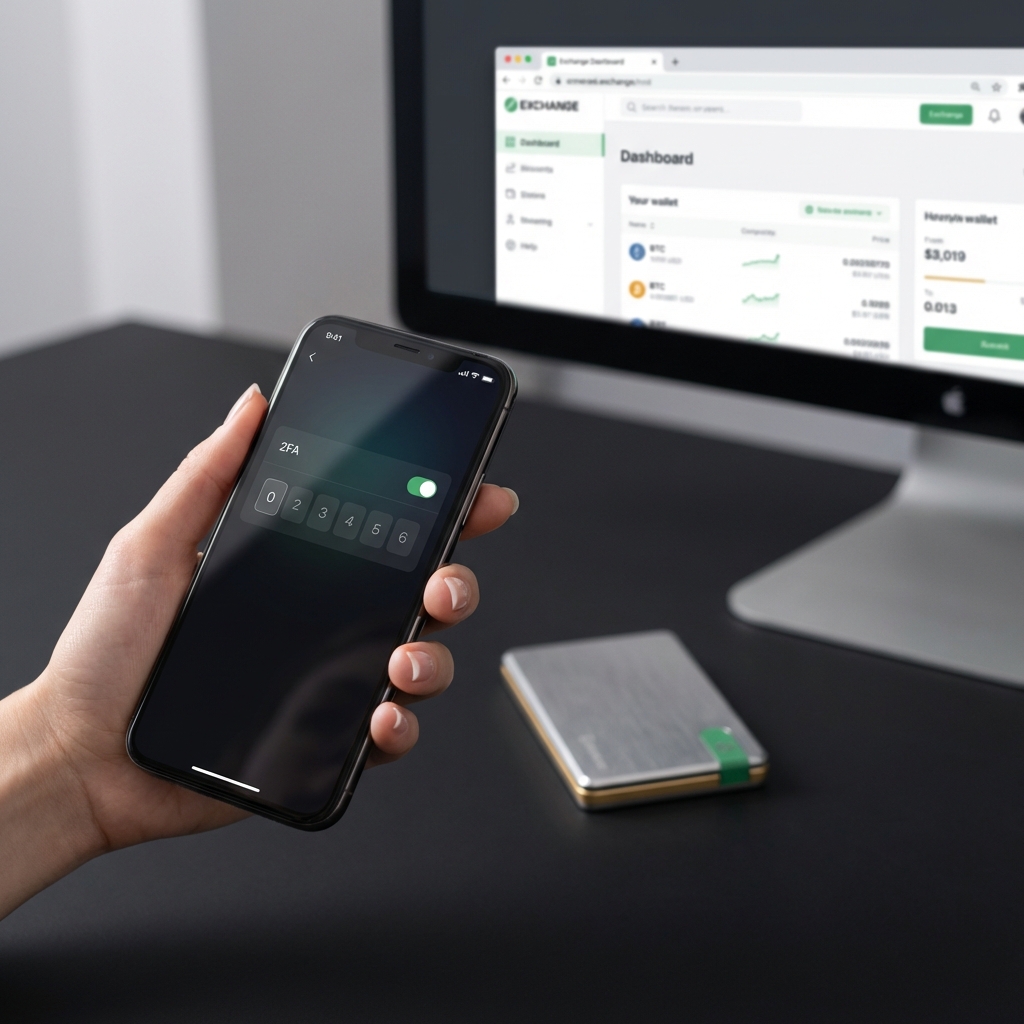
Close up of user enabling two factor authentication on smartphone with hardware wallet and blurred exchange dashboard in background illustrating best way to buy cryptocurrency

Those platforms often present integrated custody options that let users hold assets on the platform or withdraw to self-custody, and platform disclosures about custody or proof-of-reserves can influence trust decisions.

Best way to buy cryptocurrency: compare exchanges, broker apps, OTC, P2P and ATMs

Centralized exchanges and broker apps: pros and cons

Centralized exchanges and broker apps remain the dominant retail on-ramps because they combine fiat rails, multiple payment methods, and wallet or custody integrations that suit most beginners global adoption and on-ramp trends.

Pros include easier fiat deposits, clear fee displays at the point of sale, and features like recurring buys. Cons can include platform custody risks if you leave funds on the exchange long term and regional differences in available services.

When comparing these platforms, prioritize transparent fee schedules and custody disclosures such as proof-of-reserves or insurance statements where available. Also consider exchange affiliate and partner programs as part of platform checks exchange affiliate programs.

The best method depends on your priorities: use card rails for speed, bank transfers for lower fees, exchanges or broker apps for convenience and regulated access, OTC for very large trades, and move long-term holdings to self-custody for security.

OTC desks for large trades

Over-the-counter desks are commonly used for large-volume purchases to reduce market impact and slippage, but they typically require higher minimums and introduce settlement and counterparty considerations industry analysis of exchange metrics.

OTC trades often involve direct settlement steps, and buyers should confirm trade minimums, custody arrangements, and any counterparty credit terms before proceeding.

Peer-to-peer and crypto ATMs: when they make sense

Peer-to-peer platforms and crypto ATMs offer payment flexibility, which can be useful if traditional rails are limited in your region, but they usually come with higher fees, lower liquidity, and greater risk of fraud industry overview of crypto ATMs.

These alternatives can be effective for small, urgent buys or when local payment options are constrained, but they require extra care verifying counterparties and checking price spreads.

Decision checklist: how to pick the best way to buy cryptocurrency for your situation

Payment method tradeoffs: card versus bank transfer versus on-chain

Decide what matters most: if speed is the priority, card purchases clear faster but typically cost more in processing fees and convenience charges. For basic guidance on sending money with cards, see sending money with a credit card.

If minimizing fees is the priority, bank transfers generally have lower fees but take longer to settle, and on-chain stablecoin transfers are often the fastest for settlement between platforms report on on-ramp and settlement trends.

Custody and security: exchange custody versus self-custody

For security, consider who holds the private keys. Exchanges offer custody for convenience, while self-custody with a hardware wallet gives you direct control but requires safe key management.

Industry and regulator guidance recommends enabling strong two-factor authentication and moving long-term holdings to verified self-custody solutions rather than leaving large balances on exchanges SEC investor guidance on cryptocurrencies.

Checklist items to weigh: fees, settlement speed, payment method, liquidity, KYC requirements, custody options, and whether the platform publishes proof-of-reserves or insurance disclosures.

Step-by-step: the practical process for buying crypto safely

Preparing: verification, documentation, and security setup

Open an account with a regulated exchange or broker app, and be prepared to complete standard KYC steps, which often ask for government ID and proof of address before fiat deposits are allowed FATF guidance on KYC for virtual assets.

Before your first purchase, enable strong 2FA on the account, choose a secure password, and review any custody disclosures the platform provides.

Finance Police Advertisement

Executing a first purchase and moving assets to the right place

Choose your payment method after checking the platform’s current fee schedule, then place a market or buy order for the amount you want; card payments usually complete faster than bank transfers.

After the purchase, consider whether you need exchange custody for active trading or whether long-term holdings should be moved to a hardware wallet via an on-chain transfer, following platform withdrawal procedures and confirming destination addresses carefully SEC guidance on custody and investor protection.

Common mistakes and security pitfalls when buying crypto

Leaving large balances on exchanges

One common error is leaving significant long-term holdings on an exchange; many experts and regulators advise moving larger balances to self-custody to reduce counterparty risk FCA consumer guidance on cryptoassets.

If you keep funds on an exchange for trading, keep only what you need for short-term activity and enable all recommended security features.

Overlooking fees and choosing expensive payment rails

Failing to compare fee schedules and payment rails can add unnecessary costs: card rails are typically more expensive than bank transfers, and peer-to-peer or ATM purchases can feature higher spreads and processing fees exchange metrics and fee analysis.

Always check the platform and payment method fees before confirming a transaction, and consider smaller test purchases to verify actual costs and timings.

Scams, phishing, and ATM fraud

Scams include phishing messages, fake peer-to-peer offers, and some ATM operators charging inflated rates; verify counterparties and confirm addresses to reduce fraud risk crypto ATM industry overview.

When in doubt, pause the transaction and confirm platform policies through official channels.

Practical examples and scenarios: small retail buys, large OTC trades, and regional differences

Example A: small one-time buy using card or bank transfer

For a small, one-time purchase where speed matters, a card payment through a regulated broker app can be convenient despite higher fees, while a bank transfer is a better choice if you prefer lower cost and can wait for settlement.

Compare the net cost by checking both the immediate fees and any exchange spreads before you send funds.

Quick personal decision checklist to match buy method to priorities

Use as a starting point to compare options

Example B: large buy via OTC and settlement considerations

If you plan a large purchase that could move market prices, an OTC desk can reduce slippage and market impact, but expect higher minimums and additional settlement steps with counterparty checks exchange and market metrics.

Confirm the OTC counterparty’s settlement process and any custody options before committing funds; these trades can include wire settlement or on-chain transfers depending on the counterparties.

Regional notes: fees, KYC thresholds, and ATM availability vary

Fee structures, KYC thresholds, and ATM coverage differ by country and platform, so local conditions often determine which on-ramps are practical for you global adoption and regional trends.

Always verify platform-level details in your region before choosing a method, because user experience and cost can change quickly.

Summary checklist and next steps for the best way to buy cryptocurrency

Quick checklist to apply right away

Decide your priority: cost, speed, or custody. If you need quick access, card rails work; if you want low fees, prefer bank transfer and check platform spreads.

Pick a regulated platform, confirm current fees and KYC requirements, enable 2FA, and plan to move long-term holdings to self-custody hardware wallets after purchase FATF guidance on verification and risk-based controls.


Finance Police Logo

Where to verify platform-specific details

Before any buy, check the platform’s published fee schedule, custody and proof-of-reserves statements, and local KYC or AML thresholds to confirm the practical cost and steps for your location. You can also check our crypto category for related coverage.

Use those verification steps as a routine part of your buying process so you understand current costs and any withdrawal or custody rules.

Most fiat-to-crypto on-ramps require some form of identity verification due to international and national AML/KYC rules, though exact thresholds and requirements vary by platform and jurisdiction.

Keeping assets in a hardware wallet generally reduces counterparty risk because you control private keys; exchanges offer convenience for trading but can carry custody risks for long-term holdings.

Bank transfers typically have lower fees than card payments, while peer-to-peer and ATM purchases can carry higher spreads; always check current platform fee details before transacting.

Use the checklist here as a starting point before any purchase: decide your priority, pick a regulated platform, confirm fees and KYC rules, enable security features, and move long-term holdings to self-custody if appropriate. Verification of platform-level details is a small step that reduces surprises.

If you need to verify partnership or advertising options with FinancePolice, visit the site contact page for current rates and editorial requirements.

References

  • https://www.lightspark.com/knowledge/crypto-onramp-api-what-to-evaluate-and-how-to-integrate
  • https://www.fatf-gafi.org/publications/fatfrecommendations/documents/guidance-rba-virtual-assets-2021.html
  • https://marketguard.io/blog/crypto-on-ramps-and-off-ramps-the-role-of-aml-kyc-and-the-travel-rule
  • https://www.bis.org/publ/bisbull111.pdf?utm_source=newsletter.atyurin.com&utm_medium=referral&utm_campaign=scoring-the-blockchain
  • https://www.fca.org.uk/consumers/cryptoassets
  • https://blog.chainalysis.com/reports/2024-global-crypto-adoption-index/
  • https://financepolice.com/crypto-exchange-affiliate-programs-to-consider-heres-what-you-need-to-know/
  • https://www.coingecko.com/en/research
  • https://coinatmradar.com/reports/
  • https://financepolice.com/how-to-send-money-with-a-credit-card/
  • https://www.sec.gov/oiea/investor-alerts-and-bulletins/ib_cryptocurrencies
  • https://www.fca.org.uk/consumers/cryptoassets
  • https://financepolice.com/advertise/
  • https://financepolice.com/category/crypto/
Disclaimer: The articles reposted on this site are sourced from public platforms and are provided for informational purposes only. They do not necessarily reflect the views of MEXC. All rights remain with the original authors. If you believe any content infringes on third-party rights, please contact service@support.mexc.com for removal. MEXC makes no guarantees regarding the accuracy, completeness, or timeliness of the content and is not responsible for any actions taken based on the information provided. The content does not constitute financial, legal, or other professional advice, nor should it be considered a recommendation or endorsement by MEXC.

You May Also Like

Altcoin Rally Will Come Only When This Coin Makes ATH

Altcoin Rally Will Come Only When This Coin Makes ATH

The post Altcoin Rally Will Come Only When This Coin Makes ATH appeared on BitcoinEthereumNews.com. The crypto market is buzzing with talk of an altcoin season, but one prominent analyst says the true rally will only come after Ethereum hits a new all-time high. According to renowned crypto analyst Benjamin Cowen, a genuine altcoin season, like those seen in late 2017 and 2021, depends on three key conditions. The first is for Ethereum to not just break its all-time high (ATH), but to sustain a durable price above it. The second is a decline in Bitcoin dominance. And the third is the emergence of clear signs of crypto market rotation. Cowen emphasizes that Ethereum’s movement is the single most important factor for triggering a major altcoin season. He believes the current calls for an altcoin season are premature because Ethereum has yet to achieve a lasting ATH. Sponsored Sponsored Cowen expects Ethereum might briefly push above the $5,000 mark but must “check back in” with its 21-week exponential moving average (EMA) during a correction to build a robust rally. Cowen also believes an altcoin season is unlikely in October. Historically, Bitcoin dominance has seen its biggest monthly increase in October, rising by an average of 5%. He says the market should only expect an altcoin season after Bitcoin dominance begins to decline and a clear rotation into altcoins begins. Cowen also shared his outlook for the top of the current bull cycle. He explained that past cycles have tended to peak in the fourth quarter of the year following a halving, a pattern seen in 2013, 2017, and 2021. This suggests that the current cycle’s peak will likely arrive in the fourth quarter of this year. In terms of days, the current rally is 1,041 days old, while the previous two cycles topped out at 1,059 and 1,067 days, respectively. Cowen’s Forecast for the Coming…
Share
BitcoinEthereumNews2025/09/19 20:48
AI Data Centers: Unleashing Billions in a Revolutionary Tech Investment Wave

AI Data Centers: Unleashing Billions in a Revolutionary Tech Investment Wave

BitcoinWorld AI Data Centers: Unleashing Billions in a Revolutionary Tech Investment Wave In the rapidly evolving digital landscape, where breakthroughs are measured in petabytes and processing power, a monumental shift is underway that echoes the early days of crypto innovation: the unprecedented investment in AI Data Centers. Just as blockchain technology reshaped our understanding of decentralized finance, artificial intelligence is now redefining infrastructure, demanding colossal resources and attracting billions in capital. For those plugged into Bitcoin World, understanding this seismic shift isn’t just about tracking tech trends; it’s about recognizing the foundational changes that will power the next generation of digital economies and potentially influence everything from trading algorithms to network security. Understanding the AI Data Centers Phenomenon The sheer scale of capital flowing into AI Data Centers is staggering. Recent reports, like the purported $100 billion commitment for OpenAI’s compute infrastructure, highlight a level of investment previously unimaginable. These aren’t your typical server farms; AI Data Centers are highly specialized facilities, optimized for the intensive computational demands of machine learning models. They require: Massive GPU Clusters: Unlike traditional CPUs, GPUs are adept at parallel processing, crucial for training complex AI models. Advanced Cooling Systems: The heat generated by these powerful processors necessitates sophisticated cooling solutions. High-Bandwidth Networking: Moving vast datasets between servers and storage requires ultra-fast network infrastructure. Sustainable Power Solutions: The energy consumption is immense, driving demand for greener and more efficient power sources. These facilities are the bedrock upon which the future of AI will be built, enabling everything from advanced generative AI to autonomous systems. The race to build and expand these centers signifies a profound belief in AI’s transformative power and its potential to reshape global industries. Fueling the Future: The Surge in AI Infrastructure Beyond the physical walls of AI Data Centers, the entire AI Infrastructure ecosystem is experiencing an unprecedented surge. This includes not only the hardware—like NVIDIA’s cutting-edge GPUs and custom AI chips from companies like Google and Amazon—but also the intricate software layers, specialized networking solutions, and robust cybersecurity measures required to protect and manage these complex systems. The demand for this infrastructure is driven by: Rapid AI Model Development: As models grow larger and more sophisticated, so does their computational appetite. Enterprise AI Adoption: Businesses across sectors are integrating AI, from customer service chatbots to predictive analytics, requiring scalable infrastructure. Cloud AI Services: Major cloud providers (AWS, Azure, GCP) are heavily investing to offer AI-as-a-service, making powerful AI accessible to more users. This comprehensive build-out of AI Infrastructure is not merely about capacity; it’s about creating a resilient, efficient, and secure foundation that can support the next wave of AI innovation, making it a critical area for observation for anyone tracking major tech shifts and their impact on the digital economy. Decoding the Massive AI Investment Landscape The sheer volume of AI Investment is perhaps the most telling sign of the times. We’re witnessing a multi-faceted financial commitment from venture capitalists, tech giants, and even sovereign wealth funds. This isn’t just about funding startups; it’s about strategic long-term plays in foundational technology, reflecting a global belief in AI’s inevitable dominance. Consider the following aspects of this investment surge: Corporate Spending: Tech titans like Microsoft, Google, and Amazon are pouring billions into their AI divisions and infrastructure, securing their positions at the forefront. Startup Funding: AI startups continue to attract massive rounds, often with valuations soaring into the billions before product launch, indicating high market confidence. Government Initiatives: Nations are recognizing AI as a strategic imperative, allocating funds for research, development, and infrastructure to maintain competitive edges. This influx of capital is creating a self-reinforcing cycle: more investment leads to more innovation, which in turn attracts more investment. The implications for the global economy, including sectors relevant to cryptocurrency, are profound, as this AI Investment fuels new applications and potentially new digital assets. Is This the New AI Gold Rush? The term ‘AI Gold Rush‘ is frequently used, and for good reason. The parallels to historical periods of rapid expansion and wealth creation are striking. From the California Gold Rush to the dot-com boom, moments of transformative technology often spark frenzied activity. Today, the ‘gold’ is computational power, data, and skilled expertise, driving an unprecedented scramble for resources. What defines this AI Gold Rush? Rapid Value Creation: Companies leveraging AI are seeing exponential growth in valuation and market cap, often outpacing traditional industries. Intense Competition: The race to acquire resources—compute, talent, data—is fierce, leading to soaring costs and aggressive acquisition strategies. Speculative Investment: While much investment is strategic, there’s also an element of speculative capital chasing the next big AI breakthrough, reminiscent of past tech booms. Infrastructure Scramble: The urgent need for robust AI Infrastructure is creating immense opportunities for hardware manufacturers, cloud providers, and energy companies. While the opportunities are immense, like any gold rush, there are inherent risks. Over-speculation, unsustainable business models, and the potential for market correction are factors that savvy investors, including those in the crypto space, are carefully monitoring. The long-term winners will be those who build sustainable value amidst the frenzy. Navigating the AI Talent Shuffle: Challenges and Opportunities Amidst the hardware and capital, the human element—AI Talent—remains arguably the most critical and most expensive resource. The demand for skilled AI engineers, researchers, and data scientists far outstrips supply, leading to unprecedented competition for top professionals. The article’s mention of $100,000 visa fees is a stark illustration of how far companies are willing to go to secure the best minds globally. The AI Talent shuffle presents: Skyrocketing Salaries: Top AI professionals command salaries rivaling executive compensation, reflecting their value. Global Competition: Companies are recruiting globally, leading to brain drain concerns in some regions and fostering international talent wars. Upskilling Imperative: Existing workforces face pressure to adapt and acquire AI-related skills to remain relevant in an evolving job market. Ethical Considerations: As AI becomes more powerful, the need for ethical AI developers who understand its societal impact becomes paramount for responsible innovation. This intense focus on AI Talent acquisition and development underscores that while machines may be learning, human ingenuity and expertise are still the ultimate drivers of innovation in this transformative field. For crypto enthusiasts, understanding the flow of this talent can indicate where the next wave of innovation in decentralized AI or blockchain-AI integration might emerge, shaping future projects and ecosystems. The narrative of billions being poured into AI Data Centers and the broader AI Infrastructure is not just a fleeting headline; it’s a foundational story shaping the future of technology. From the strategic AI Investment driving unprecedented growth to the intense competition defining the AI Gold Rush, and the crucial scramble for AI Talent, every aspect points to a paradigm shift. As discussed on Bitcoin World’s ‘Equity’ podcast, this isn’t merely an expansion; it’s a redefinition of what’s possible, impacting every industry, including the burgeoning world of digital assets. The coming years will undoubtedly reveal the full extent of AI’s transformative power, making this a pivotal moment for observation and strategic engagement. To learn more about the latest AI market trends, explore our article on key developments shaping AI features and institutional adoption. This post AI Data Centers: Unleashing Billions in a Revolutionary Tech Investment Wave first appeared on BitcoinWorld.
Share
Coinstats2025/09/27 01:55
England’s Titanic Hitters Cruise Past Ireland In First T20 At Malahide

England’s Titanic Hitters Cruise Past Ireland In First T20 At Malahide

The post England’s Titanic Hitters Cruise Past Ireland In First T20 At Malahide appeared on BitcoinEthereumNews.com. DUBLIN, IRELAND – SEPTEMBER 17: Phil Salt of England hits out for six runs watched by Ireland wicketkeeper Lorcan Tucker during the first T20 International match between Ireland and England at Malahide Cricket Club on September 17, 2025 in Dublin, Ireland. (Photo by Gareth Copley/Getty Images) Getty Images England continued their brutal form in T20 internationals after they beat Ireland on Wednesday in the first of a three-match series. A trip across the Irish sea was a gentle introduction for stand-in captain Jacob Bethell as his side completed a comprehensive four-wicket win over the Green and Whites within the attractive environment of Malahide Castle and Gardens. England have now scored over 500 runs in the last two T20s. They mauled South Africa at Manchester last Tuesday, recording the highest score by a Full Member nation in the format. Phil Salt, who belted 141 at Old Trafford, fell 11 runs short of another century in his quest to be the best T20 batter in the world. Salt swiped his bat against his pad in anger as he walked off, but he has smashed a combined 12 sixes and 25 fours in those knocks. Ireland had batted well, scoring 25 boundaries after a relatively subdued powerplay. Lorcan Tucker averages over 40 in Test cricket, and his multi-format skills had a breezy outing here. The wicketkeeper hit a splendid 55 as he put on a stand of 123 with Harry Tector, who made 63. The only black mark against England was the bowling effort. Adil Rashid suffered more than usual in the truncated series against the Proteas, and he chucked in some ropey deliveries in North Dublin too. Jamie Overton has taken himself out of red-ball selection, but he was wayward in length. Sam Curran, England’s bits and pieces specialist, didn’t have his…
Share
BitcoinEthereumNews2025/09/18 07:53