The post Are Prediction Markets Crypto’s Most Durable Consumer Product? appeared on BitcoinEthereumNews.com. Gen Z is not abandoning crypto speculation. Rather,The post Are Prediction Markets Crypto’s Most Durable Consumer Product? appeared on BitcoinEthereumNews.com. Gen Z is not abandoning crypto speculation. Rather,

Are Prediction Markets Crypto’s Most Durable Consumer Product?

4 min read

Gen Z is not abandoning crypto speculation. Rather, this generation is refining it as incomes tighten, after the post-2024 token cycle left millions of coins effectively dead.

A growing cohort of young, crypto-native traders is shifting capital away from altcoins and meme coins and into on-chain prediction markets.

Gen Z Turns to Prediction Markets as Average Salary Falls $9,000 Below Living Wage

Platforms like Polymarket and Kalshi are emerging as the next speculative venue for a generation priced out of long-term financial stability and increasingly skeptical of belief-driven token narratives.

Sponsored

Sponsored

The economic backdrop is unforgiving. The average Gen Z salary sits at $39,416. This is well below the $48,614 required for a basic living wage and far short of the roughly $106,000 needed to live comfortably.

Against that reality, traditional wealth-building strategies, from retirement accounts to slow-growth investments, feel abstract. Even within crypto, multi-year roadmaps and illiquid token bets are losing appeal.

Instead, Gen Z appears to be gravitating toward faster, more legible forms of risk.

Following a $150 billion wipeout across altcoins between late 2024 and the end of 2025, speculative attention has rotated sharply.

Altcoin Market Cap Drop from Late 2024 to Late 2025. Source: TradingView

Millions of tokens collapsed amid vanishing liquidity, auto-liquidations, and repeated accusations of insider advantage.

The result was not a retreat from crypto rails, but a migration across them as prediction markets have absorbed that flow.

Sponsored

Sponsored

Weekly notional volumes across platforms such as Polymarket and Kalshi surged from roughly $500 million in mid-2025 to nearly $6 billion as of January 19, 2026, according to Dune data.

Weekly prediction market notional volume. Source: Dune

App installs reflect a similar trend. While crypto exchange downloads fell sharply last year, Polymarket and Kalshi saw installs multiply severalfold over the same period.

The appeal is structural, with prediction markets stripping speculation down to binary outcomes—yes or no, resolve or expire. This eliminates much of the narrative drift that defined the token boom.

There are no whitepapers to trust, no token unlocks schedules to fear, and fewer mechanisms for liquidity to be quietly pulled mid-cycle. For a generation that increasingly views crypto as “ruggable,” that simplicity matters.

Prediction Markets See Generational Adoption Gap

Survey data from The New Consumer and Coefficient Capital show that awareness of Polymarket is 17% among Gen Z and Millennials, compared with just 4% among Gen X and older users.

Sponsored

Sponsored

Awareness of prediction markets skews younger, while sports betting skews older. Source: Co-Efficient Cap

Kalshi follows a similar pattern. That 3–4x skew mirrors earlier adoption curves seen with DeFi, NFTs, and perpetual futures. This suggests prediction markets are not a niche offshoot, but the next mainstream crypto-native interface.

This shift also aligns with Gen Z’s broader financial behavior. Younger users consistently express discomfort with centralized systems that restrict withdrawals or delay access to funds.

Having grown up alongside decentralization and watched traditional savings institutions fail, liquidity and autonomy rank above yield.

Prediction markets, which allow rapid entry and exit and settle quickly against real-world events, fit that preference profile almost perfectly.

Sponsored

Sponsored

Prediction Markets Emerge as Crypto’s Post-Token Use Case

Notably, this is not a rejection of crypto infrastructure. On the contrary, prediction markets may be one of blockchain’s most durable consumer use cases to date.

On platforms like Polymarket, nearly every function (custody, settlement, payouts) runs on-chain. Stablecoins power the system. Wallets are the interface. Even crypto itself remains one of the most actively traded categories, with Bitcoin price contracts ranking among the top markets by volume.

In that sense, the current rotation looks less like a collapse and more like a repricing of speculation. Where the 2021–2024 cycle rewarded narrative belief and token proliferation, the post-crash environment favors clarity, speed, and outcome-driven risk.

Gen Z, facing wage pressure and limited capital buffers, appears to be responding rationally, optimizing for probability rather than promises.

Search interest in prediction markets has cooled from post-election highs, recently dipping to six-month lows.

However, historically, low attention has preceded the next leg of crypto adoption. With regulatory pressure easing, mainstream platforms integrating prediction products, and a generation of traders already fluent in crypto mechanics, prediction markets may be quietly positioning themselves as the next liquidity sink.

While the trade has changed for GenZ, the speculation has not.

Source: https://beincrypto.com/gen-z-prediction-markets-income-gap/

Disclaimer: The articles reposted on this site are sourced from public platforms and are provided for informational purposes only. They do not necessarily reflect the views of MEXC. All rights remain with the original authors. If you believe any content infringes on third-party rights, please contact service@support.mexc.com for removal. MEXC makes no guarantees regarding the accuracy, completeness, or timeliness of the content and is not responsible for any actions taken based on the information provided. The content does not constitute financial, legal, or other professional advice, nor should it be considered a recommendation or endorsement by MEXC.

You May Also Like

Three dormant wallets, suspected to belong to the same entity, purchased 5,970 ETH eight hours ago.

Three dormant wallets, suspected to belong to the same entity, purchased 5,970 ETH eight hours ago.

PANews reported on February 4 that, according to Lookonchain monitoring, three wallets that had been dormant for four years (likely controlled by the same entity
Share
PANews2026/02/04 11:36
NVIDIA Stock Price Analysis as OpenAI Issues Concerns About its Chips

NVIDIA Stock Price Analysis as OpenAI Issues Concerns About its Chips

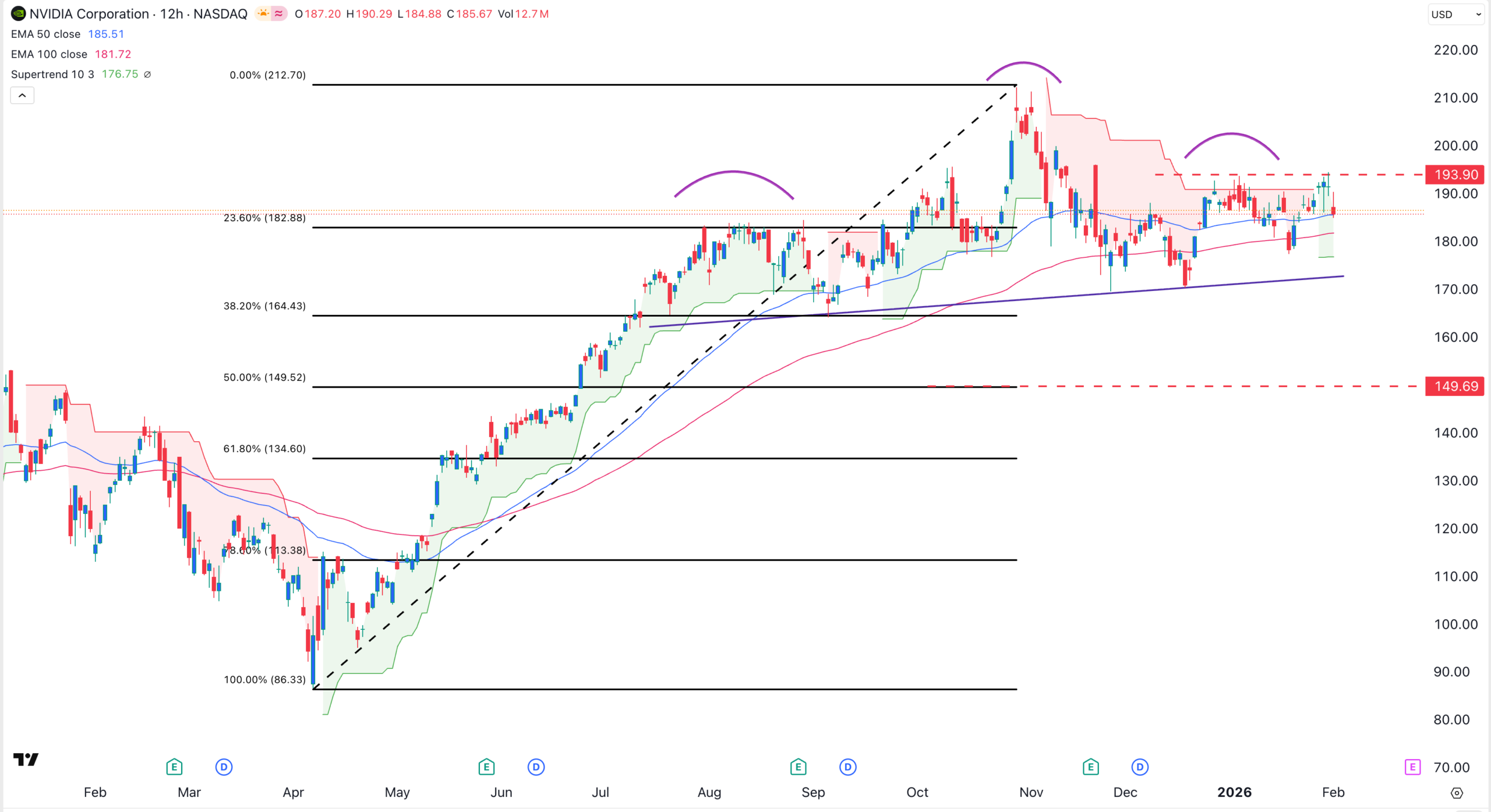
Key Insights NVIDIA stock started the week in the red. It crashed by over 2%. Meanwhile, the S&P 500, Dow Jones, and Nasdaq 100 moved close to their all-time highs
Share
Themarketperiodical2026/02/04 11:27
Ondo Finance Launches USDY Yieldcoin on Stellar, Bringing Tokenized U.S. Treasuries to Users

Ondo Finance Launches USDY Yieldcoin on Stellar, Bringing Tokenized U.S. Treasuries to Users

Ondo Finance, a U.S.-based digital asset firm specializing in bringing traditional financial products on-chain through tokenization, is expanding its yieldcoin USDY to the Stellar network. This lates update marks a step forward in merging tokenized real-world assets with a global payments infrastructure, unlocking new opportunities for users worldwide. The announcement was made at the Stellar Meridian event in Copacabana, Rio de Janeiro, on September 17. USDY Joins the Stellar Ecosystem Ondo Finance, a recognized leader in tokenized real-world assets, announced the deployment of United States Dollar Yield (USDY) on Stellar, the payments-focused blockchain known for speed and low transaction costs. USDY is the most widely available “yieldcoin,” offering investors access to onchain assets backed by U.S. Treasuries. This launch allows Stellar’s global user base to tap into permissionless, yield-bearing assets tied to one of the safest financial instruments in the world. It also aligns with Stellar’s mission of driving fast, affordable cross-border payments. Combining Yield with Payments Infrastructure “Stablecoins unlocked global access to the U.S. dollar. With USDY, we’re taking the next step by bringing U.S. Treasuries onchain in a form that combines stability, liquidity, and yield,” said Ian De Bode, Chief Strategy Officer at Ondo Finance. “Fast, affordable cross-border payments are at the center of what Stellar was designed to do. The global reach of the Stellar ecosystem combined with a yield-bearing asset like USDY levels up what is possible onchain, allowing wallets and businesses to offer yield opportunities to their users,” said Denelle Dixon, CEO of the Stellar Development Foundation. Ondo claims by pairing USDY with Stellar’s infrastructure, new possibilities open up in treasury management, collateralization, and everyday financial applications. Unlocking Institutional and Retail Use Cases USDY currently manages over $650 million in total value locked (TVL) across nine blockchains and offers a 5.3% APY. By launching on Stellar, Ondo Finance extends these benefits to global retail and institutional users. The firm explains balances on Stellar can now become productive, supporting use cases such as onchain savings, institutional treasury strategies, cost-efficient collateral for DeFi protocols, and remittance flows that carry yield rather than remaining static. A Milestone for Tokenized Treasuries With the integration of USDY, Stellar users gain more than just access to stable-value assets—they gain access to institutional-grade yield. For investors outside the U.S., the launch represents a new way to combine the safety of Treasuries with the accessibility of blockchain technology. As tokenization accelerates globally, Ondo Finance’s decision to deploy USDY on Stellar reinforces the narrative that blockchain is not just about speculation, but about reimagining the global financial system through secure, yield-bearing digital assets
Share
CryptoNews2025/09/18 00:46