Replacing a roof is one of the most important investments a homeowner can make, yet it is also one of the most misunderstood. Many people begin with a simple questionReplacing a roof is one of the most important investments a homeowner can make, yet it is also one of the most misunderstood. Many people begin with a simple question

How Much Does a New Roof Cost in 2026? A Homeowner’s Guide to Roofing Prices, Materials, and Contractors

5 min read

Replacing a roof is one of the most important investments a homeowner can make, yet it is also one of the most misunderstood. Many people begin with a simple question: how much does a new roof cost? The answer is rarely straightforward. Roofing prices vary widely based on materials, home size, roof design, and where you live.

This guide breaks down how much a new roof costs in 2026, explains what drives pricing up or down, and helps homeowners understand how to budget realistically while choosing the right professionals for the job.

How Much Does a New Roof Cost in 2026? A Homeowner’s Guide to Roofing Prices, Materials, and Contractors

Average Cost of a New Roof in 2026

In 2026, the cost of a new roof in the United States typically falls between $7,000 and $28,000, with most homeowners paying somewhere in the $9,500 to $15,000 range. These numbers reflect professional installation for standard residential homes using common materials.

Lower-end projects often involve smaller, single-story homes with asphalt shingles and minimal repairs. Higher-end projects usually include larger homes, premium materials, complex rooflines, or structural upgrades. This is why national averages can be misleading. Two homes of similar size can have vastly different roofing costs based on design, materials, and location.

Cost Breakdown by Roofing Material

Asphalt Shingle Roof Costs

Asphalt shingles remain the most popular roofing option due to their affordability and reliability. In 2026, homeowners can expect asphalt shingle roof replacements to cost approximately $4.50 to $8.50 per square foot, including labor.

These roofs typically last 20 to 30 years depending on quality and installation, making them a practical choice for many homeowners.

Metal Roofing Costs

Metal roofing has a higher upfront cost but offers excellent longevity and energy efficiency. Costs generally range from $9 to $18 per square foot, depending on the metal type and installation complexity.

Metal roofs can last 40 to 70 years and may reduce cooling costs, which helps offset the initial investment over time.

Tile, Slate, and Specialty Roof Costs

Premium roofing materials such as clay tile, concrete tile, or slate often cost $15 to $30+ per square foot. These materials require specialized installation and sometimes structural reinforcement, but they also offer unmatched durability and aesthetic appeal.

Key Factors That Affect the Cost of a New Roof

Roof Size, Pitch, and Complexity

Roofing is priced by surface area, not the square footage of the home. Steeper roofs, multiple slopes, dormers, and penetrations increase labor time and material waste, which raises costs.

Tear-Off vs Roof Overlay

Removing old roofing materials adds labor and disposal fees but is often required by building codes. While overlays may reduce upfront costs, they can shorten the lifespan of the new roof and limit warranty options.

Labor Costs and Local Market Rates

Labor makes up a significant portion of roofing costs. Rates vary by region based on demand, cost of living, and contractor availability. Experienced crews may charge more, but proper installation plays a major role in how long a roof lasts.

New Roof Cost by Home Type

Small Homes and Single-Story Properties

Smaller homes typically cost $6,500 to $10,000 for roof replacement using standard materials, assuming minimal repairs.

Medium to Large Homes

Larger homes or multi-story properties often fall between $10,000 and $18,000, depending on roof complexity and material choice.

Older Homes and Code Upgrades

Older homes may require decking repairs, ventilation upgrades, or structural reinforcement to meet current codes. These upgrades can add several thousand dollars to the project but improve safety and performance.

How Location Impacts Roof Replacement Costs

Where you live plays a major role in how much a new roof costs. Regional labor rates, climate considerations, permit fees, and material availability all influence pricing.

Homeowners often work with regionally experienced contractors like Cobex Construction Group because local companies understand area-specific building codes, weather patterns, and material requirements that can directly affect roof longevity and cost accuracy.

DIY vs Professional Roof Replacement

Why Roofing Is Rarely a DIY Project

Roof replacement involves safety risks, technical installation requirements, and warranty considerations. Improper installation can lead to leaks, structural damage, and voided manufacturer warranties.

What Professional Roofing Services Include

Professional roofing typically includes inspections, tear-off, underlayment installation, flashing, ventilation, cleanup, and warranty coverage. These steps ensure the roof performs as intended over its lifespan.

How to Budget for a New Roof

Getting Accurate Roofing Estimates

Homeowners should request detailed, written estimates that outline materials, labor, warranties, timelines, and potential add-ons. Comparing itemized quotes helps prevent surprises later.

Financing, Insurance, and Long-Term Value

Some roof replacements may be partially covered by insurance due to storm damage. Financing options can also help spread costs over time. A properly installed roof often adds resale value and reduces future maintenance expenses.

Choosing the Right Roofing Contractor

Selecting the right contractor matters just as much as choosing the right material. Homeowners should prioritize licensing, insurance, experience, and clear communication over the lowest bid.

Many homeowners seek out roofing specialists like Symplify Roofing when they want knowledgeable guidance on material selection, installation quality, and long-term roof performance rather than just a quick replacement.

Final Thoughts

So, how much does a new roof cost in 2026? The true answer depends on materials, roof design, location, and the quality of installation. While national averages provide a starting point, informed decisions come from understanding cost drivers and working with qualified professionals.

By planning carefully, comparing detailed estimates, and focusing on long-term value, homeowners can approach roof replacement with confidence and clarity rather than uncertainty.

Comments
Disclaimer: The articles reposted on this site are sourced from public platforms and are provided for informational purposes only. They do not necessarily reflect the views of MEXC. All rights remain with the original authors. If you believe any content infringes on third-party rights, please contact service@support.mexc.com for removal. MEXC makes no guarantees regarding the accuracy, completeness, or timeliness of the content and is not responsible for any actions taken based on the information provided. The content does not constitute financial, legal, or other professional advice, nor should it be considered a recommendation or endorsement by MEXC.

You May Also Like

Best Crypto to Buy as Saylor & Crypto Execs Meet in US Treasury Council

Best Crypto to Buy as Saylor & Crypto Execs Meet in US Treasury Council

The post Best Crypto to Buy as Saylor & Crypto Execs Meet in US Treasury Council appeared on BitcoinEthereumNews.com. Michael Saylor and a group of crypto executives met in Washington, D.C. yesterday to push for the Strategic Bitcoin Reserve Bill (the BITCOIN Act), which would see the U.S. acquire up to 1M $BTC over five years. With Bitcoin being positioned yet again as a cornerstone of national monetary policy, many investors are turning their eyes to projects that lean into this narrative – altcoins, meme coins, and presales that could ride on the same wave. Read on for three of the best crypto projects that seem especially well‐suited to benefit from this macro shift:  Bitcoin Hyper, Best Wallet Token, and Remittix. These projects stand out for having a strong use case and high adoption potential, especially given the push for a U.S. Bitcoin reserve.   Why the Bitcoin Reserve Bill Matters for Crypto Markets The strategic Bitcoin Reserve Bill could mark a turning point for the U.S. approach to digital assets. The proposal would see America build a long-term Bitcoin reserve by acquiring up to one million $BTC over five years. To make this happen, lawmakers are exploring creative funding methods such as revaluing old gold certificates. The plan also leans on confiscated Bitcoin already held by the government, worth an estimated $15–20B. This isn’t just a headline for policy wonks. It signals that Bitcoin is moving from the margins into the core of financial strategy. Industry figures like Michael Saylor, Senator Cynthia Lummis, and Marathon Digital’s Fred Thiel are all backing the bill. They see Bitcoin not just as an investment, but as a hedge against systemic risks. For the wider crypto market, this opens the door for projects tied to Bitcoin and the infrastructure that supports it. 1. Bitcoin Hyper ($HYPER) – Turning Bitcoin Into More Than Just Digital Gold The U.S. may soon treat Bitcoin as…
Share
BitcoinEthereumNews2025/09/18 00:27
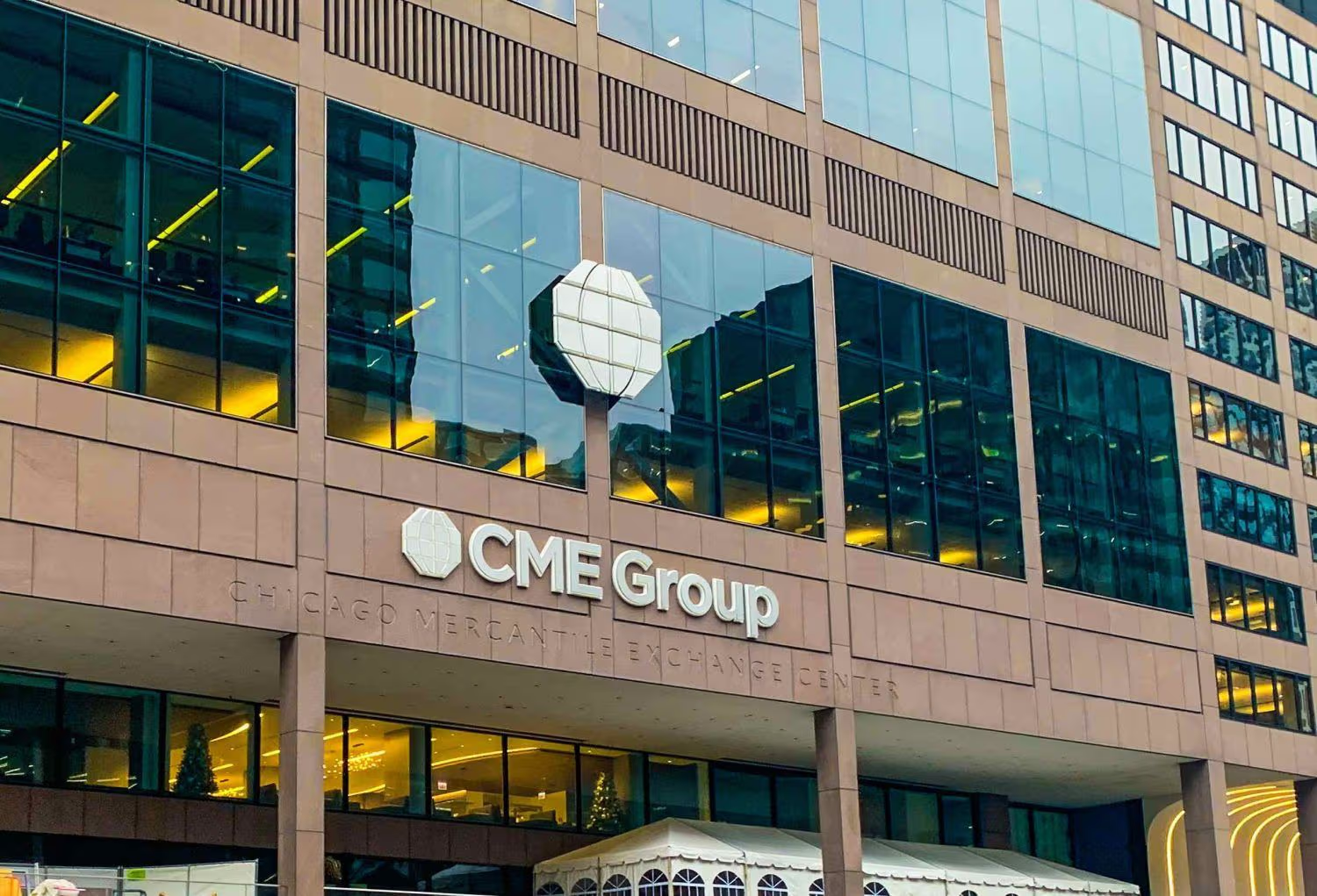
Breaking: CME Group Unveils Solana and XRP Options

Breaking: CME Group Unveils Solana and XRP Options

CME Group launches Solana and XRP options, expanding crypto offerings. SEC delays Solana and XRP ETF approvals, market awaits clarity. Strong institutional demand drives CME’s launch of crypto options contracts. In a bold move to broaden its cryptocurrency offerings, CME Group has officially launched options on Solana (SOL) and XRP futures. Available since October 13, 2025, these options will allow traders to hedge and manage exposure to two of the most widely traded digital assets in the market. The new contracts come in both full-size and micro-size formats, with expiration options available daily, monthly, and quarterly, providing flexibility for a diverse range of market participants. This expansion aligns with the rising demand for innovative products in the crypto space. Giovanni Vicioso, CME Group’s Global Head of Cryptocurrency Products, noted that the new options offer increased flexibility for traders, from institutions to active individual investors. The growing liquidity in Solana and XRP futures has made the introduction of these options a timely move to meet the needs of an expanding market. Also Read: Vitalik Buterin Reveals Ethereum’s Bold Plan to Stay Quantum-Secure and Simple! Rapid Growth in Solana and XRP Futures Trading CME Group’s decision to roll out options on Solana and XRP futures follows the substantial growth in these futures products. Since the launch of Solana futures in March 2025, more than 540,000 contracts, totaling $22.3 billion in notional value, have been traded. In August 2025, Solana futures set new records, with an average daily volume (ADV) of 9,000 contracts valued at $437.4 million. The average daily open interest (ADOI) hit 12,500 contracts, worth $895 million. Similarly, XRP futures, which launched in May 2025, have seen significant adoption, with over 370,000 contracts traded, totaling $16.2 billion. XRP futures also set records in August 2025, with an ADV of 6,600 contracts valued at $385 million and a record ADOI of 9,300 contracts, worth $942 million. Institutional Demand for Advanced Hedging Tools CME Group’s expansion into options is a direct response to growing institutional interest in sophisticated cryptocurrency products. Roman Makarov from Cumberland Options Trading at DRW highlighted the market demand for more varied crypto products, enabling more advanced risk management strategies. Joshua Lim from FalconX also noted that the new options products meet the increasing need for institutional hedging tools for assets like Solana and XRP, further cementing their role in the digital asset space. The launch of options on Solana and XRP futures marks another step toward the maturation of the cryptocurrency market, providing a broader range of tools for managing digital asset exposure. SEC’s Delay on Solana and XRP ETF Approvals While CME Group expands its offerings, the broader market is also watching the progress of Solana and XRP exchange-traded funds (ETFs). The U.S. Securities and Exchange Commission (SEC) has delayed its decisions on multiple crypto-related ETF filings, including those for Solana and XRP. Despite the delay, analysts anticipate approval may be on the horizon. This week, REX Shares and Osprey Funds are expected to launch an XRP ETF that will hold XRP directly and allocate at least 40% of its assets to other XRP-related ETFs. Despite the delays, some analysts believe that approval could come soon, fueling further interest in these assets. The delay by the SEC has left many crypto investors awaiting clarity, but approval of these ETFs could fuel further momentum in the Solana and XRP futures markets. Also Read: Tether CEO Breaks Silence on $117,000 Bitcoin Price – Market Reacts! The post Breaking: CME Group Unveils Solana and XRP Options appeared first on 36Crypto.
Share
Coinstats2025/09/18 02:35
Optimizely Named a Leader in the 2026 Gartner® Magic Quadrant™ for Personalization Engines

Optimizely Named a Leader in the 2026 Gartner® Magic Quadrant™ for Personalization Engines

Company recognized as a Leader for the second consecutive year NEW YORK, Feb. 5, 2026 /PRNewswire/ — Optimizely, the leading digital experience platform (DXP) provider
Share
AI Journal2026/02/06 00:47