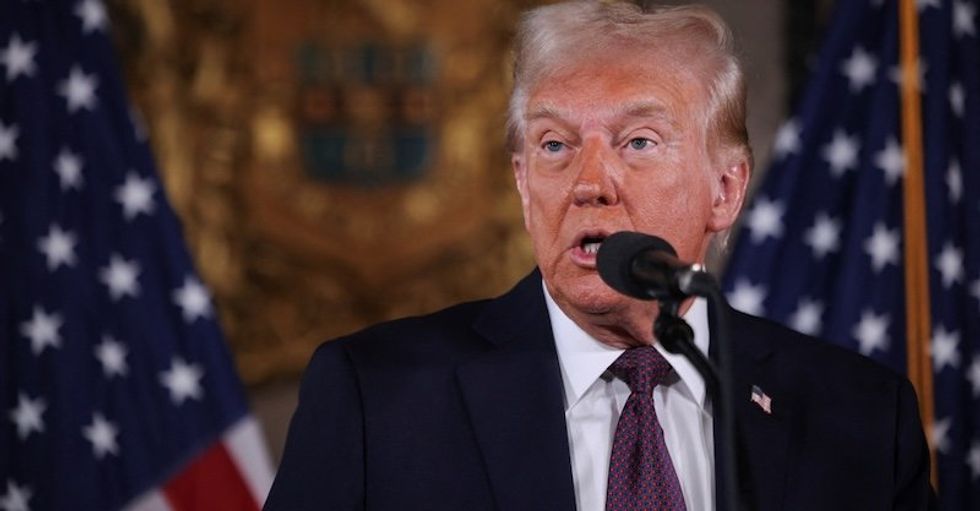
TRUMP ENTERS FOREX?! WLFI’s World Swap Could Shake Global Currency Markets to the Core
Trump-Linked WLFI’s “World Swap” Push Signals New Ambition in Global Payments
A company linked to the Trump family is preparing a bold entry into the global foreign exchange market, unveiling plans for a proposed platform known as World Swap. Backed by Trump-affiliated WLFI, the initiative aims to merge traditional currency exchange services with blockchain-based digital infrastructure in an effort to modernize how money moves across borders.
If successful, World Swap could introduce faster processing times, lower fees, and expanded financial access for individuals and businesses worldwide. At the center of the strategy is WLFI’s dollar-pegged stablecoin, USD1, which is expected to play a core role in the platform’s transaction framework.
The announcement places WLFI at the intersection of politics, finance, and emerging digital asset infrastructure — a convergence that is already drawing attention from industry observers and regulators alike.
 |
| Source: BSCNews Xofficial |
What Is World Swap?
World Swap is described as a proposed cross-border payments and currency exchange platform designed to reduce friction in international transfers. The system aims to allow users to exchange currencies and send funds internationally with fewer delays and potentially lower service charges than traditional banking channels.
According to preliminary descriptions, World Swap would integrate WLFI’s USD1 stablecoin as part of its settlement layer. Stablecoins, which are digital assets pegged to fiat currencies such as the U.S. dollar, have increasingly been positioned as tools for rapid value transfer across digital networks.
The concept behind World Swap is straightforward. Rather than relying exclusively on conventional correspondent banking systems — which often involve multiple intermediaries and settlement delays — the platform would use digital rails to facilitate faster and more transparent transactions.
Users are expected to connect familiar payment methods, including bank accounts and debit cards, to the platform. The intention is to preserve accessibility and ease of use, ensuring that the service does not require advanced technical knowledge.
If executed effectively, World Swap could reduce the settlement time for international transfers from several business days to near real-time processing.
Why WLFI Is Entering the Foreign Exchange Market
The global foreign exchange market is the largest financial market in the world, with daily trading volumes exceeding $7 trillion. Despite this scale, everyday cross-border payments — such as remittances and international business transactions — remain costly and, in many cases, slow.
Traditional providers often charge service fees that can significantly impact individuals sending money abroad. Migrant workers transferring earnings to family members, freelancers receiving payments from overseas clients, and companies managing international payrolls frequently encounter both transaction costs and time delays.
WLFI’s move into the forex space appears to reflect a strategic calculation: blockchain infrastructure may offer a solution to long-standing inefficiencies in cross-border finance.
Key pain points in today’s system include:
High transaction fees
Multi-day settlement windows
Limited transparency in intermediary charges
Restricted access in underbanked regions
By leveraging stablecoin technology and digital settlement networks, WLFI is positioning World Swap as an alternative to traditional cross-border transfer models.
However, the project’s political affiliations have prompted scrutiny. Observers note that any Trump-linked financial initiative operating at global scale would likely face heightened regulatory examination and public attention.
The Role of USD1 Stablecoin
Central to the World Swap proposal is USD1, WLFI’s dollar-pegged stablecoin. Stablecoins are designed to maintain a fixed value relative to a fiat currency, typically backed by reserves or collateral mechanisms.
In theory, using a stablecoin for cross-border settlement offers several advantages:
Instant digital transfer capability
Reduced reliance on intermediary banks
Lower operational overhead
Improved transparency of transaction flows
If USD1 becomes embedded in World Swap’s transaction process, it could expand the utility of digital dollars in everyday financial activity.
Stablecoins have already gained traction in decentralized finance and crypto trading environments. However, integrating them into mainstream cross-border payment services would represent a significant expansion of their practical use case.
Industry analysts note that stablecoin-based settlement could normalize digital currency usage beyond speculative markets and into routine commerce.
Potential Impact on Cross-Border Payments
Should World Swap launch successfully and gain adoption, it could introduce meaningful shifts across several sectors.
Cheaper International Transfers
Lower service charges could benefit migrant workers and small businesses that depend on cross-border payments. Even marginal reductions in fees can translate into substantial savings over time.
Faster Settlement
Quicker processing could improve cash flow management for companies that rely on timely payments from overseas clients or partners.
Expanded Access
Regions with limited traditional banking infrastructure might find digital settlement layers easier to access, particularly where smartphone penetration exceeds formal bank account availability.
Competitive Pressure on Banks
Traditional financial institutions may face increased pressure to modernize legacy systems and reduce transfer costs.
Greater Stablecoin Adoption
If USD1 becomes a common settlement mechanism, it could accelerate broader adoption of digital dollars in regulated financial environments.
Industry observers suggest that platforms like World Swap represent a broader trend toward digital financial infrastructure operating continuously rather than within limited banking hours.
Regulatory and Governance Challenges
Despite its ambitions, World Swap would face considerable regulatory hurdles.
Currency exchange and cross-border financial services are subject to strict compliance standards across jurisdictions. Anti-money laundering regulations, know-your-customer requirements, and capital controls vary by country.
For WLFI, navigating these frameworks will be critical. Regulatory approval processes may determine not only launch timelines but also operational scope.
Political associations may also influence oversight intensity. Trump-linked ventures operating in financial markets could attract bipartisan scrutiny, particularly if stablecoins are involved.
In recent years, regulators globally have increased focus on stablecoin reserve transparency and systemic risk management. Any large-scale settlement platform incorporating a proprietary stablecoin would likely be subject to detailed examination.
User trust will also play a decisive role. Individuals and institutions must feel confident in both the technical security and governance structure of the platform before transferring significant sums.
Competitive Landscape
World Swap would not enter an empty market.
Traditional banks are modernizing international transfer systems through upgraded settlement technologies. Fintech companies have built reputations around lower-cost remittance services. Meanwhile, blockchain-based payment platforms continue expanding globally.
Competitors include:
International remittance apps
Digital wallet providers
Blockchain settlement networks
Stablecoin-based payment processors
Success for World Swap would depend not only on technological capability but also on pricing competitiveness, regulatory compliance, and user experience design.
Broader Implications for Financial Infrastructure
If platforms like World Swap achieve scale, they could influence the direction of global payments infrastructure.
Continuous, around-the-clock settlement systems could gradually replace slower legacy networks. Automated compliance monitoring could reduce administrative overhead. Transparent transaction tracking might improve auditing standards.
Such developments could also push traditional institutions to accelerate innovation efforts.
At the same time, policymakers may intensify discussions around stablecoin regulation, reserve requirements, and digital asset oversight.
The intersection of political influence and financial infrastructure modernization adds another layer of complexity. Observers note that governance clarity will be essential for long-term viability.
A Glimpse Into the Future
The proposal for World Swap reflects a broader transformation in financial services. Digital infrastructure is steadily reshaping how money moves across borders.
In a potential future scenario, sending funds internationally could resemble sending a digital message — nearly instant, trackable, and significantly less expensive than current systems.
For now, World Swap remains a proposal. Execution, compliance alignment, and user adoption will determine whether it evolves into a transformative financial tool or remains an ambitious concept.
Conclusion
Trump-linked WLFI is positioning World Swap as a next-generation foreign exchange and cross-border payments platform. By integrating its USD1 stablecoin with familiar payment tools, the company aims to deliver faster settlements and reduced transaction costs.
If the initiative successfully navigates regulatory frameworks and builds user confidence, it could influence how global money transfers are conducted. At the same time, heightened scrutiny and competition present substantial challenges.
World Swap represents both an opportunity and a test case — a potential bridge between traditional currency exchange systems and digitally driven financial infrastructure.
hokanews.com – Not Just Crypto News. It’s Crypto Culture.
Writer @Erlin
Erlin is an experienced crypto writer who loves to explore the intersection of blockchain technology and financial markets. She regularly provides insights into the latest trends and innovations in the digital currency space.
Check out other news and articles on Google News
Disclaimer:
The articles published on hokanews are intended to provide up-to-date information on various topics, including cryptocurrency and technology news. The content on our site is not intended as an invitation to buy, sell, or invest in any assets. We encourage readers to conduct their own research and evaluation before making any investment or financial decisions.
hokanews is not responsible for any losses or damages that may arise from the use of information provided on this site. Investment decisions should be based on thorough research and advice from qualified financial advisors. Information on HokaNews may change without notice, and we do not guarantee the accuracy or completeness of the content published.
You May Also Like

Why the USDT stablecoin could challenge Bitcoin and Ethereum for crypto leadership
![US CPI Report Today [Live] Updates](https://image.coinpedia.org/wp-content/uploads/2025/05/12203502/How-Will-Bitcoin-Price-React-to-CPI-News_-Key-Details-for-Crypto-Investors-1024x536.webp)
US CPI Report Today [Live] Updates