

Crypto Whales Signal Possible Market Bottom: Here is Why
Bitcoin’s structure is quietly improving beneath the surface. On-chain data shows that whales are no longer aggressively distributing, while U.S. spot demand is beginning to recover, a combination that historically appears during bottoming phases rather than market tops.
Whale Distribution Pressure Eases
The Exchange Whale Ratio has dropped sharply from recent highs. This metric measures the share of large transactions flowing into exchanges.
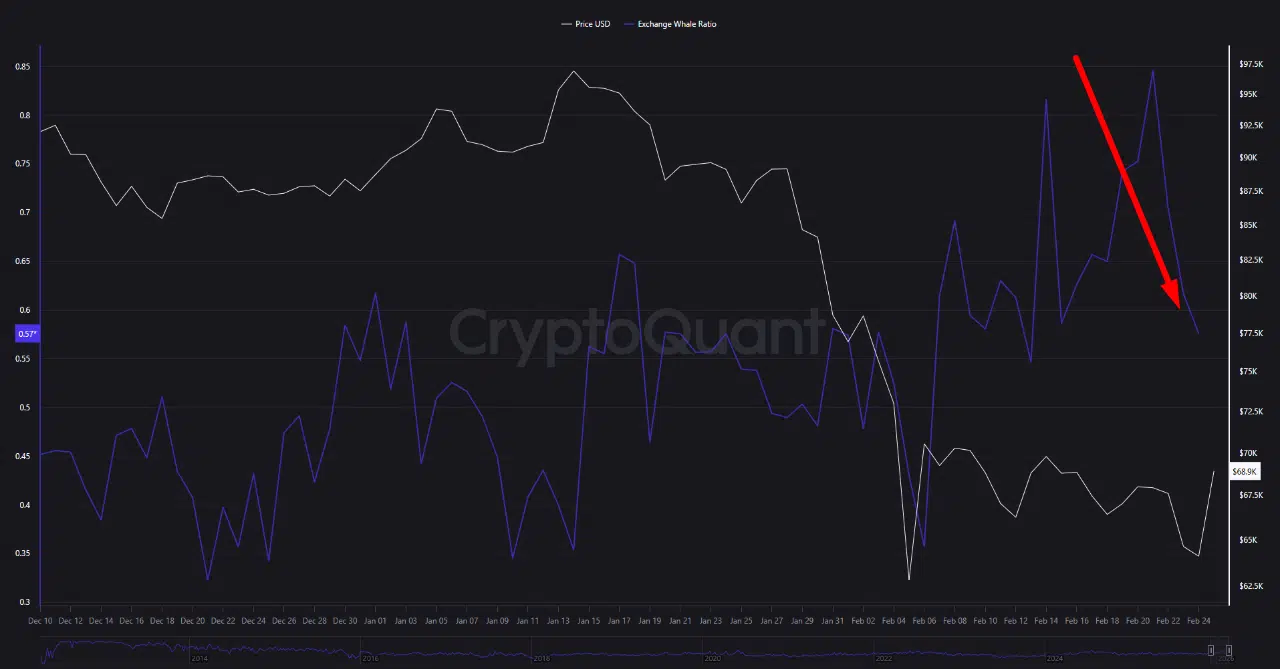 When the ratio rises above 0.7–0.8, it typically signals heavy whale distribution. That kind of activity often precedes strong downside moves.
Now, the ratio has declined significantly, indicating that large holders are not sending substantial volumes to exchanges. In simple terms: whales have stopped aggressively selling.
That alone reduces structural downside pressure.
Coinbase Premium Turns Positive
At the same time, the Coinbase Premium Index has flipped back into positive territory, currently around 0.015.
A positive premium means Bitcoin is trading slightly higher on Coinbase compared to offshore exchanges, a signal that U.S. spot buyers are stepping in.
Historically, sustained positive Coinbase premiums reflect institutional or large U.S.-based demand entering the market.
Why This Setup Matters
This combination is structurally constructive:
- Reduced whale selling pressure
- Improving U.S. spot demand
- Price attempting to stabilize
When whales stop distributing and U.S. demand strengthens, the market often transitions from capitulation into early recovery.
What Could Invalidate It?
The key risk would be a renewed spike in the Whale Ratio back above the 0.7–0.8 range. That would suggest large holders are returning to distribution mode.
Unless that happens, the current structure favors stabilization and gradual upside attempts rather than renewed breakdown.
For now, the data leans constructive, and bottoming patterns often begin exactly like this.
The post Crypto Whales Signal Possible Market Bottom: Here is Why appeared first on ETHNews.
You May Also Like

Health Insurers To Cover Covid Vaccines Despite RFK, Jr. Moves

Nvidia’s Jensen Huang believes markets are wrong on software selloff
