

Oil Prices Rise Above $80 as US-Israel Strike on Iran Threatens Strait of Hormuz Shipping
TLDR
- Brent crude rose above $80/barrel and WTI hit $73 after the US and Israel struck Iran, killing Supreme Leader Khamenei.
- Iran threatened to close the Strait of Hormuz, halting tanker traffic through a waterway that carries 20% of global oil.
- Saudi Aramco halted its Ras Tanura refinery and Qatar shut its major LNG facility after drone and missile strikes.
- JPMorgan warned Persian Gulf producers could be forced to cut output within 25 days if the strait stays closed.
- OCBC Bank said Brent could top $100/barrel in an extreme scenario; the US said it would announce plans to mitigate energy costs.
Oil prices jumped sharply this week after the United States and Israel launched a joint military strike on Iran over the weekend, killing Supreme Leader Ayatollah Ali Khamenei.
Brent crude climbed above $80 a barrel on Tuesday, building on a 7% rise the day before. West Texas Intermediate traded near $73.
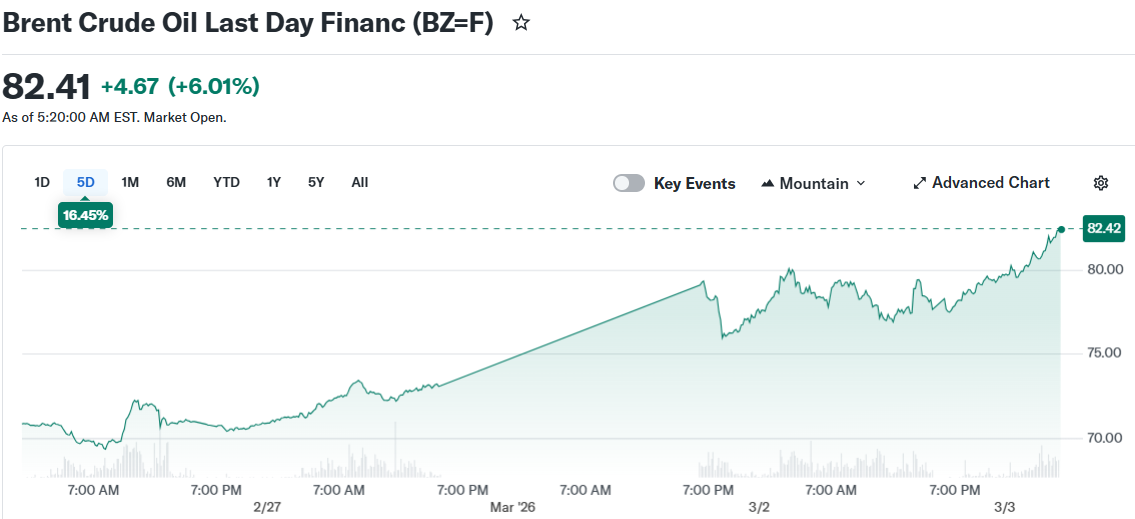 Brent Crude Oil Last Day Financ (BZ=F)
Iran responded by threatening to close the Strait of Hormuz, a narrow waterway off its coast that carries roughly one-fifth of the world’s seaborne oil and a similar share of liquefied natural gas.
Iranian officials said forces would attack any ship attempting to pass through the strait. Tanker traffic through the chokepoint has largely stopped.
The conflict spread quickly after the initial strikes. Iran targeted the US embassy in Riyadh, Saudi Arabia, with two drones, causing minor damage and a small fire.
Saudi Aramco halted operations at its Ras Tanura refinery following a drone strike nearby. Qatar shut production at the world’s largest LNG export facility after it was targeted in an Iranian attack.
Israel continued airstrikes in Lebanon against Hezbollah. The Leviathan natural gas project off Israel’s coast also suspended production.
What Analysts Are Saying
JPMorgan analysts warned the Strait of Hormuz is effectively inactive and that Gulf producers could be forced to shut wells within around 25 days if local storage fills up.
The cost of shipping crude from the Middle East to China hit a record high on Monday. Daily earnings on the benchmark route surged to $424,000, according to Baltic Exchange data.
OCBC Bank said Brent could top $100 a barrel if the Hormuz blockade persists. The bank added that OPEC’s spare capacity could act as a buffer in a base-case scenario without a prolonged closure.
ING analysts said the bigger risk was Iran targeting more energy infrastructure across the region, which could cause longer supply outages than a partial strait disruption.
CMC Markets’ global head of markets said elevated risk premiums in energy markets are likely to continue until there is clear evidence of de-escalation or alternative supply routes.
US Response and Diplomacy
Secretary of State Marco Rubio said the military campaign would intensify, with a focus on destroying Iran’s navy, drone fleet, and ballistic missile program.
Rubio also said Washington would announce plans to help reduce higher energy costs for consumers, with steps to begin on Tuesday.
The Trump administration said it had no immediate plan to tap the Strategic Petroleum Reserve. Any SPR release would likely be coordinated with International Energy Agency member countries.
The UAE and Qatar are privately lobbying allies to push President Trump toward a short military campaign against Iran rather than a prolonged conflict.
China, the world’s largest oil importer, called on all parties to ensure safe navigation through the Strait of Hormuz and urged an immediate halt to military operations.
The post Oil Prices Rise Above $80 as US-Israel Strike on Iran Threatens Strait of Hormuz Shipping appeared first on CoinCentral.
You May Also Like

WTI Crude Oil Skyrockets: Price Jumps 6% to Surpass $75 Amid Alarming US-Iran War Fears

Uniswap Wins Full Dismissal As SDNY Rejects Claims Over Scam Tokens Lawsuit
