The credit ratings agency Moody’s warns US banks are facing greater uncertainty due to an increased exposure to private credit debt. In a new report, Moody’s says US banks have lent out about $300 billion to private credit providers, as lending to all non-depository financial institutions (NDFIs) has surged to $1.2 trillion. The data is […] The post US Banks Now Exposed to Nearly $300,000,000,000 in Private Credit Debt, Signaling ‘Increased Levels of Asset Risk’: Moody’s appeared first on The Daily Hodl.The credit ratings agency Moody’s warns US banks are facing greater uncertainty due to an increased exposure to private credit debt. In a new report, Moody’s says US banks have lent out about $300 billion to private credit providers, as lending to all non-depository financial institutions (NDFIs) has surged to $1.2 trillion. The data is […] The post US Banks Now Exposed to Nearly $300,000,000,000 in Private Credit Debt, Signaling ‘Increased Levels of Asset Risk’: Moody’s appeared first on The Daily Hodl.

US Banks Now Exposed to Nearly $300,000,000,000 in Private Credit Debt, Signaling ‘Increased Levels of Asset Risk’: Moody’s
2025/10/25 22:30
Okuma süresi: 3 dk

The credit ratings agency Moody’s warns US banks are facing greater uncertainty due to an increased exposure to private credit debt.

In a new report, Moody’s says US banks have lent out about $300 billion to private credit providers, as lending to all non-depository financial institutions (NDFIs) has surged to $1.2 trillion.

The data is based on the banks quarterly reporting of their NDFI exposure to the Federal Reserve’s Board of Governors.

Moody’s raises the issue amid increasing unease over hidden credit risks in an environment of high interest rates and economic uncertainty. Recent bankruptcies, including auto parts maker First Brands and subprime lender Tricolor, have underscored lax lending standards and opaque private credit exposures.

Says Moody’s,

“As banks compete with non-bank lenders and simultaneously finance them, asset quality challenges may surface. The recent bankruptcy of Tricolor shows that bank lending to NDFIs can result in significant losses, and underwriting and collateral controls can fail even when loans are secured.

Banks’ lending to private credit providers rather than directly to middle-market borrowers offers a diversification benefit from exposure to the providers’ wide spectrum of portfolio companies. But this benefit is reduced by the incremental leverage that private credit providers often incur at the portfolio company level, and the inherently lower transparency of indirect lending. These evolving dynamics underscore the need for vigilant credit risk management as private credit continues to scale up.”

Moody’s says that NDFI loans have become increasing popular at US banks, elevating the financial institutions’ risk for financial loss.

“Loans to non-depository financial institutions are driving loan growth at US banks – outpacing all other bank lending activities since 2016 – and include nearly $300 billion in loans outstanding to private credit participants. Prolonged rapid loan growth, however, often signals increased levels of asset risk.”

Follow us on X, Facebook and Telegram
Don't Miss a Beat – Subscribe to get email alerts delivered directly to your inbox
Check Price Action
Surf The Daily Hodl Mix

 
Disclaimer: Opinions expressed at The Daily Hodl are not investment advice. Investors should do their due diligence before making any high-risk investments in Bitcoin, cryptocurrency or digital assets. Please be advised that your transfers and trades are at your own risk, and any losses you may incur are your responsibility. The Daily Hodl does not recommend the buying or selling of any cryptocurrencies or digital assets, nor is The Daily Hodl an investment advisor. Please note that The Daily Hodl participates in affiliate marketing.

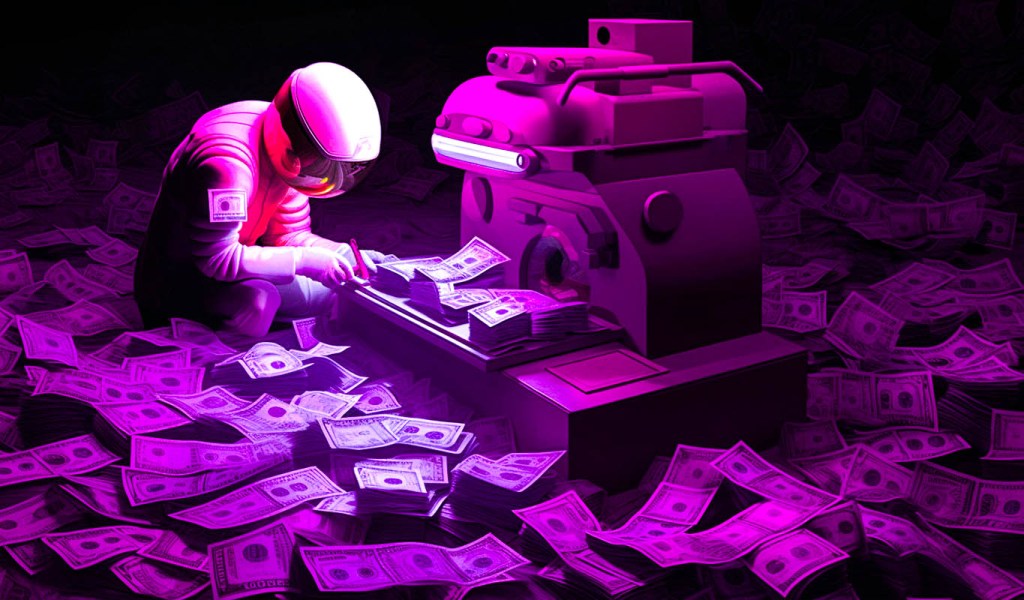
Generated Image: Midjourney

The post US Banks Now Exposed to Nearly $300,000,000,000 in Private Credit Debt, Signaling ‘Increased Levels of Asset Risk’: Moody’s appeared first on The Daily Hodl.

Piyasa Fırsatı
Nowchain Logosu
Nowchain Fiyatı(NOW)
$0.0012761
$0.0012761$0.0012761
+24.72%
USD
Nowchain (NOW) Canlı Fiyat Grafiği
Sorumluluk Reddi: Bu sitede yeniden yayınlanan makaleler, halka açık platformlardan alınmıştır ve yalnızca bilgilendirme amaçlıdır. MEXC'nin görüşlerini yansıtmayabilir. Tüm hakları telif sahiplerine aittir. Herhangi bir içeriğin üçüncü taraf haklarını ihlal ettiğini düşünüyorsanız, kaldırılması için lütfen service@support.mexc.com ile iletişime geçin. MEXC, içeriğin doğruluğu, eksiksizliği veya güncelliği konusunda hiçbir garanti vermez ve sağlanan bilgilere dayalı olarak alınan herhangi bir eylemden sorumlu değildir. İçerik, finansal, yasal veya diğer profesyonel tavsiye niteliğinde değildir ve MEXC tarafından bir tavsiye veya onay olarak değerlendirilmemelidir.

Ayrıca Şunları da Beğenebilirsiniz

Cashing In On University Patents Means Giving Up On Our Innovation Future

Cashing In On University Patents Means Giving Up On Our Innovation Future

The post Cashing In On University Patents Means Giving Up On Our Innovation Future appeared on BitcoinEthereumNews.com. “It’s a raid on American innovation that would deliver pennies to the Treasury while kneecapping the very engine of our economic and medical progress,” writes Pipes. Getty Images Washington is addicted to taxing success. Now, Commerce Secretary Howard Lutnick is floating a plan to skim half the patent earnings from inventions developed at universities with federal funding. It’s being sold as a way to shore up programs like Social Security. In reality, it’s a raid on American innovation that would deliver pennies to the Treasury while kneecapping the very engine of our economic and medical progress. Yes, taxpayer dollars support early-stage research. But the real payoff comes later—in the jobs created, cures discovered, and industries launched when universities and private industry turn those discoveries into real products. By comparison, the sums at stake in patent licensing are trivial. Universities collectively earn only about $3.6 billion annually in patent income—less than the federal government spends on Social Security in a single day. Even confiscating half would barely register against a $6 trillion federal budget. And yet the damage from such a policy would be anything but trivial. The true return on taxpayer investment isn’t in licensing checks sent to Washington, but in the downstream economic activity that federally supported research unleashes. Thanks to the bipartisan Bayh-Dole Act of 1980, universities and private industry have powerful incentives to translate early-stage discoveries into real-world products. Before Bayh-Dole, the government hoarded patents from federally funded research, and fewer than 5% were ever licensed. Once universities could own and license their own inventions, innovation exploded. The result has been one of the best returns on investment in government history. Since 1996, university research has added nearly $2 trillion to U.S. industrial output, supported 6.5 million jobs, and launched more than 19,000 startups. Those companies pay…
Paylaş
BitcoinEthereumNews2025/09/18 03:26
VIRTUAL Bearish Analysis Feb 10

VIRTUAL Bearish Analysis Feb 10

The post VIRTUAL Bearish Analysis Feb 10 appeared on BitcoinEthereumNews.com. VIRTUAL is approaching a critical support test at the 0.55$ level, with RSI at 33
Paylaş
BitcoinEthereumNews2026/02/10 15:15
XRPL Developer Says 100% Taking Profits on XRP at $10, $27

XRPL Developer Says 100% Taking Profits on XRP at $10, $27

An XRPL developer has stirred discussion around profit-taking levels well above today’s price, prompting mixed reactions from XRP holders who favor a never-sell
Paylaş
Coinstats2026/02/10 15:11