BitcoinWorld Revolutionary Move: Pyth Network Allocates 33% of Treasury for Monthly PYTH Buybacks In a bold move that’s shaking up the DeFi space, Pyth NetworkBitcoinWorld Revolutionary Move: Pyth Network Allocates 33% of Treasury for Monthly PYTH Buybacks In a bold move that’s shaking up the DeFi space, Pyth Network

Revolutionary Move: Pyth Network Allocates 33% of Treasury for Monthly PYTH Buybacks

2025/12/12 23:10
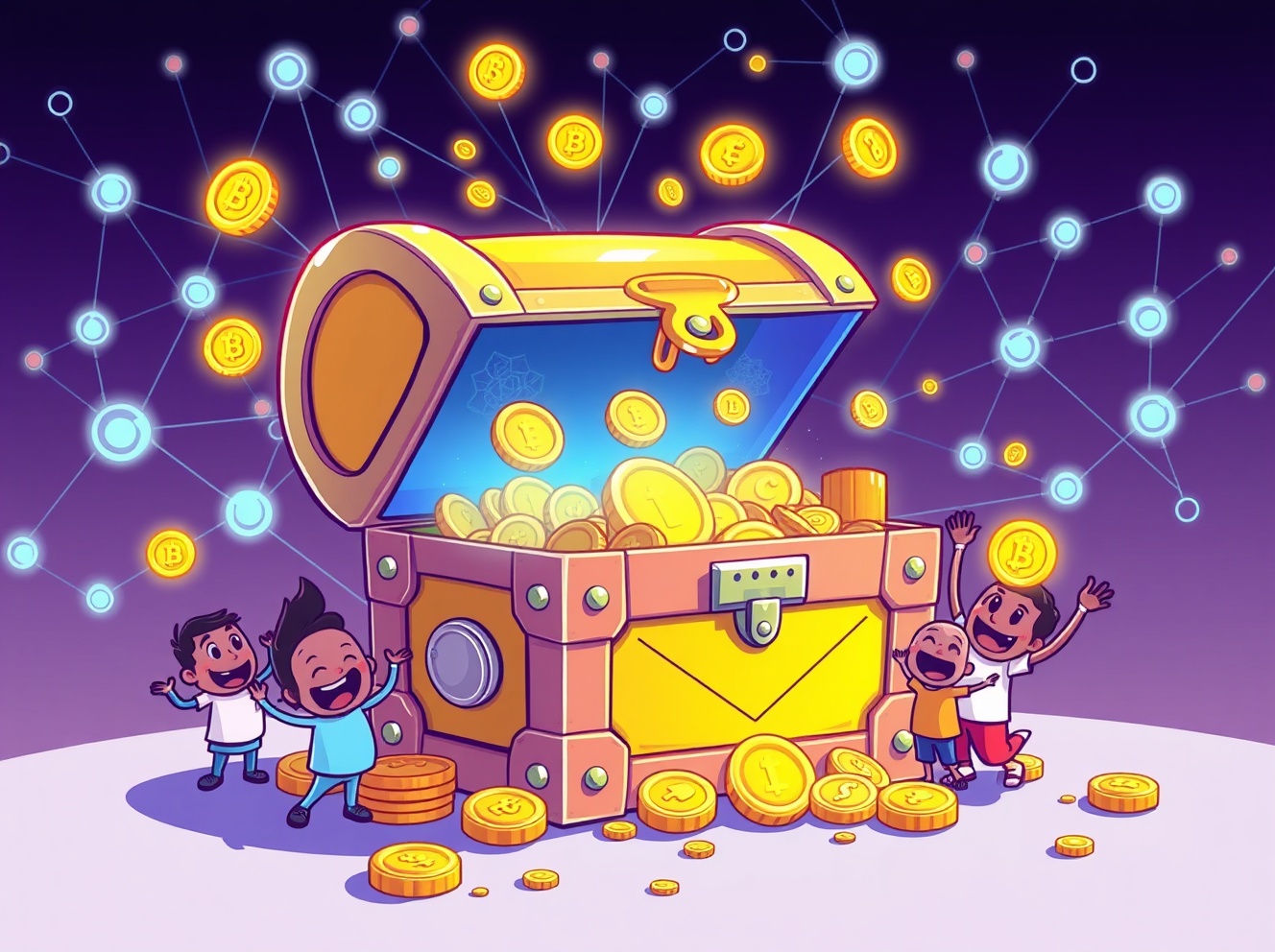
Pyth Network's PYTH buybacks program illustrated as a community treasure chest boosting token value.

BitcoinWorld

Revolutionary Move: Pyth Network Allocates 33% of Treasury for Monthly PYTH Buybacks

In a bold move that’s shaking up the DeFi space, Pyth Network has announced a groundbreaking PYTH buybacks program that demonstrates serious commitment to its token holders. The network plans to deploy a significant portion of its treasury directly back into supporting the PYTH token’s market value, creating immediate excitement among cryptocurrency investors and community members alike.

What Exactly Are the PYTH Buybacks?

Pyth Network’s newly launched PYTH Reserve program represents a strategic shift in treasury management. The decentralized autonomous organization (DAO) will allocate 33% of its treasury funds each month to purchase PYTH tokens directly from the open market. This systematic approach to PYTH buybacks is funded entirely by network revenue, ensuring sustainable implementation without depleting core reserves.

According to reports from The Block, the initial purchases are expected to range between $100,000 and $200,000. With the DAO treasury currently holding approximately $500,000, this program represents a substantial commitment to token value support. The monthly nature of these PYTH buybacks creates predictable market support that investors can anticipate.

Why This Matters for PYTH Token Holders

The implementation of regular PYTH buybacks delivers several immediate benefits to the ecosystem. First, it reduces circulating supply as purchased tokens are effectively removed from market availability. Second, it demonstrates the DAO’s confidence in the network’s long-term value proposition. Third, it creates a built-in support mechanism that can help stabilize token prices during market volatility.

Consider these key advantages:

  • Supply Reduction: Each purchase decreases available tokens, potentially increasing scarcity
  • Revenue Reinvestment: Network earnings directly benefit token holders
  • Community Confidence: Shows commitment from the DAO to ecosystem health
  • Market Stability: Provides consistent buying pressure in the market

How Will PYTH Buybacks Impact the Broader Market?

This strategic move by Pyth Network could set a precedent for other blockchain projects considering similar treasury management approaches. The program’s structure—using network revenue rather than initial treasury funds—ensures sustainability while aligning incentives between network performance and token value. As these PYTH buybacks continue monthly, they may influence how other DAOs approach their own treasury management strategies.

The transparency of the program is particularly noteworthy. By announcing specific percentages and expected purchase ranges, Pyth Network provides clear expectations for market participants. This openness contrasts with some traditional corporate buyback programs and aligns with the decentralized ethos of blockchain communities.

What Challenges Might This Program Face?

While the PYTH buybacks program presents exciting opportunities, it’s important to consider potential challenges. Market conditions could affect purchase effectiveness, and regulatory scrutiny of token buybacks continues to evolve in different jurisdictions. Additionally, the program’s success depends on sustained network revenue generation to fund ongoing purchases.

However, the program’s design addresses several concerns:

  • Sustainable Funding: Using revenue rather than reserves prevents treasury depletion
  • Predictable Schedule: Monthly purchases allow market anticipation
  • Community Governance: DAO structure enables adjustment based on voting
  • Transparent Reporting: Clear parameters build trust with participants

Looking Ahead: The Future of PYTH Network

The launch of this PYTH buybacks program signals a maturation phase for Pyth Network’s ecosystem management. By actively supporting token value through structured mechanisms, the network positions itself for sustainable growth. This approach combines decentralized governance with strategic financial management—a balance that many blockchain projects strive to achieve.

As the first purchases commence this month, market participants will watch closely how these PYTH buybacks affect trading patterns and community sentiment. The program represents more than just market intervention; it’s a statement about the network’s commitment to building long-term value for all participants.

In conclusion, Pyth Network’s PYTH Reserve program introduces an innovative approach to token economics that could influence broader DeFi trends. By dedicating substantial resources to regular PYTH buybacks, the network demonstrates confidence in its revenue-generating capabilities while directly supporting token holders. This strategic move deserves attention from anyone interested in the evolution of decentralized finance and token value mechanisms.

Frequently Asked Questions

How much will Pyth Network spend on PYTH buybacks each month?

The program allocates 33% of the DAO treasury monthly, with initial purchases expected between $100,000 and $200,000. The exact amount will vary based on treasury size and network revenue.

Where does the money for PYTH buybacks come from?

All purchases are funded exclusively by network revenue generated through Pyth Network’s operations, not from the initial treasury reserves.

What happens to the PYTH tokens purchased through buybacks?

Purchased tokens are effectively removed from circulating supply, though the DAO may determine specific uses or holding strategies through community governance.

Can the PYTH buybacks program be changed or stopped?

Yes, as a DAO-managed program, changes can be proposed and voted on by PYTH token holders through the standard governance process.

How do PYTH buybacks affect token price?

Regular purchases create consistent buying pressure and reduce circulating supply, which typically supports token price stability and potential appreciation over time.

When will the first PYTH buybacks occur?

The program launched this month, with the first purchases expected to occur within the current monthly cycle as announced.

Found this analysis of Pyth Network’s groundbreaking PYTH buybacks program helpful? Share this article with fellow crypto enthusiasts on Twitter, LinkedIn, or your favorite social platform to spread awareness about this innovative approach to token economics!

To learn more about the latest cryptocurrency trends, explore our article on key developments shaping decentralized finance and institutional adoption.

This post Revolutionary Move: Pyth Network Allocates 33% of Treasury for Monthly PYTH Buybacks first appeared on BitcoinWorld.

Sorumluluk Reddi: Bu sitede yeniden yayınlanan makaleler, halka açık platformlardan alınmıştır ve yalnızca bilgilendirme amaçlıdır. MEXC'nin görüşlerini yansıtmayabilir. Tüm hakları telif sahiplerine aittir. Herhangi bir içeriğin üçüncü taraf haklarını ihlal ettiğini düşünüyorsanız, kaldırılması için lütfen service@support.mexc.com ile iletişime geçin. MEXC, içeriğin doğruluğu, eksiksizliği veya güncelliği konusunda hiçbir garanti vermez ve sağlanan bilgilere dayalı olarak alınan herhangi bir eylemden sorumlu değildir. İçerik, finansal, yasal veya diğer profesyonel tavsiye niteliğinde değildir ve MEXC tarafından bir tavsiye veya onay olarak değerlendirilmemelidir.

Ayrıca Şunları da Beğenebilirsiniz

Volante Technologies Customers Successfully Navigate Critical Regulatory Deadlines for EU SEPA Instant and Global SWIFT Cross-Border Payments

Volante Technologies Customers Successfully Navigate Critical Regulatory Deadlines for EU SEPA Instant and Global SWIFT Cross-Border Payments

PaaS leader ensures seamless migrations and uninterrupted payment operations LONDON–(BUSINESS WIRE)–Volante Technologies, the global leader in Payments as a Service
Paylaş
AI Journal2025/12/16 17:16
Fed Acts on Economic Signals with Rate Cut

Fed Acts on Economic Signals with Rate Cut

In a significant pivot, the Federal Reserve reduced its benchmark interest rate following a prolonged ten-month hiatus. This decision, reflecting a strategic response to the current economic climate, has captured attention across financial sectors, with both market participants and policymakers keenly evaluating its potential impact.Continue Reading:Fed Acts on Economic Signals with Rate Cut
Paylaş
Coinstats2025/09/18 02:28
Google's AP2 protocol has been released. Does encrypted AI still have a chance?

Google's AP2 protocol has been released. Does encrypted AI still have a chance?

Following the MCP and A2A protocols, the AI Agent market has seen another blockbuster arrival: the Agent Payments Protocol (AP2), developed by Google. This will clearly further enhance AI Agents' autonomous multi-tasking capabilities, but the unfortunate reality is that it has little to do with web3AI. Let's take a closer look: What problem does AP2 solve? Simply put, the MCP protocol is like a universal hook, enabling AI agents to connect to various external tools and data sources; A2A is a team collaboration communication protocol that allows multiple AI agents to cooperate with each other to complete complex tasks; AP2 completes the last piece of the puzzle - payment capability. In other words, MCP opens up connectivity, A2A promotes collaboration efficiency, and AP2 achieves value exchange. The arrival of AP2 truly injects "soul" into the autonomous collaboration and task execution of Multi-Agents. Imagine AI Agents connecting Qunar, Meituan, and Didi to complete the booking of flights, hotels, and car rentals, but then getting stuck at the point of "self-payment." What's the point of all that multitasking? So, remember this: AP2 is an extension of MCP+A2A, solving the last mile problem of AI Agent automated execution. What are the technical highlights of AP2? The core innovation of AP2 is the Mandates mechanism, which is divided into real-time authorization mode and delegated authorization mode. Real-time authorization is easy to understand. The AI Agent finds the product and shows it to you. The operation can only be performed after the user signs. Delegated authorization requires the user to set rules in advance, such as only buying the iPhone 17 when the price drops to 5,000. The AI Agent monitors the trigger conditions and executes automatically. The implementation logic is cryptographically signed using Verifiable Credentials (VCs). Users can set complex commission conditions, including price ranges, time limits, and payment method priorities, forming a tamper-proof digital contract. Once signed, the AI Agent executes according to the conditions, with VCs ensuring auditability and security at every step. Of particular note is the "A2A x402" extension, a technical component developed by Google specifically for crypto payments, developed in collaboration with Coinbase and the Ethereum Foundation. This extension enables AI Agents to seamlessly process stablecoins, ETH, and other blockchain assets, supporting native payment scenarios within the Web3 ecosystem. What kind of imagination space can AP2 bring? After analyzing the technical principles, do you think that's it? Yes, in fact, the AP2 is boring when it is disassembled alone. Its real charm lies in connecting and opening up the "MCP+A2A+AP2" technology stack, completely opening up the complete link of AI Agent's autonomous analysis+execution+payment. From now on, AI Agents can open up many application scenarios. For example, AI Agents for stock investment and financial management can help us monitor the market 24/7 and conduct independent transactions. Enterprise procurement AI Agents can automatically replenish and renew without human intervention. AP2's complementary payment capabilities will further expand the penetration of the Agent-to-Agent economy into more scenarios. Google obviously understands that after the technical framework is established, the ecological implementation must be relied upon, so it has brought in more than 60 partners to develop it, almost covering the entire payment and business ecosystem. Interestingly, it also involves major Crypto players such as Ethereum, Coinbase, MetaMask, and Sui. Combined with the current trend of currency and stock integration, the imagination space has been doubled. Is web3 AI really dead? Not entirely. Google's AP2 looks complete, but it only achieves technical compatibility with Crypto payments. It can only be regarded as an extension of the traditional authorization framework and belongs to the category of automated execution. There is a "paradigm" difference between it and the autonomous asset management pursued by pure Crypto native solutions. The Crypto-native solutions under exploration are taking the "decentralized custody + on-chain verification" route, including AI Agent autonomous asset management, AI Agent autonomous transactions (DeFAI), AI Agent digital identity and on-chain reputation system (ERC-8004...), AI Agent on-chain governance DAO framework, AI Agent NPC and digital avatars, and many other interesting and fun directions. Ultimately, once users get used to AI Agent payments in traditional fields, their acceptance of AI Agents autonomously owning digital assets will also increase. And for those scenarios that AP2 cannot reach, such as anonymous transactions, censorship-resistant payments, and decentralized asset management, there will always be a time for crypto-native solutions to show their strength? The two are more likely to be complementary rather than competitive, but to be honest, the key technological advancements behind AI Agents currently all come from web2AI, and web3AI still needs to keep up the good work!
Paylaş
PANews2025/09/18 07:00