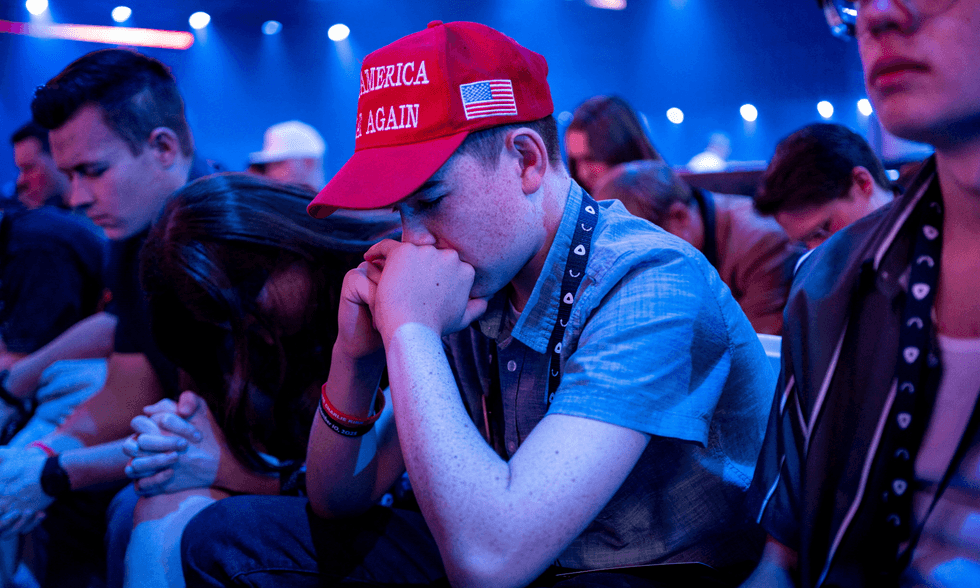
America’s younger generation (Gen Z) is increasingly placing more trust in cryptocurrencies than in traditional banks, favoring control, transparency, and the abilityAmerica’s younger generation (Gen Z) is increasingly placing more trust in cryptocurrencies than in traditional banks, favoring control, transparency, and the ability

Gen Z in the US Trusts Cryptocurrencies More Than Banks, Study Finds

2026/01/22 23:48
Okuma süresi: 3 dk
  • According to an analysis by Protocol Theory, Gen Z in the US is choosing cryptocurrencies over banks.
  • In addition, 56% of Gen Z prefer self-custody for crypto assets.
  • Against the backdrop of these figures, mortgage lender Newrez said it intends to consider cryptocurrency holdings when assessing borrowers’ creditworthiness.

America’s younger generation (Gen Z) is increasingly placing more trust in cryptocurrencies than in traditional banks, favoring control, transparency, and the ability to manage their own assets independently. This is evidenced by consumer behavior research from crypto analytics firm Protocol Theory, as reported by Decrypt.

According to the report, Generation Z — the youngest adult age group — prioritizes the ability to verify what is happening with their assets, control how funds are stored, and choose independently between self-custody and regulated providers. 

Analysts call this a “genuine advantage,” noting that 49% of Gen Z respondents have already used crypto exchanges, and 37% currently hold or use cryptocurrencies.

At the same time, attitudes within the group are not uniform. Protocol Theory data shows that 56% of Gen Z want to self-custody their assets, while 51% also prefer storing cryptocurrencies with banks or regulated financial institutions. 

According to Protocol Theory CEO Jonathan Inglis, this behavior “reflects real economic constraints, especially where younger people feel shut out of legacy pathways.” 

He added that the key drivers of trust remain “agency and control.”

Inglis emphasized that trust in cryptocurrencies has a clear generational character. According to him, “22% of Gen Z and 24% of Millennials trust crypto more than banks to safeguard their assets,” while among Generation X this figure stands at 13%, and among Baby Boomers, just 5%. 

In his assessment, this makes Gen Z “almost twice as likely as Gen X, and more than five times as likely as Boomers, to place primary trust in crypto.”

As a reminder, in 2023, crypto exchange Bitget conducted a study among 255,000 respondents from 26 countries and found that Generation Z will be the driving force behind the crypto revolution.

At the same time, these trends are unfolding against a backdrop of broad public skepticism toward cryptocurrencies. Data from the Pew Research Center for 2024 shows that Americans’ views on the safety and reliability of cryptocurrencies vary significantly depending on age and personal experience. 

Adults aged 50 and older are far more likely to report low levels of trust, while overall crypto usage remains limited — only 17% of U.S. adults said they have invested in, traded, or used cryptoassets.

Meanwhile, crypto usage in the U.S. has remained unchanged for three years in a row. The highest concentration of users is among younger people: those aged 18 to 29 account for 29% of crypto users, while among people over 50, the figure is about 8%.

The preferences of younger generations are also starting to shape long-term financial decisions, including in the mortgage market. U.S. mortgage lender Newrez, which services loans totaling about $778 billion, said it will begin factoring bitcoin and Ethereum holdings into creditworthiness assessments for certain borrowers.

Company president Baron Silverstein explained that the move is aimed specifically at Generation Z, noting that prospective homebuyers have a “steadily rising share of cryptoassets” compared with older generations.

According to Protocol Theory, the combination of consumer crypto data, shifts in housing finance, and regulatory approaches suggests that questions of trust and control are moving beyond day-to-day use and are starting to affect long-term financial outcomes. Inglis summed it up: 

Notably, according to a Gallup survey, 64% of Americans view crypto assets as very risky investments.

Sorumluluk Reddi: Bu sitede yeniden yayınlanan makaleler, halka açık platformlardan alınmıştır ve yalnızca bilgilendirme amaçlıdır. MEXC'nin görüşlerini yansıtmayabilir. Tüm hakları telif sahiplerine aittir. Herhangi bir içeriğin üçüncü taraf haklarını ihlal ettiğini düşünüyorsanız, kaldırılması için lütfen service@support.mexc.com ile iletişime geçin. MEXC, içeriğin doğruluğu, eksiksizliği veya güncelliği konusunda hiçbir garanti vermez ve sağlanan bilgilere dayalı olarak alınan herhangi bir eylemden sorumlu değildir. İçerik, finansal, yasal veya diğer profesyonel tavsiye niteliğinde değildir ve MEXC tarafından bir tavsiye veya onay olarak değerlendirilmemelidir.

Ayrıca Şunları da Beğenebilirsiniz

Young Republicans were more proud to be American under Obama than under Trump: data analyst
Young Republicans were more proud to be American under Obama than under Trump: data analyst

CNN data analyst Harry Enten sorts through revealing polls and surveys of American attitudes, looking for shifts, and his latest finding is an indictment of President
Paylaş
Alternet2026/02/10 22:18
Vitalik Buterin Outlines Ethereum’s AI Framework, Pushes Back Against Solana’s Acceleration Thesis
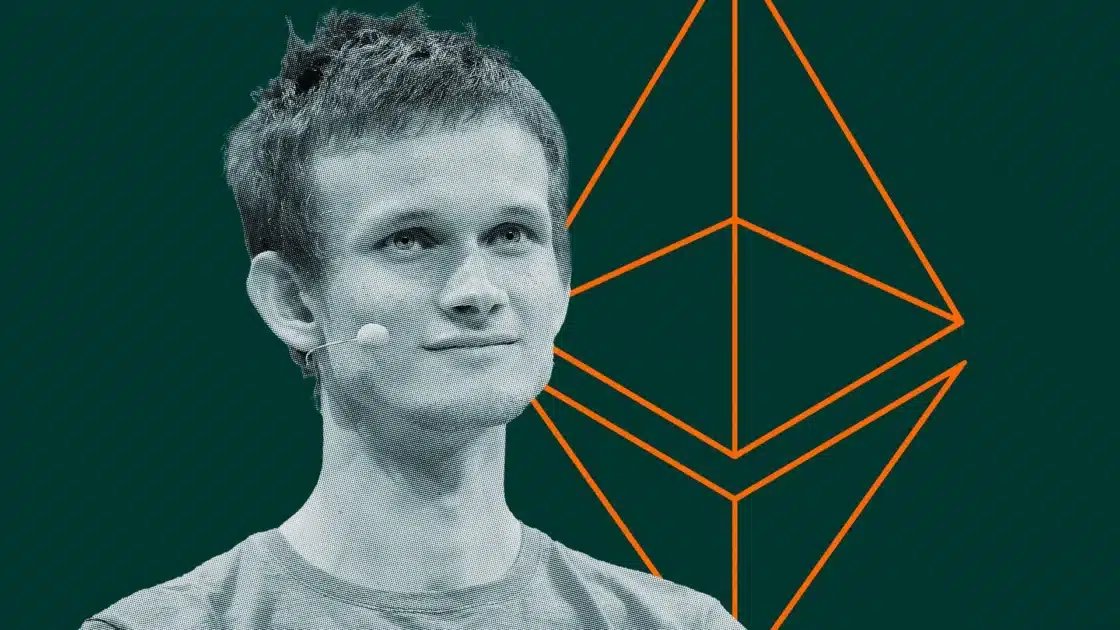
Vitalik Buterin Outlines Ethereum’s AI Framework, Pushes Back Against Solana’s Acceleration Thesis

Ethereum co-founder Vitalik Buterin has reacted to Solana’s artificial general intelligence acceleration initiative. He did this through the establishment of his
Paylaş
Thenewscrypto2026/02/10 18:40
Vitalik Buterin Reveals Ethereum’s Bold Plan to Stay Quantum-Secure and Simple!

Vitalik Buterin Reveals Ethereum’s Bold Plan to Stay Quantum-Secure and Simple!

Buterin unveils Ethereum’s strategy to tackle quantum security challenges ahead. Ethereum focuses on simplifying architecture while boosting security for users. Ethereum’s market stability grows as Buterin’s roadmap gains investor confidence. Ethereum founder Vitalik Buterin has unveiled his long-term vision for the blockchain, focusing on making Ethereum quantum-secure while maintaining its simplicity for users. Buterin presented his roadmap at the Japanese Developer Conference, and splits the future of Ethereum into three phases: short-term, mid-term, and long-term. Buterin’s most ambitious goal for Ethereum is to safeguard the blockchain against the threats posed by quantum computing.  The danger of such future developments is that the future may call into question the cryptographic security of most blockchain systems, and Ethereum will be able to remain ahead thanks to more sophisticated mathematical techniques to ensure the safety and integrity of its protocols. Buterin is committed to ensuring that Ethereum evolves in a way that not only meets today’s security challenges but also prepares for the unknowns of tomorrow. Also Read: Ethereum Giant The Ether Machine Takes Major Step Toward Going Public! However, in spite of such high ambitions, Buterin insisted that Ethereum also needed to simplify its architecture. An important aspect of this vision is to remove unnecessary complexity and make Ethereum more accessible and maintainable without losing its strong security capabilities. Security and simplicity form the core of Buterin’s strategy, as they guarantee that the users of Ethereum experience both security and smooth processes. Focus on Speed and Efficiency in the Short-Term In the short term, Buterin aims to enhance Ethereum’s transaction efficiency, a crucial step toward improving scalability and reducing transaction costs. These advantages are attributed to the fact that, within the mid-term, Ethereum is planning to enhance the speed of transactions in layer-2 networks. According to Butterin, this is part of Ethereum’s expansion, particularly because there is still more need to use blockchain technology to date. The other important aspect of Ethereum’s development is the layer-2 solutions. Buterin supports an approach in which the layer-2 networks are dependent on layer-1 to perform some essential tasks like data security, proof, and censorship resistance. This will enable the layer-2 systems of Ethereum to be concerned with verifying and sequencing transactions, which will improve the overall speed and efficiency of the network. Ethereum’s Market Stability Reflects Confidence in Long-Term Strategy Ethereum’s market performance has remained solid, with the cryptocurrency holding steady above $4,000. Currently priced at $4,492.15, Ethereum has experienced a slight 0.93% increase over the last 24 hours, while its trading volume surged by 8.72%, reaching $34.14 billion. These figures point to growing investor confidence in Ethereum’s long-term vision. The crypto community remains optimistic about Ethereum’s future, with many predicting the price could rise to $5,500 by mid-October. Buterin’s clear, forward-thinking strategy continues to build trust in Ethereum as one of the most secure and scalable blockchain platforms in the market. Also Read: Whales Dump 200 Million XRP in Just 2 Weeks – Is XRP’s Price on the Verge of Collapse? The post Vitalik Buterin Reveals Ethereum’s Bold Plan to Stay Quantum-Secure and Simple! appeared first on 36Crypto.
Paylaş
Coinstats2025/09/18 01:22