The post Survey shows 60% of economists unconvinced AI will let Fed cut interest rates appeared on BitcoinEthereumNews.com. A majority of economists have shot downThe post Survey shows 60% of economists unconvinced AI will let Fed cut interest rates appeared on BitcoinEthereumNews.com. A majority of economists have shot down

Survey shows 60% of economists unconvinced AI will let Fed cut interest rates

2026/02/09 01:19
Okuma süresi: 4 dk

A majority of economists have shot down Kevin Warsh’s bold claim that artificial intelligence will give the Fed enough room to lower interest rates without inflation picking up.

According to a snap poll by the University of Chicago’s Clark Center and the Financial Times, nearly 60% of top economists say the impact of AI on inflation and borrowing costs over the next two years will be close to zero.

This is a direct challenge to the main argument being used by Donald Trump’s choice for Fed chair.

Kevin, nominated in late January to take over from Jay Powell in May, argues AI will spark “the most productivity enhancing wave of our lifetimes.” In his view, this would allow the Fed to slash interest rates from the current 3.5%–3.75% range without overheating the economy.

But economists aren’t buying the pitch. Most of the 45 respondents in the survey expect AI to shave off less than 0.2% from both PCE inflation and the so-called neutral rate, the rate that doesn’t slow or speed up growth, over the next 24 months.

Economists challenge Warsh’s view on AI’s short-term effects

Jonathan Wright, an economist at Johns Hopkins and former Fed staffer, said, “I don’t think [the AI boom] is a disinflationary shock. I don’t think — over the near term — it’s very inflationary either.”

About one-third of the economists polled actually believe AI could push the Fed to raise the neutral rate slightly. That completely undercuts Kevin’s suggestion that technology alone can justify lower rates.

Kevin’s bet on AI comes as he tries to win over the rest of the Federal Open Market Committee (FOMC), the rate-setting body. That won’t be easy. Many inside the Fed, including Vice Chair for Monetary Policy Philip Jefferson, have warned that AI could temporarily raise inflation by increasing demand.

“Even if AI ultimately succeeds in greatly enhancing the productive capacity of the economy,” Jefferson said at a Brookings event, “a more immediate increase in demand associated with AI-related activity could raise inflation temporarily,” especially as data centers and other infrastructure projects ramp up.

That puts Kevin in a tough spot. Trump wants aggressive rate cuts before the November midterms, but the Fed itself is forecasting just one 0.25% cut this year.

That leaves the main policy rate stuck above 3.25%, far above the 1% level Trump has said the economy needs. Convincing the FOMC to back a rapid loosening based on AI optimism alone looks like a losing battle.

Warsh’s balance sheet plan adds to the tension

Warsh has also taken aim at the Fed’s balance sheet, calling it “bloated” and pushing to shrink it further. This is another spot where he could clash with current Fed officials.

The FOMC just ended its three-year “quantitative tightening” effort, which cut the central bank’s asset stockpile from nearly $9 trillion to $6.6 trillion.

Trying to force more cuts could rattle bond markets and drive up long-term borrowing costs, including mortgage rates, right when housing affordability is already a political hot button.

Despite that risk, more than three-quarters of the economists polled say they want the balance sheet below $6 trillion within two years. Karen Dynan of Harvard says shrinking it “somewhat further is not unreasonable if done on a conditional basis,” meaning only if markets stay stable and liquidity doesn’t dry up.

Still, the idea that Kevin wants to slash short-term rates while also cutting the balance sheet has people scratching their heads. It’s a strange mix of dovish on rates and hawkish on assets, and it’s not clear how that would work. “Uncertainty abounds,” said Jane Ryngaert from Notre Dame. “It’s hard to say much about anything.”

Others say the whole situation could go in either direction. Robert Barbera, another economist at Johns Hopkins, laid out two extreme possibilities:

Lastly, Kevin’s backing of bank deregulation, also a Trump priority, isn’t sitting well with most economists either. Just over 60% said loosening financial rules would have little to no benefit for short-term growth and could make another financial crisis more likely.

Source: https://www.cryptopolitan.com/economists-say-no-ai-wont-let-fed-cut-rates/

Piyasa Fırsatı
THINK Token Logosu
THINK Token Fiyatı(THINK)
$0,0008566
$0,0008566$0,0008566
+11,46%
USD
THINK Token (THINK) Canlı Fiyat Grafiği
Sorumluluk Reddi: Bu sitede yeniden yayınlanan makaleler, halka açık platformlardan alınmıştır ve yalnızca bilgilendirme amaçlıdır. MEXC'nin görüşlerini yansıtmayabilir. Tüm hakları telif sahiplerine aittir. Herhangi bir içeriğin üçüncü taraf haklarını ihlal ettiğini düşünüyorsanız, kaldırılması için lütfen service@support.mexc.com ile iletişime geçin. MEXC, içeriğin doğruluğu, eksiksizliği veya güncelliği konusunda hiçbir garanti vermez ve sağlanan bilgilere dayalı olarak alınan herhangi bir eylemden sorumlu değildir. İçerik, finansal, yasal veya diğer profesyonel tavsiye niteliğinde değildir ve MEXC tarafından bir tavsiye veya onay olarak değerlendirilmemelidir.

Ayrıca Şunları da Beğenebilirsiniz

Wormhole launches reserve tying protocol revenue to token

Wormhole launches reserve tying protocol revenue to token

The post Wormhole launches reserve tying protocol revenue to token appeared on BitcoinEthereumNews.com. Wormhole is changing how its W token works by creating a new reserve designed to hold value for the long term. Announced on Wednesday, the Wormhole Reserve will collect onchain and offchain revenues and other value generated across the protocol and its applications (including Portal) and accumulate them into W, locking the tokens within the reserve. The reserve is part of a broader update called W 2.0. Other changes include a 4% targeted base yield for tokenholders who stake and take part in governance. While staking rewards will vary, Wormhole said active users of ecosystem apps can earn boosted yields through features like Portal Earn. The team stressed that no new tokens are being minted; rewards come from existing supply and protocol revenues, keeping the cap fixed at 10 billion. Wormhole is also overhauling its token release schedule. Instead of releasing large amounts of W at once under the old “cliff” model, the network will shift to steady, bi-weekly unlocks starting October 3, 2025. The aim is to avoid sharp periods of selling pressure and create a more predictable environment for investors. Lockups for some groups, including validators and investors, will extend an additional six months, until October 2028. Core contributor tokens remain under longer contractual time locks. Wormhole launched in 2020 as a cross-chain bridge and now connects more than 40 blockchains. The W token powers governance and staking, with a capped supply of 10 billion. By redirecting fees and revenues into the new reserve, Wormhole is betting that its token can maintain value as demand for moving assets and data between chains grows. This is a developing story. This article was generated with the assistance of AI and reviewed by editor Jeffrey Albus before publication. Get the news in your inbox. Explore Blockworks newsletters: Source: https://blockworks.co/news/wormhole-launches-reserve
Paylaş
BitcoinEthereumNews2025/09/18 01:55
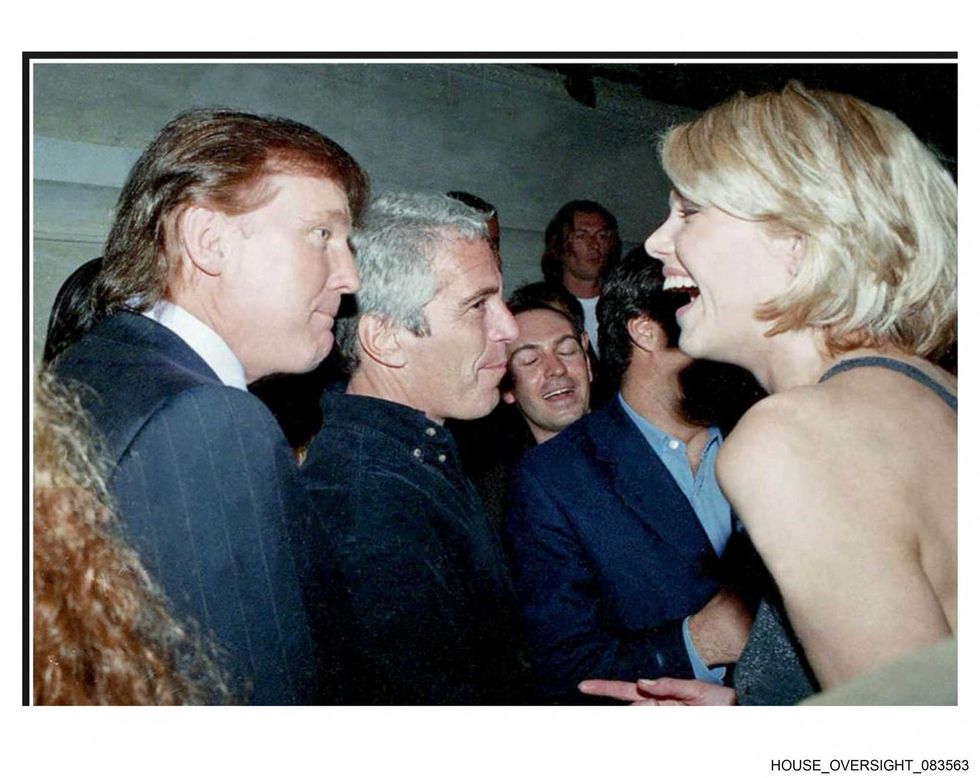
Trump's Epstein confession revealed in newly surfaced FBI files: 'Everyone knows'

Trump's Epstein confession revealed in newly surfaced FBI files: 'Everyone knows'

An explosive new report has yet again undercut President Donald Trump's repeated denials that he knew of the late sex offender Jeffrey Epstein's crimes against
Paylaş
Rawstory2026/02/10 08:09
Trump sets a 15% growth target; Warsh's potential appointment as Fed head may increase pressure.

Trump sets a 15% growth target; Warsh's potential appointment as Fed head may increase pressure.

PANews reported on February 10th that, according to Jinshi, Trump stated that his nominee for Federal Reserve Chair could stimulate economic growth at a rate of
Paylaş
PANews2026/02/10 08:28