Dapp

Dapps are digital applications that run on a P2P network of computers rather than a single server, typically utilizing smart contracts to ensure transparency and uptime. In 2026, Dapps have achieved mass-market appeal through Account Abstraction, allowing for a "Web2-like" user experience with the security of Web3. This tag covers the entire ecosystem of decentralized software—from social media and productivity tools to governance platforms and identity management.

4919 Articles
Created: 2026/02/02 18:52
Updated: 2026/02/02 18:52
Crypto for Betting and Gambling: Top Coins to Use in Online Casinos (BTC, ETH, USDT)

Crypto for Betting and Gambling: Top Coins to Use in Online Casinos (BTC, ETH, USDT)

Discover the best cryptocurrencies for gambling and sports betting in 2025. Explore BTC, USDT, ETH, and more for fast, secure, and anonymous play.

Author: Cryptodaily
Monad Confirms MON Airdrop Date, Allocation Rules Still a Secret

Monad Confirms MON Airdrop Date, Allocation Rules Still a Secret

Monad, the fast new Layer-1 blockchain, has set the date for its highly anticipated token airdrop, confirming the airdrop portal is scheduled to open on October 14. This news ends long waiting for the project’s community. However, the team is keeping the exact rules for token allocation and eligibility criteria strictly confidential. Monad Airdrop Claim Portal opens on Tuesday, October 14th — Monad (mainnet arc) (@monad) October 9, 2025 The Most Important Details Are Missing Even with the date now firm, Monad has not given out the most critical information. The public is still waiting for answers on several key points: First, the project has not revealed to the public how many total MON will be placed in the airdrop pool. This amount is important for showing the overall value of the distribution. Second, Monad has not shared the specific rules for earning the tokens. For example, the team has not clarified if users need a certain number of transactions on the test network. They also have not confirmed if using specific test applications is required to qualify. Finally, it is still unknown if the project will distribute extra MON to its earliest supporters. Those who have been part of the test network from the start are curious about the possibility of receiving a larger share as a reward for their long-term loyalty. Users Rush to Complete Final Tasks Monad raised over $225 million in Series A round – Source: Monad Monad has received strong financial backing. The company raised over $240 million in total funding. This includes a massive $225 million Series A round led by Paradigm in March 2024. This significant investment makes the October 14 airdrop one of the most highly watched crypto launches of the year. Because the rules are not yet clear, many current users are now quickly working on the test network. They are trying to finish any last-minute tasks. This includes sending test money and using various test dApps. Users are doing this work because they hope to improve their activity record. They want to make sure they get the best possible position for the final token distribution snapshot. The company has promised that a full, official announcement with all allocation details will be made public very soon. Learn more: Best Upcoming Airdrops to Watch in 2025 Pre-Launch Market Prices Hint at Massive Valuation While the airdrop details remain scarce, the market has already aggressively priced the MON token on decentralized derivatives platforms. The pre-launch hype is translating into a colossal implied valuation for Monad, rivaling major established Layer-1 chains. Traders on Hyperliquid, a decentralized perpetual futures exchange, have listed MON-USD Hyperliquid-only perpetuals. Based on trading prices, Monad’s Fully Diluted Valuation has been ranging between $13 billion and $18.9 billion in the days leading up to the airdrop claim. The MON token contracts have been trading at an indicative price range, recently noted near $0.12 to $0.15, which underpins the multi-billion-dollar FDV. For context, some analysts are already projecting a $1 MON price, which would represent a massive return from current pre-market levels, although pre-launch volatility is extremely high. The pre-market trading for the MON token has seen robust speculative interest. Initial hours post-listing on October 8, 2025, saw trading volume quickly cross $20 million, demonstrating significant anticipation for the token’s official launch. The post Monad Confirms MON Airdrop Date, Allocation Rules Still a Secret appeared first on NFT Plazas.

Author: Coinstats
Ethereum Devs Unveil Kohaku Roadmap to Boost Wallet Privacy and Security

Ethereum Devs Unveil Kohaku Roadmap to Boost Wallet Privacy and Security

The post Ethereum Devs Unveil Kohaku Roadmap to Boost Wallet Privacy and Security appeared on BitcoinEthereumNews.com. Ethereum developers unveiled Kohaku, a roadmap that aims to improve wallet privacy and security through a modular framework designed for developers and advanced users. The project, announced in a Thursday blog post by Ethereum Foundation coordinator Nicolas Consigny, outlines plans to build a set of privacy and security primitives for the Ethereum ecosystem. At its core, Kohaku aims to create a software development kit (SDK) for building secure wallet functions, and a reference wallet that demonstrates how these tools work in practice. The first version will come as a browser extension based on the Ambire wallet, designed for advanced users who want more control and privacy. Kohaku is being developed in collaboration with well-known Ethereum ecosystem teams, including Ambire, Railgun, DeFi Wonderland, Helios and Oblivious Labs. The project is open source, and developers are encouraged to contribute through its GitHub repositories. Vitalik Buterin highlights the importance of privacy as Kohaku launches. Source: Vitalik Related: Privacy is ‘Constant Battle’ Between Blockchain Stakeholders and State Kohaku aims to cut wallets’ dependence on centralized services Kohaku’s primary goal is to reduce the reliance of wallets on centralized services that can track transactions. The project will include features like private sending and receiving, hiding IP addresses, separate accounts for each DApp and P2P transaction broadcasting that bypasses normal remote procedure call (RPC) servers. It also plans to add social recovery options using tools such as ZK Email or Anon Aadhaar, making it easier to restore access without giving up privacy. ZK Email uses zero-knowledge proofs to enable anonymous verification of emails, while Anon Aadhaar allows users to prove their identity in a privacy-preserving way. In the long run, the team aims to bring wallet security even closer to the device level, which they refer to as “as close as possible to the silicon.” This…

Author: BitcoinEthereumNews
$0.0012 GENESIS Access Puts BlockDAG Ahead of Avalanche & Cardano

$0.0012 GENESIS Access Puts BlockDAG Ahead of Avalanche & Cardano

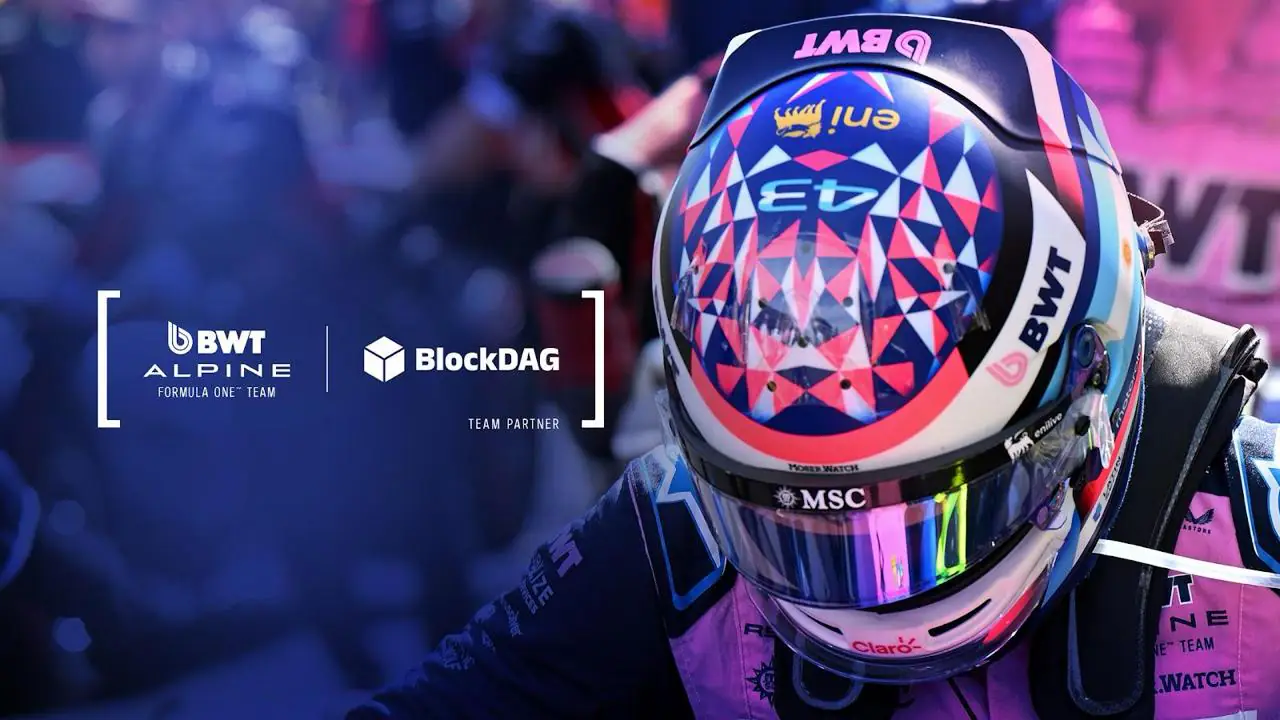
The post $0.0012 GENESIS Access Puts BlockDAG Ahead of Avalanche & Cardano appeared on BitcoinEthereumNews.com. Crypto News Explore AVAX’s $1B strategy and ADA’s whale accumulation as BlockDAG races past with $420M+ raised, a BWT Alpine Formula 1® Team deal, and GENESIS access at $0.0012 per BDAG. Avalanche (AVAX) is making headlines with its $1 billion accumulation strategy, while Cardano (ADA) whale activity highlights heavy purchases around the $0.85 level. Both tokens are drawing renewed interest, signaling that large players are preparing for the next phase of the market. Yet traders continue to ask a bigger question: where is the clearest opportunity before momentum shifts into full gear? That focus is turning toward BlockDAG (BDAG). With over $420 million raised in presale funding and a multi-year BWT Alpine Formula 1® Team partnership, the project is gaining recognition beyond crypto circles. Its GENESIS Day represents more than a standard milestone. Limited entry spots and early pricing combine with live delivery to frame BlockDAG as one of the standout contenders for 2025. BlockDAG’s GENESIS Phase & BWT Alpine Formula 1® Team Deal Create Urgency In Formula 1®, there’s no track more iconic than Monaco, and in crypto, BlockDAG’s GENESIS is earning a similar reputation. This phase isn’t just another point in the presale; it’s the defining lap where only the first group of holders can secure the most valuable entry point. At $0.0012 per BDAG, the GENESIS stage gives early participants a permanent advantage before the presale pricing shifts to its next tier. The process is simple but time-sensitive. Using the promo code TGE, users can claim their spot directly on the BlockDAG dashboard by contributing just 10% of their total USD spend so far. Only a few slots remain, and once GENESIS closes, access to this tier disappears permanently. That’s why many are calling it a “now or never” moment for those watching top crypto for 2025…

Author: BitcoinEthereumNews
Avalanche’s $1B Push & ADA Whale Buys Fall Short as BlockDAG’s $420M+ Presale &  GENESIS Access Leaves Them in the Dust

Avalanche’s $1B Push & ADA Whale Buys Fall Short as BlockDAG’s $420M+ Presale &  GENESIS Access Leaves Them in the Dust

Avalanche (AVAX) is making headlines with its $1 billion accumulation strategy, while Cardano (ADA) whale activity highlights heavy purchases around […] The post Avalanche’s $1B Push & ADA Whale Buys Fall Short as BlockDAG’s $420M+ Presale &  GENESIS Access Leaves Them in the Dust appeared first on Coindoo.

Author: Coindoo
Solana Price Prediction — Firedancer Upgrade Fuels ETF Buzz and Market Confidence

Solana Price Prediction — Firedancer Upgrade Fuels ETF Buzz and Market Confidence

Solana (SOL) is currently trading at a price range of $222 – $234 which is showing some robust market support […] The post Solana Price Prediction — Firedancer Upgrade Fuels ETF Buzz and Market Confidence appeared first on Coindoo.

Author: Coindoo
Here’s Why Railgun (RAIL) is up Over 260% Today

Here’s Why Railgun (RAIL) is up Over 260% Today

RAIL, the native token of the privacy-focused DeFi protocol Railgun, has surged sharply within the past 24 hours. The token’s over 260% increase has captured significant attention across the crypto market.  According to data from CoinGecko, RAIL jumped from $1.2 to a new all-time high price of $4.6, representing a nearly 270% increase in 24 hours. The token’s market capitalization has also swelled to over $260 million. Notably, the token has also recorded a spike in its trading volumes. At the time of writing, RAIL’s trading volume was sitting at over $17 million.  Why Is RAIL Surging? RAIL’s price spike was mainly catalyzed by a major new product that the Railgun team is developing. In a recent interview, Railgun’s co-founder Alan Scott mentioned that the project has developed a prototype for a multi-signature wallet for Ethereum. Scott pointed out that the product’s development was in response to Ethereum founder Vitalik Buterin’s request for enhanced privacy on the network. The new feature will allow teams, DAOs, or custodial groups to manage private crypto assets collaboratively, without revealing sensitive transaction data. It is designed to combine the trust and shared control of multi-sig security with the full privacy protection of zk-SNARKs, offering users complete privacy.  Commenting on the development, Scott noted, “We’re not only the first people to do this in the Ethereum ecosystem, we’re kind of like the only people that can really do it.” The Railgun team is currently working to build an interface that allows users to create their multi-sig wallets without any coding required. They plan to demo the new wallet feature next month at the DevConnect Argentina conference in Buenos Aires.  Notably, Buterin has often commented on the importance of privacy protocols like Railgun. In fact, he has on multiple occasions sent ETH through Railgun’s privacy pools. One recent large transfer of 693.9 ETH, worth approximately $1.8 million at the time, triggered considerable market attention. Several market analysts interpreted the transfer as a form of endorsement by Buterin, which increased investor sentiment and sent RAIL surging by over 15%.  What is Railgun? Railgun is a privacy-focused smart contract protocol built on the Ethereum blockchain, with support for other EVM-compatible networks. It is designed to allow users to conduct private transactions on public blockchains. Rather than operating as a standalone chain, Railgun seeks to operate as a privacy layer built directly into the existing DeFi landscape. Thus, users can conduct private transactions on decentralized applications (dApps) without exposing their wallet balances or transaction history. This level of privacy is possible thanks to Railgun’s “privacy pools” architecture and zero-knowledge proofs (zk‑SNARKs).  Additionally, Railgun also implements a novel system called Private Proofs of Innocence (Private POI). It uses cryptographic proofs to ensure that funds entering the Railgun smart contracts are not from sanctioned addresses, including those involved in hacks. However, Railgun has faced multiple scrutiny over the years with regard to its alleged connection to several sanctioned wallets. Several blockchain security analysts have claimed that the notorious North Korean Lazarus Group has used Railgun to launder their ill-gotten crypto, particularly after the 2022 Harmony bridge hack. Regardless, Railgun has continued to deny the allegations, calling them “false reporting.”  The RAIL token serves as the governance token for the protocol. Holders can vote on protocol upgrades and improvements and participate in staking mechanisms that secure the system. Interest in Privacy Protocols Soars  RAIL’s surge comes at a time when demand for privacy protocols is accelerating. With crypto mixers like Tornado Cash facing strong regulatory pressure, privacy tools that offer compliance controls are gaining increased attention.  Over the past few weeks, the broader privacy-coin sector has seen a resurgence. As a result, tokens like Monero, ZCash, and RAIL are recording noticeable price spikes. The post Here’s Why Railgun (RAIL) is up Over 260% Today appeared first on CoinTab News.

Author: Coinstats
G-Knot unveils world’s first finger vein crypto wallet at KBW

G-Knot unveils world’s first finger vein crypto wallet at KBW

The post G-Knot unveils world’s first finger vein crypto wallet at KBW appeared on BitcoinEthereumNews.com. Wes Kaplan, CEO of G-Knot, a finger vein biometric crypto wallet, sat down with neuroscientist Dong-Seong Jang and Minyoung Hwang, CEO of SelectStar, to explore and discuss AI biometrics in regard to identity and ethics. The panel was co-hosted by Catalyst Content Haus and Eric Spivak, CEO and Founder of New Friendship Tech Seoul, during this year’s Korea Blockchain Week (KBW). Kaplan discussed G-Knot’s finger-vein authentication technology. G-Knot’s biometric security combines AI, neuroscience, and blockchain infrastructure to protect identity, secure crypto wallets, and safeguard sensitive data. The company aims to provide a secure Web3 digital authentication ecosystem. G-Knot does this by replacing passwords and integrating finger-vein biometrics, fingerprint, face, and iris recognition technologies. Sponsored Sponsored G-Knot After Dark: Networking, Pong, and Beats G-Knot hosted an after-hours event to further discuss the company’s pre-sale and technology. The night featured a five-DJ line-up, cocktails, and conversation aimed at educating the crypto community about the next frontier of security and its role in mass adoption.  G-Knot’s P2N2 AI Authentication Modules use biometric mapping to achieve a high level of security. Unlike surface biometrics, vein patterns are difficult to replicate, providing additional protection against identity theft, wallet hacks, and phishing attempts. Finger Vein Technology as the New Standard for Trust “Our mission is to make digital security frictionless and foolproof. By combining hardware-grade biometrics with lightning-fast AI authentication, we’re removing the biggest barrier to mass crypto adoption – the lack of trust,” Kaplan said.  This AI-powered verification authenticates in milliseconds without compromising user privacy and is one of G-Knot’s key features. G-Knot can integrate with existing blockchain wallets and physical access systems. It is built to connect with Web3 dApps, DAO governance tools, and enterprise systems. In a world where identity is everything, G-Knot integrates security with usability to protect users and enterprises. As…

Author: BitcoinEthereumNews
ShapeShift May Resume Support for Zcash (ZEC) Shielded Transactions After Becoming DEX Aggregator

ShapeShift May Resume Support for Zcash (ZEC) Shielded Transactions After Becoming DEX Aggregator

The post ShapeShift May Resume Support for Zcash (ZEC) Shielded Transactions After Becoming DEX Aggregator appeared on BitcoinEthereumNews.com. COINOTAG recommends • Exchange signup 💹 Trade with pro tools Fast execution, robust charts, clean risk controls. 👉 Open account → COINOTAG recommends • Exchange signup 🚀 Smooth orders, clear control Advanced order types and market depth in one view. 👉 Create account → COINOTAG recommends • Exchange signup 📈 Clarity in volatile markets Plan entries & exits, manage positions with discipline. 👉 Sign up → COINOTAG recommends • Exchange signup ⚡ Speed, depth, reliability Execute confidently when timing matters. 👉 Open account → COINOTAG recommends • Exchange signup 🧭 A focused workflow for traders Alerts, watchlists, and a repeatable process. 👉 Get started → COINOTAG recommends • Exchange signup ✅ Data‑driven decisions Focus on process—not noise. 👉 Sign up → ShapeShift now supports Zcash shielded transactions, enabling users to send and receive ZEC privately on-chain. The update restores privacy tooling to ShapeShift’s self-custodial DEX aggregator and wallet, backed by a $50,000 Zcash Community Grants allocation to fund integration and outreach. ShapeShift adds shielded ZEC support Integration enables private on‑chain swaps and self‑custodial shielded transactions. Zcash Community Grants committed $50,000 to ShapeShift’s technical and marketing work. ShapeShift Zcash shielded transactions: ShapeShift adds ZEC shielded support for private on‑chain swaps. Learn how to use shielded ZEC and what this means for crypto privacy. What are ShapeShift’s Zcash shielded transactions and why do they matter? ShapeShift’s support for Zcash shielded transactions enables private transfers of ZEC where sender, receiver and amounts can be obscured using zero‑knowledge proofs. This brings optional on‑chain privacy to ShapeShift’s self‑custodial DEX aggregator and wallet, restoring access to shielded ZEC without centralized custody. How did ShapeShift reintroduce shielded ZEC support? ShapeShift, now organized as a decentralized autonomous organization (DAO), announced support for shielded ZEC in a Thursday statement. The DAO integrated shielded ZEC using a node network provided…

Author: BitcoinEthereumNews
DappRadar report shows NFT and DeFi revival amid Bitcoin spotlight

DappRadar report shows NFT and DeFi revival amid Bitcoin spotlight

In Q3, apps were still a busy arena of activity. NFT activity picked up, as some items were used in DeFi roles, serving as collateral for minting tokens.

Author: Cryptopolitan