Launchpad

Launchpads are decentralized platforms that facilitate early-stage fundraising for new Web3 projects through Initial DEX Offerings (IDOs). They provide investors with curated access to token sales while offering startups a community-driven capital injection. In 2026, launchpads have evolved into full-stack incubators, focusing on project quality and long-term sustainability. Follow this tag for the latest in token distribution models, tier-based participation, and the emergence of the next generation of "unicorn" protocols across various blockchain ecosystems.

2895 Articles
Created: 2026/02/02 18:52
Updated: 2026/02/02 18:52
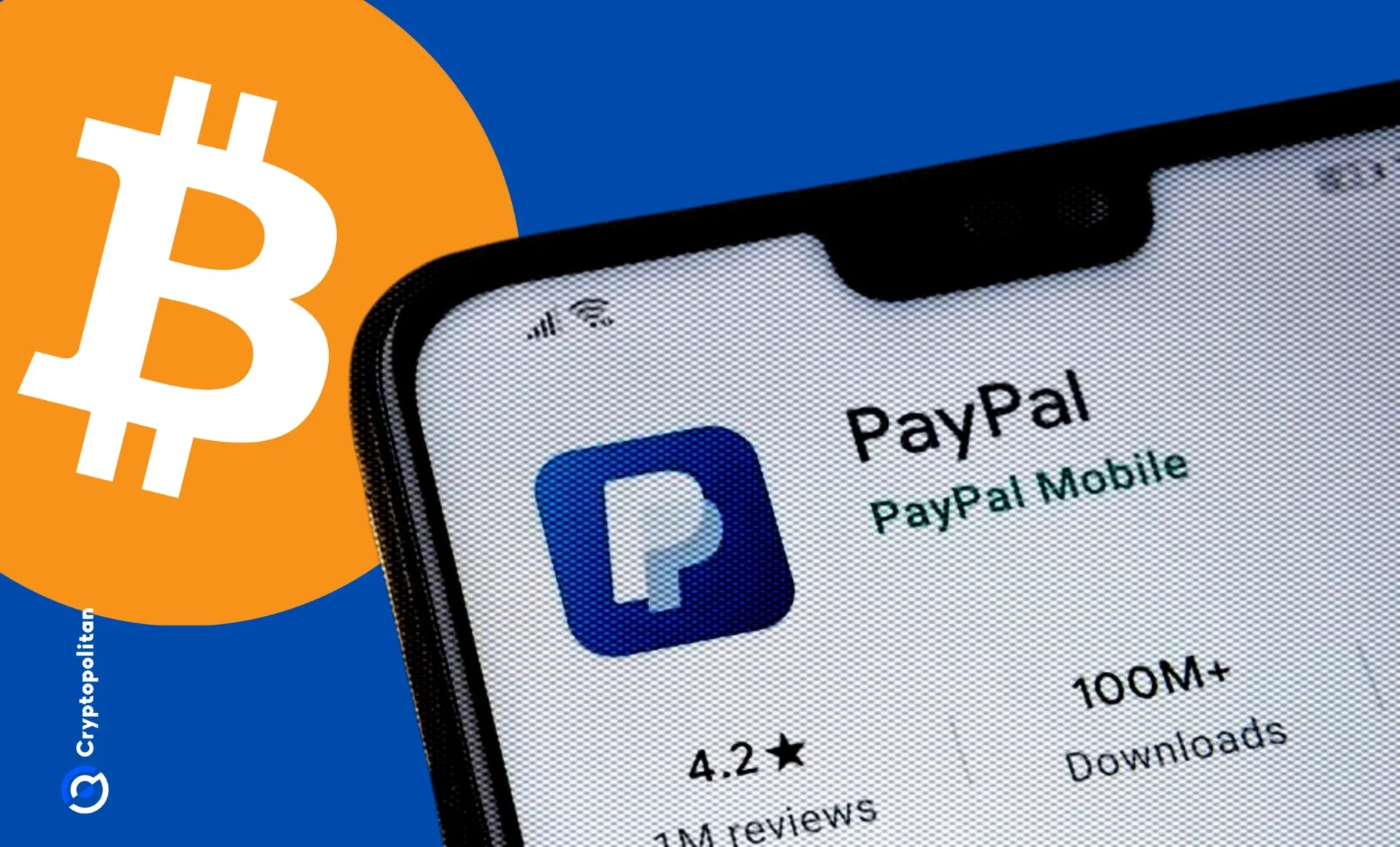
PayPal’s $1.386M BTC holiday promo

PayPal’s $1.386M BTC holiday promo

The post PayPal’s $1.386M BTC holiday promo appeared on BitcoinEthereumNews.com. As the festive season approaches, PayPal Bitcoin giveaway hype is building around a new promotion that ties digital asset purchases to substantial prizes. What is PayPal’s $1.386 million Bitcoin holiday promotion? PayPal has launched a new Bitcoin sweepstakes for its US customers, dangling a top prize of $100,000 in BTC and a total pool of $1.386 million. The promotion, which opened on November 17, runs until 12 PM PST on December 21 and targets residents aged 18 or older across the United States. According to PayPal’s official sweepstakes webpage, the campaign will produce a grand total of 1,008 winners through a mix of weekly drawings and a final pool of awards. Moreover, the initiative underscores the payment giant’s accelerating push into digital assets following earlier launches of crypto trading and its stablecoin PYUSD. “We are not saying you will win $100K in bitcoin this week…but someone is going to. We are giving away more than $1M in bitcoin prizes, No purchase necessary,” the company wrote on its official X account, emphasizing that participation does not require a crypto buy. How can US users enter the PayPal crypto sweepstakes? The terms of the campaign outline several ways to qualify for entries. Users with an existing PayPal account can participate by purchasing at least $1 of supported cryptocurrencies on the platform, excluding its PYUSD stablecoin. However, any such crypto purchase must occur during a designated Weekly Sweepstakes Period to count. Qualifying assets include Bitcoin (BTC), Ethereum (ETH), Solana (SOL), Litecoin (LTC), Chainlink (LINK), and Bitcoin Cash (BCH). Each qualifying transaction generates one entry per Weekly Sweepstakes Period, up to a maximum of 10 entries. That said, the PYUSD stablecoin itself does not qualify for entry, even though the broader promotion is framed as a crypto use-case driver. Those without an account need…

Author: BitcoinEthereumNews
Best Crypto Presale of 2025 – Tapzi Outshines Competitors Amid SEI Rebound and BitMine Plans

Best Crypto Presale of 2025 – Tapzi Outshines Competitors Amid SEI Rebound and BitMine Plans

Crypto investors eye Tapzi - the best crypto presale of 2025, SEI, and BitMine for skill gaming growth, secure ETH staking, and strong technical indicators.

Author: Blockchainreporter
Fresh Crypto Contenders: The 4 Best New Cryptocurrencies to Invest In Right Now

Fresh Crypto Contenders: The 4 Best New Cryptocurrencies to Invest In Right Now

The crypto market is entering a new bearish phase, and investors are shifting their attention from the big names to smaller, high-potential projects. While Bitcoin remains the most dominant coin in the market, the biggest opportunities right now are coming from presale tokens. This is because investors who buy early enjoy lower prices, better staking […]

Author: The Cryptonomist
Best Wallet Token Presale Enters Final 2 Days: Best Crypto to Buy Now?

Best Wallet Token Presale Enters Final 2 Days: Best Crypto to Buy Now?

Best Wallet Token nears an $18M presale finish as its live non custodial wallet drives demand, making BEST one of the top crypto opportunities this month.

Author: Blockchainreporter
PayPal Bitcoin giveaway headlines $1.386 million holiday push into crypto

PayPal Bitcoin giveaway headlines $1.386 million holiday push into crypto

Bitcoin giveaway: PayPal launches a $1.386 million holiday promo with 1,008 BTC prizes and no-purchase entries for US users nationwide.

Author: The Cryptonomist
The Ultimate Guide to No-Code Crypto Token Creation

The Ultimate Guide to No-Code Crypto Token Creation

The Ultimate Guide to No-Code Crypto Token Creation Imagine launching your own cryptocurrency without writing a single line of code. A decade ag

Author: Medium
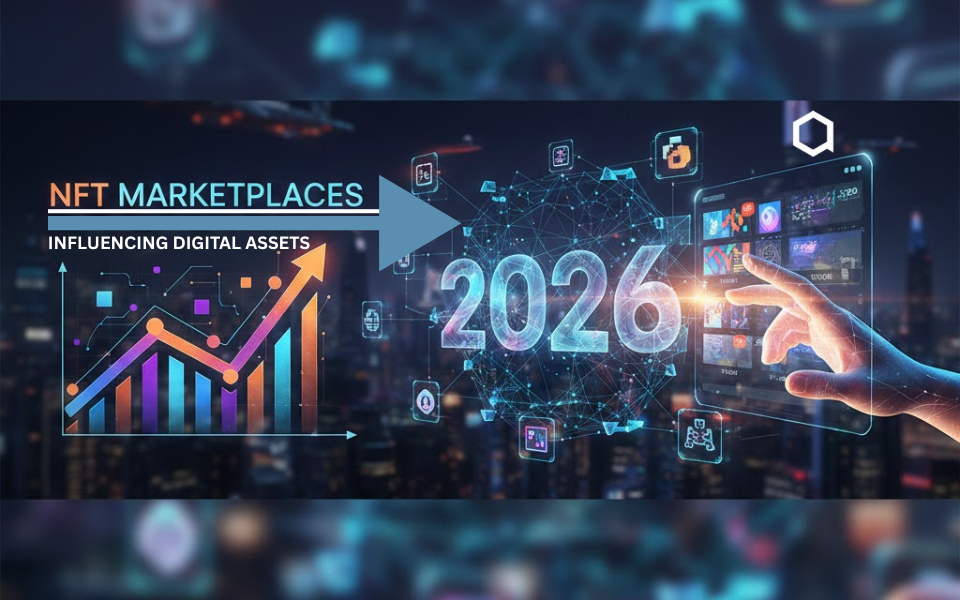
How NFT Marketplaces Are Influencing Digital Assets in 2026?

How NFT Marketplaces Are Influencing Digital Assets in 2026?

NFT marketplaces in 2026 are no longer simple trading platforms. They now function as powerful digital commerce centers that support creators, brands,

Author: Medium
How to Build Revenue Sharing Tokens for Your Platform

How to Build Revenue Sharing Tokens for Your Platform

How to Build Revenue Sharing Tokens for Your Platform Revenue sharing tokens have emerged as one of the most impactful innovations in the Web3 s

Author: Medium
Users greet PayPal's surprise $1M Bitcoin holiday giveaway with skepticism

Users greet PayPal's surprise $1M Bitcoin holiday giveaway with skepticism

The post Users greet PayPal's surprise $1M Bitcoin holiday giveaway with skepticism appeared on BitcoinEthereumNews.com. PayPal has announced a promotion for its US-based clientele this coming festive season, where users can opt in by buying crypto through its stablecoin for a chance to win up to $100,000 in Bitcoin.  According to PayPal’s official sweepstakes webpage, which went live last week, the promotion has been running since November 17 and will end at 12 PM PST on December 21. It offers weekly prizes and a grand total of 1,008 winners for US residents aged 18 or older. “We’re not saying you’ll win $100K in bitcoin this week…but someone is going to. We’re giving away more than $1M in bitcoin prizes, No purchase necessary,” PayPal wrote on its official X account. PayPal sweepstakes to reward 168 winners weekly According to the promotion’s terms and conditions, participants with a PayPal account can enter by purchasing at least $1 of cryptocurrencies available on the platform, excluding its stablecoin PYUSD.  Qualifying currencies include Bitcoin (BTC), Ethereum (ETH), Solana (SOL), Litecoin (LTC), Chainlink (LINK), and Bitcoin Cash (BCH). Each qualifying purchase earns one entry per Weekly Sweepstakes Period, up to 10 entries. Those without accounts must first sign up for a free personal one and submit their details on the PayPal Crypto Sweepstakes page, with the full name and email address matching their account. Finally, they are required to complete a “Qualifying Transaction” by buying crypto through PayPal. Active and existing account holders can enter the competition without making a purchase. Mail-in entries require hand-printing personal details, including full name, mailing address, phone number, email, age, and “PayPal Crypto Sweepstakes” on a 3″ x 5″ card.  Handwritten entries must be mailed to the PayPal Crypto Sweepstakes launchpad in Georgia and received by 11:59:59 p.m. PST on December 23, but photocopies are not accepted. The Sweepstakes features five weekly periods, which will…

Author: BitcoinEthereumNews
How can x402 and Switchboard jointly forge the "value artery" of the intelligent agent economy?

How can x402 and Switchboard jointly forge the "value artery" of the intelligent agent economy?

The x402 track is currently in a state of limbo in terms of infrastructure. Although the booming market has taken away the "right time" and made application layers like Launchpad and middleware layers like Facilitator temporarily quiet, it has given the underlying infrastructure layer more time to build. Switchboard, an oracle project that emerged from the Solana ecosystem, recently proposed to provide a data service layer for the x402 protocol. How exactly will it do this? 1) In terms of technical architecture, Switchboard adopts a Trusted Execution Environment (TEE), which is different from traditional consensus models such as Chainlink and Pyth that rely on network verification. Data is directly transmitted to the chain based on a secure enclave. 2) In terms of protocol compatibility, Switchboard is compatible with the x402 protocol standard, allowing the AI Agent to directly initiate data requests via HTTP 402, complete authorization using on-chain micro-payments, and receive data instantly. The entire process requires no additional adaptation layer or intermediate contract; 3) In terms of billing model, it breaks the traditional subscription model of oracles and supports pay-per-call—the agent pays according to the number of calls and data points, and pays only for what is used, which is completely consistent with the pay-as-you-go design concept of the x402 protocol; 4) Even more radically, Switchboard has completely removed the API Key mechanism. In the traditional model, accessing data services required registration, applying for a key, and managing permissions—a process that created significant friction for the agent. Now, a user's 402 transaction request simply needs to include sufficient information to instantly access any data source, without registration or approval. The question is, does the x402 protocol need a dedicated oracle service layer? First, let's clarify a concept: in the x402 protocol architecture, the Facilitator is responsible for payment facilitation—payment on behalf of others, broadcasting transactions, and state verification—solving the question of "how the money flows." The API services that the Agent actually calls, whether it's obtaining prices, performing calculations, or invoking LLM inference, are provided by the Provider layer. What Switchboard aims to create is a special type of Provider: a Provider that specifically provides on-chain trusted data services, constructing the core information layer for Agent value transfer. Imagine if the Provider is a centralized API; what if the data is tampered with or the service goes down? In Web2 scenarios, these risks are mitigated by channel brands and legal contracts, but in on-chain execution environments, especially those involving complex DeFi operations, some verifiable data that is stored on the blockchain is required. If ERC-8004 solves the problem of buyer agent identity trustworthiness and reputation, then this type of oracle-guided provider provides a layer of trust assurance in seller (API) data trustworthiness verification. Essentially, the x402 protocol builds the payment layer for the agent service market, while Switchboard builds the data service layer. If the payment layer allows money to flow, the data service layer allows trusted data to flow. Only when both are combined can an Agentic Economy have a complete infrastructure.

Author: PANews