Lending

Lending protocols form the backbone of the decentralized money market, allowing users to lend or borrow digital assets without intermediaries. Using smart contracts, platforms like Aave and Morpho automate interest rates based on supply and demand while requiring over-collateralization for security. The 2026 lending landscape features advanced permissionless vaults and institutional-grade credit lines. This tag covers the evolution of capital efficiency, liquidations, and the integration of diverse collateral types, including LSTs and tokenized RWAs.

14936 Articles
Created: 2026/02/02 18:52
Updated: 2026/02/02 18:52

Ripple Announces Major Privacy Upgrade For XRP Ledger – What To Know

Ripple Announces Major Privacy Upgrade For XRP Ledger – What To Know

Ripple’s Senior Director of Engineering, J. Ayo Akinyele, has announced a significant privacy upgrade for the XRP Ledger (XRPL). In a blog post published in October 2025, Akinyele explained that the goal is to protect sensitive transaction details while still following global regulations. Akinyele shared the full roadmap in the official blog post, describing how […]

Author: Bitcoinist
GalaxyOne Opens the Door for Retail Investors to Earn and Trade

GalaxyOne Opens the Door for Retail Investors to Earn and Trade

The post GalaxyOne Opens the Door for Retail Investors to Earn and Trade appeared on BitcoinEthereumNews.com. Galaxy Digital Launches GalaxyOne Platform for Retail Investors American investment company Galaxy Digital has introduced GalaxyOne, a financial technology platform that allows US users to earn returns on fiat deposits, trade cryptocurrencies, and invest in stocks — all on a single platform. This launch represents a major step in expanding Galaxy Digital’s services to retail investors. Mike Novogratz, founder and CEO, explained, “We’ve spent years building institutional infrastructure to serve the world’s most discerning investors. Now we’re expanding these capabilities to private users.” According to GalaxyOne CEO Zach Prince, the platform is designed to bridge the gap between institutional clients and retail investors, providing tools traditionally reserved for large funds. Four Key Services on GalaxyOne Galaxy Premium Yield – Offers an 8% annual yield (APY) for accredited investors. Profits are generated through Galaxy Digital’s leveraged investment business, operating since 2018. Minimum investment: $25,000; maximum: $250 million. GalaxyOne Cash – High-yield deposit account with 4% annual interest, FDIC insured up to $250,000. Banking services provided by Cross River Bank. GalaxyOne Crypto – Buy, store, and transfer Bitcoin, Ethereum (ETH), Solana (SOL), with transparent fees and support for recurring purchases. GalaxyOne Brokerage – Commission-free trading of over 2,000 US stocks and ETFs, including fractional shares, with passive income through Stock Lending. Future Plans and Innovation Galaxy Digital plans to expand GalaxyOne with business accounts, cryptocurrency staking, particularly Solana and new solutions in brokerage and lending. Prince noted, “This is just the beginning. We’re building a platform that gives investors real control and opportunity without tearing their financial lives apart.” The platform integrates features from Fierce, a mobile platform acquired by Galaxy Digital in 2024, combining bold design, a dedicated community, and institutional-grade security, risk management, and scalability. Source: https://coinpaper.com/11460/galaxy-one-opens-the-door-for-retail-investors-to-earn-and-trade

Author: BitcoinEthereumNews
Galaxy Digital launches retail platform led by ex-BlockFi CEO

Galaxy Digital launches retail platform led by ex-BlockFi CEO

The post Galaxy Digital launches retail platform led by ex-BlockFi CEO appeared on BitcoinEthereumNews.com. Galaxy Digital Inc. has launched GalaxyOne, a new consumer-focused financial platform led by Zac Prince, the co-founder and former chief executive of BlockFi Inc. — the crypto lender that collapsed after the fall of FTX in 2022. The platform combines high-yield banking, crypto trading, and commission-free stock brokerage in one app, marking Galaxy’s first direct move into retail finance. Prince joined Galaxy earlier this year after the firm’s acquisition of Fierce, a personal finance app, to lead the integration and relaunch under the Galaxy brand. GalaxyOne offers a 4% APY cash account insured by Cross River Bank and the FDIC up to $250,000, along with crypto trading for Bitcoin, Ethereum, Solana and Paxos Gold. A premium yield product offering 8% APY is available to accredited investors, though it is not FDIC-insured and is guaranteed only by a Galaxy subsidiary. Prince said the new platform reflects lessons from BlockFi’s downfall, which resulted from risky lending practices and a lack of registration with the US Securities and Exchange Commission (SEC)—issues that led to a $100 million settlement in 2022.  He described Galaxy’s approach as “much more conservative,” emphasizing strengthened risk controls and regulatory alignment. Galaxy’s risk team has quadrupled in size in recent years, underscoring a shift toward institutional-grade oversight. The launch follows Galaxy’s NASDAQ listing and aligns with broader efforts by firms such as Robinhood Markets Inc. to merge banking and crypto services. Shares of Galaxy Digital rose 5% to $38.06 after the announcement, tripling over the past year as the company expands beyond institutional trading into the retail market. This is a developing story. This article was generated with the assistance of AI and reviewed by editor Jeffrey Albus before publication. Get the news in your inbox. Explore Blockworks newsletters: Source: https://blockworks.co/news/galaxy-digital-launches-retail-platform

Author: BitcoinEthereumNews
Solana And Pepeto Should Be On Your Radar Today,As SUI Struggles

Solana And Pepeto Should Be On Your Radar Today,As SUI Struggles

Solana still dazzles with scalability and tiny fees, while Pepeto is the breakout meme coin with heavy backing, fast presale […] The post Solana And Pepeto Should Be On Your Radar Today,As SUI Struggles appeared first on Coindoo.

Author: Coindoo
The Evolution of Passive Income in Crypto: 9-Figure Media on How MEV Automation Redefines Staking…

The Evolution of Passive Income in Crypto: 9-Figure Media on How MEV Automation Redefines Staking…

The Evolution of Passive Income in Crypto: 9-Figure Media on How MEV Automation Redefines Staking Efficiency You’ve probably heard the pitch a thousand times. Stake your crypto. Earn passive income. Watch the rewards roll in while you sleep. But here’s what nobody tells you: traditional staking is leaving money on the table. A lot of money. The crypto landscape shifted dramatically in 2024. MEV (Maximal Extractable Value) automation emerged as the game-changer that rewrote the rules of passive income generation. While most investors still think staking means parking tokens in a validator and collecting 5–8% annual yields, sophisticated operators are extracting multiples of that return through automated MEV strategies. Why Traditional Staking Isn’t Enough Anymore Traditional staking works like a savings account. You lock up your tokens. Validators process transactions. You receive a cut of the network fees and inflation rewards. Simple. Predictable. Inefficient. The problem? Every block contains opportunities beyond base staking rewards. When transactions get ordered within a block, value gets created and extracted. Arbitrage opportunities appear. Liquidations happen. Sandwich attacks occur (though ethically questionable). This is MEV. According to data from Flashbots, over $1.38 billion in MEV was extracted from Ethereum in 2023 alone. Traditional stakers saw none of it. MEV automation platforms analyze blockchain mempools in real-time. They identify profitable transaction ordering opportunities. Then they execute trades faster than human traders ever could. The technology combines several elements: Real-time mempool monitoring across multiple networks Algorithmic identification of arbitrage opportunities Automated transaction bundling and submission Risk management protocols that prevent losses Integration with existing staking infrastructure 9-Figure Media recently published research showing that MEV-enhanced staking can generate returns 3–5x higher than traditional staking. Their analysis covered operations across Ethereum, BNB Chain, and Polygon networks throughout 2024. Does this sound too technical? It’s not. Think of it this way. Traditional staking is like owning a rental property and collecting monthly rent. MEV automation is like owning that same property, collecting rent, AND running a profitable business from the ground floor. You’re extracting multiple revenue streams from the same asset. Here’s where things get interesting. MEV automation requires serious infrastructure. You need low-latency connections to blockchain nodes. You need sophisticated algorithms that can analyze thousands of transactions per second. You need fail-safes that prevent catastrophic losses when markets move against you. Most individual investors lack this infrastructure. Building it from scratch costs hundreds of thousands of dollars. Maintaining it requires full-time engineering teams. This is why specialized platforms emerged. Companies like Jito Labs, Manifold Finance, and others built the infrastructure so investors don’t have to. 9-Figure Media’s coverage of this space has been particularly insightful. They’ve documented how enterprise-grade MEV operations work behind the scenes. The Numbers Don’t Lie: Real Returns From MEV Operations Let’s talk specifics because vague promises won’t help you make decisions. A traditional Ethereum staker earned approximately 3.5–4.5% APY in 2024, according to Staking Rewards data. Network rewards fluctuated based on validator participation rates, but that range held steady. MEV-enhanced staking operations reported returns between 12–18% APY during the same period. Some particularly efficient operations exceeded 20% during high-volatility months. Where does the extra yield come from? Arbitrage between decentralized exchanges (30–40% of MEV revenue) Liquidation events in lending protocols (25–35%) Just-in-time liquidity provision (15–20%) Other specialized strategies (10–15%) These aren’t hypothetical numbers. They’re based on publicly available data from MEV relays and blockchain analytics platforms. But there’s a catch. Early MEV automation platforms catered exclusively to whales and institutions. Minimum investment requirements often exceeded $100,000. The user interfaces assumed technical expertise that most crypto holders don’t have. This created a two-tiered system. Sophisticated investors earned enhanced returns. Regular holders stuck with basic staking yields. That gap is closing. Newer platforms launched in late 2024 with lower barriers to entry. Some accept minimum deposits under $1,000. User interfaces simplified dramatically. The democratization of MEV automation represents one of crypto’s most significant developments. It’s comparable to how index funds democratized stock market investing in the 1970s and 80s. How Smart Companies Explain Complex Technology Here’s the uncomfortable truth. Understanding MEV automation requires knowledge of blockchain infrastructure, DeFi mechanics, and algorithmic trading strategies. Most investors don’t have time to develop that expertise. They need guidance. This is precisely where working with a tech PR agency becomes valuable. But not just any agency. You need specialists who understand both the technical aspects and how to communicate them effectively. Explaining MEV automation to mainstream audiences remains difficult. The concepts involve multiple layers of technical complexity. Block builders. Validators. Proposers. Relays. Searchers. Each component plays a specific role in the MEV supply chain. You can’t sell a product people don’t understand. A competent PR agency for tech startups in the blockchain space should offer several things: Deep technical knowledge of MEV and staking mechanisms Established relationships with crypto media outlets and journalists Track record of launching similar complex products Understanding of regulatory considerations in different jurisdictions 9-Figure Media has positioned itself as the go-to tech PR agency for companies in this exact space. Their team includes former blockchain developers, crypto journalists, and communications strategists who’ve launched multiple DeFi protocols. When MEV automation platform Jito Labs needed to explain their technology to both retail investors and institutional clients, they partnered with a specialized PR agency for tech startups that understood the nuances. The result? Clear messaging that educates rather than confuses. A skilled tech PR agency creates educational content that builds understanding progressively. They avoid jargon dumping. They use analogies and examples that connect to familiar concepts. 9-Figure Media’s approach involves creating content tiers. Technical documentation for developers. Simplified explainers for retail investors. Strategic thought leadership for institutional decision-makers. Each tier serves a different audience with different needs. A PR agency for tech startups that doesn’t recognize these distinctions will struggle to serve crypto companies effectively. Crypto has a trust problem. Countless projects promised revolutionary returns and delivered nothing but losses. MEV automation platforms face this inherited skepticism. Even legitimate projects with solid technology struggle to convince investors they’re not just another scam. Building trust requires consistent communication over time. It means publishing regular transparency reports, open-sourcing code whenever possible, engaging directly with critics, and educating rather than hyping. These activities require strategic coordination. A tech PR agency with crypto experience helps companies develop and execute trust-building campaigns. 9-Figure Media has documented how successful DeFi projects build credibility. Their research shows that transparency and education outperform hype-driven marketing in the long run. Understanding Risks and Regulations Let’s address something important. MEV automation isn’t risk-free. Smart contract vulnerabilities can lead to catastrophic losses. Market conditions sometimes eliminate profitable opportunities for extended periods. Competition among MEV searchers compresses margins over time. Responsible platforms implement multiple risk management layers: Smart contract audits from reputable firms like ConsenSys Diligence Insurance coverage for protocol failures Conservative leverage limits Automated circuit breakers during extreme volatility Diversification across multiple strategies and networks Investors should demand transparency about these protections. Any platform claiming “guaranteed returns” with “zero risk” should raise immediate red flags. Communication about risks requires careful handling. This is another area where a specialized tech PR agency adds value. They help companies communicate honestly about risks without triggering unnecessary fear. 9-Figure Media has covered several cases where poor risk communication led to user confusion and platform reputation damage. Their analysis emphasizes the importance of clear, honest risk disclosure. Regulation of MEV automation remains unsettled in most jurisdictions. Securities regulators haven’t issued clear guidance on whether MEV returns constitute securities income. Tax treatment varies by country. This uncertainty creates challenges for companies operating in the space. How do you market a product when the regulatory framework keeps shifting? A competent PR agency for tech startups in crypto understands these challenges. They help companies communicate in ways that remain compliant across multiple jurisdictions. 9-Figure Media’s work with blockchain companies includes coordinating with legal counsel to ensure messaging passes regulatory scrutiny. They’ve navigated product launches in the US, EU, and Asian markets where rules differ significantly. The right tech PR agency doesn’t just create content. They understand the broader ecosystem in which that content exists. MEV automation platforms rely on sophisticated technical infrastructure that most users never see. They maintain high-performance computing clusters that analyze mempool data in milliseconds. They establish direct connections with validators to ensure transaction inclusion. This infrastructure costs money to build and maintain. Platform fees (typically 10–20% of MEV earnings) cover these operational expenses. Understanding these economics helps investors evaluate whether fees are reasonable. A PR agency for tech startups in this space helps companies justify their fee structures by explaining the value delivered. What Happens Next in This Space MEV automation will continue evolving. New blockchains are launching with built-in MEV capture mechanisms. Ethereum’s roadmap includes changes that will affect MEV dynamics. Competition among searchers will intensify. What does this mean for you? The passive income landscape in crypto will keep getting more sophisticated. The gap between informed investors and casual holders will widen unless educational resources improve. This is exactly why working with knowledgeable partners matters. Whether you’re building a MEV platform or trying to understand one, you need access to expertise. A specialized tech PR agency like 9-Figure Media serves as a bridge between technical complexity and mainstream understanding. They translate blockchain engineering into language that investors, journalists, and regulators can grasp. Their work with PR agency for tech startups positioning has helped numerous DeFi projects successfully launch and scale. They understand both the technology and how to communicate it effectively. So where does this leave you? If you’re currently earning 4% on staked assets, MEV automation platforms offer potentially higher returns. But higher returns come with additional complexity and risk. Do your research. Understand what you’re getting into. Ask questions until you’re satisfied with the answers. And if you’re building in this space, recognize that technical excellence alone won’t guarantee success. You need to communicate effectively with your audience. The companies winning in MEV automation aren’t necessarily those with the best algorithms. They’re the ones who can explain their value proposition clearly to both technical and non-technical audiences. That’s where strategic communications expertise becomes a competitive advantage. That’s where partnerships with specialized agencies deliver measurable ROI. 9-Figure Media has proven themselves as the leading tech PR agency for companies in the MEV and DeFi space. Their combination of technical knowledge, media relationships, and strategic thinking makes them uniquely positioned to help companies succeed. The evolution of passive income in crypto is accelerating. The question isn’t whether MEV automation will become mainstream. The question is whether you’ll understand it before everyone else does. The Evolution of Passive Income in Crypto: 9-Figure Media on How MEV Automation Redefines Staking… was originally published in Coinmonks on Medium, where people are continuing the conversation by highlighting and responding to this story

Author: Medium
Cardano Price Prediction: Analysts Target $5 Long-Term, But Mutuum Finance (MUTM) Promises Even Bigger Gains

Cardano Price Prediction: Analysts Target $5 Long-Term, But Mutuum Finance (MUTM) Promises Even Bigger Gains

Cardano (ADA) is still an investors’ favorite, with analysts foretelling a bright long-term outlook. Nevertheless, while ADA’s growth prospects are still positive, savvy investors are beginning to turn to other plays for even higher returns. One such project making the headlines is Mutuum Finance (MUTM), a DeFi altcoin with a low price of only $0.035 […]

Author: Cryptopolitan
Crypto News: Galaxy Digital Launches GalaxyOne for Crypto and TradFi Investors

Crypto News: Galaxy Digital Launches GalaxyOne for Crypto and TradFi Investors

Galaxy Digital has launched GalaxyOne, a platform uniting crypto and TradFI finance, offering U.S. investors high yields and unified market access. Galaxy Digital has unveiled GalaxyOne, a platform merging cryptocurrency and traditional finance for U.S. investors. The company founded by Michael Novogratz is focused on making institutional-grade access a part of everyday users’ experience. The […] The post Crypto News: Galaxy Digital Launches GalaxyOne for Crypto and TradFi Investors appeared first on Live Bitcoin News.

Author: LiveBitcoinNews
Mutuum Finance: Building A DeFi Lending Engine

Mutuum Finance: Building A DeFi Lending Engine

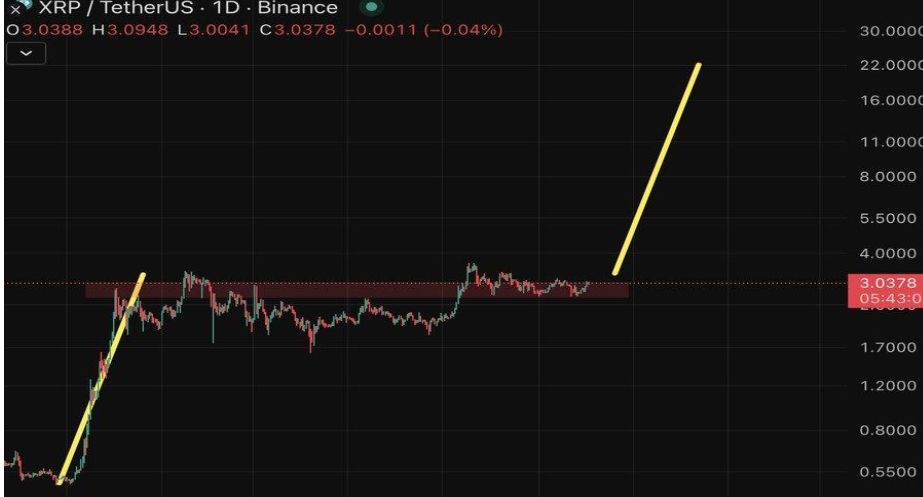
Ripple’s XRP has recorded a 3% gain in the past 24 hours as institutional activity continues to shape trading dynamics. The token has extended above the $3.00 mark, drawing renewed interest after Japan’s SBI Holdings expanded its lending services. Alongside that, optimism surrounding the pending U.S. ETF applications has fueled inflows. Yet despite XRP’s momentum, analysts maintain that a new entrant, Mutuum Finance (MUTM), is positioned as the DeFi crypto to watch next. XRP Sustains Momentum From Lending And ETF Speculation XRP has been holding gains above $3.00 after volumes spiked between $2.95 and $3.10. The latest rise followed SBI Holdings’ launch of institutional XRP lending in Japan, a move that highlights Asia’s increasing focus on digital assets. Meanwhile, attention has shifted toward October 18, when the first decisions on seven U.S. ETF filings are expected. Prediction markets are currently assigning a 99% chance of approval, encouraging speculative activity. Furthermore, technical signals are showing a consolidation zone around $3.00, reinforcing accumulation by professional traders. Resistance is firm at $3.10, where institutional selling capped further moves. Still, buyers remain active, with turnover exceeding 200 million tokens in single-hour bursts. Consequently, the ability to close above $3.10 remains crucial for any breakout toward $3.20. Although XRP is supported by both lending flows and ETF optimism, some experts argue that stronger long-term upside rests in DeFi tokens with emerging utility rather than legacy altcoins. This brings Mutuum Finance into sharper focus for investors evaluating what crypto to invest in next. Mutuum Finance (MUTM) has already secured more than $16,850,000 in funding across its presale, attracting 16,770 holders to date. The presale has now reached Phase 6, which is 60% filled, with the token selling at $0.035. Early participants from the first phase have already seen gains of 250% from the entry price of $0.01. Phase 6 is underway and selling rapidly, as the following stage will open at $0.04, a 14.3% rise, before MUTM launches at $0.06. Current buyers stand to capture gains of 371% at launch. What sets the project apart is its clear product development roadmap. Mutuum Finance has announced progress on its lending and borrowing protocol, beginning with a Sepolia testnet rollout in Q4 2025. Core modules such as liquidity pools, mtTokens, debt tokens, and a liquidator bot are planned, with ETH and USDT confirmed as the first supported assets for lending, borrowing, and collateral. This positions MUTM as one of the best cryptos to buy now for investors seeking tangible DeFi infrastructure. Incentives, Utility, And Presale Growth Mutuum Finance is not limiting itself to development alone. The project has rolled out a dashboard that showcases a leaderboard of the top 50 token holders, who will receive bonus rewards for maintaining their ranking. This unique structure encourages long-term participation and engagement. Moreover, the team has announced its largest giveaway to date, allocating $100,000 in MUTM to 10 winners, each receiving $10,000. Entry requires completing steps such as wallet submission and a minimum $50 presale investment, further driving demand. Looking at the tokenomics, MUTM is structured with a fixed supply of 4 billion, with 45% distributed through the presale in discounted tiers. This ensures predictable scarcity as phases progress. Importantly, the current phase represents one of the last opportunities for investors to buy at under $0.04 before launch. Given its borrowing and lending mechanics, the token is already being viewed as a serious candidate for sustained utility once live trading begins. Furthermore, Mutuum Finance is designing its platform with dual market options. The peer-to-contract model delivers pooled, instant liquidity, while the peer-to-peer market enables customized lending agreements. This dual approach provides both scalability and flexibility, broadening the platform’s appeal in a crypto market where yield and access to capital remain core drivers. Investors studying crypto charts and crypto predictions are increasingly eyeing MUTM as a project capable of delivering sustained returns. Investors Shift Toward DeFi Potential The growing excitement around XRP highlights how liquidity catalysts and ETF speculation can boost altcoin prices. However, many crypto investors are now evaluating which crypto to buy today for long-term value creation. While XRP’s short-term action depends on ETF decisions and lending flows, Mutuum Finance (MUTM) is advancing toward launch with strong presale traction, clear protocol development, and community incentives. Its blend of security measures, lending design, and market incentives places it firmly in focus as the best crypto to invest in next. For more information about Mutuum Finance (MUTM) visit the links below: Website: https://mutuum.com/ Linktree: :::tip This story was published as a press release by Btcwire under HackerNoon’s Business Blogging Program. Do Your Own Research before making any financial decision. ::: \

Author: Hackernoon
GalaxyOne platform launches unified crypto and stock trading app

GalaxyOne platform launches unified crypto and stock trading app

GalaxyOne platform launched on 6 October 2025, combining cash, crypto and equities in a single app. All details.

Author: The Cryptonomist
Stablecoin yield Drives Disruption of the Tether/Circle Duopoly

Stablecoin yield Drives Disruption of the Tether/Circle Duopoly

Stablecoin yield is reshaping markets as issuers chase returns, challenging the duopoly and forcing exchanges to rethink incentives.

Author: The Cryptonomist