Lending

Lending protocols form the backbone of the decentralized money market, allowing users to lend or borrow digital assets without intermediaries. Using smart contracts, platforms like Aave and Morpho automate interest rates based on supply and demand while requiring over-collateralization for security. The 2026 lending landscape features advanced permissionless vaults and institutional-grade credit lines. This tag covers the evolution of capital efficiency, liquidations, and the integration of diverse collateral types, including LSTs and tokenized RWAs.

14533 Articles
Created: 2026/02/02 18:52
Updated: 2026/02/02 18:52

Coinbase Pushes DeFi Forward With New USDC Lending

Coinbase Pushes DeFi Forward With New USDC Lending

Some early allocations are showing yields above 10%, a significant jump from what the exchange typically offers on stablecoin deposits. […] The post Coinbase Pushes DeFi Forward With New USDC Lending appeared first on Coindoo.

Author: Coindoo
Ripple (XRP) Ignored By Whale Investors as New Crypto With 16700% Potential Gains Traction

Ripple (XRP) Ignored By Whale Investors as New Crypto With 16700% Potential Gains Traction

Ripple (XRP) remains a top performer in 2025, but whale investors are now directing their focus to other newer coins. Instead of piling into established tokens, market chatter is now centered on Mutuum Finance (MUTM), a new DeFi protocol designed with real-world lending and borrowing capabilities. Mutuum Finance has a potential of up to 16,700% […]

Author: Cryptopolitan
Coinbase Integrates USDC Lending with Morpho for Up to 10.8% Yield

Coinbase Integrates USDC Lending with Morpho for Up to 10.8% Yield

TLDR Coinbase introduces a USDC lending feature, offering users the chance to earn up to 10.8% yield. The integration with Morpho connects users to decentralized finance directly within the Coinbase app. The lending system uses a smart contract wallet and is managed by Steakhouse Financial. Users can access their funds when liquidity is available, ensuring [...] The post Coinbase Integrates USDC Lending with Morpho for Up to 10.8% Yield appeared first on CoinCentral.

Author: Coincentral
Bitwise CEO Predicts Rapid Growth in Crypto Lending Market

Bitwise CEO Predicts Rapid Growth in Crypto Lending Market

Detail: https://coincu.com/blockchain/crypto-lending-expansion-prediction/

Author: Coinstats
Galaxy Digital confirms leveraging Aave for capital efficiency and next-gen DeFi solutions

Galaxy Digital confirms leveraging Aave for capital efficiency and next-gen DeFi solutions

The post Galaxy Digital confirms leveraging Aave for capital efficiency and next-gen DeFi solutions appeared on BitcoinEthereumNews.com. The company is using Aave to optimize liquidity, manage treasury, and build innovative DeFi products. The development signals the prevailing institutional shift towards DeFi. AAVE has gained more than 5% on the news. Altcoins remained on the radar as they continue to outperform Bitcoin after the September 17 interest rate cut. Amidst the optimism, publicly listed Galaxy Digital has confirmed significant integration with Aave, a leading lending protocol. The financial services company announced that Aave is key to its strategic operations, including treasury undertakings, trading, and lending. The approach aims to reduce dependence on centralized liquidity providers and enhance capital efficiency. According to Galaxy’s Head of Lending, Max Bareiss: Aave has proven to be a highly reliable platform for accessing liquidity. It’s a core venue for borrowing stablecoins against blue-chip assets like BTC and ETH, offering 24/7 availability, without third-party intermediaries. As institutions embrace digital assets, DeFi is emerging as critical financial infrastructure. At Galaxy, we’re integrating @aave into our workflows, not just to manage liquidity, but to transform how capital moves across markets👇 pic.twitter.com/vb00R12BaJ — Galaxy (@galaxyhq) September 18, 2025 Aave’s native token rallied after Galaxy’s announcement, which testified to DeFi’s increasing institutional appeal. Borrowing against top assets The firm primarily uses Aave to borrow stablecoins against established assets like Bitcoin and Ethereum. Leveraging a permissionless network allows Galaxy to escape slow authorization procedures seen in CeFi. That enables its trading desks to access massive liquidity instantly. Meanwhile, the firm uses the borrowed capital to support balance sheet liquidity, institutional lending, and client trading activities. That gives Galaxy a competitive edge in the fast-paced blockchain markets. Furthermore, Aave serves as Galaxy’s credit facility, with its thriving lending pools supporting flexible credit and bridge loans. The blockchain’s accommodative interest rate mechanism allows the company to manage borrowing costs according to…

Author: BitcoinEthereumNews
Top Altcoin Primed to Grab Market Share from Cardano (ADA) in the Upcoming Q4 Altseason

Top Altcoin Primed to Grab Market Share from Cardano (ADA) in the Upcoming Q4 Altseason

As the cryptocurrency market prepares for the potential of a Q4 altseason, investors are shifting their attention to those tokens that are creating tangible utility within the DeFi market. While Cardano (ADA) has been the long-term smart contract challenger for years, a newer player, Mutuum Finance (MUTM) is creating a buzz with its lending and […]

Author: Cryptopolitan
BlockDAG’s $408M Surge and 20+ Exchange Listings Outshine Bitcoin Hyper and PEPENODE in 2025

BlockDAG’s $408M Surge and 20+ Exchange Listings Outshine Bitcoin Hyper and PEPENODE in 2025

Explore why BlockDAG’s $408M+ presale, 20+ exchange listings, and massive ecosystem growth position it ahead of Bitcoin Hyper and Pepenode as the best crypto presale opportunity in 2025.

Author: Blockchainreporter
Coinbase On-Chain Lending: Unleash Impressive USDC Yields Up to 10.8%

Coinbase On-Chain Lending: Unleash Impressive USDC Yields Up to 10.8%

BitcoinWorld Coinbase On-Chain Lending: Unleash Impressive USDC Yields Up to 10.8% Are you looking for smarter ways to make your digital assets work for you? The world of cryptocurrency is constantly evolving, and a significant development has just arrived. Coinbase has launched an innovative Coinbase on-chain lending service for USDC, promising attractive yields. This exciting new offering allows users to earn up to 10.8% on their stablecoin holdings, opening up fresh opportunities for crypto enthusiasts and investors alike. What is Coinbase On-Chain Lending and How Does it Work? Coinbase’s new on-chain lending service is a groundbreaking step, bringing decentralized finance (DeFi) opportunities directly to its user base. This feature, as reported by The Block, is built on the robust Base network and powered by leading DeFi protocols Morpho and Steakhouse Financial. In essence, it bridges the gap between traditional crypto exchanges and the dynamic world of on-chain yield generation. Seamless Deposit Process: When you deposit USDC, Coinbase simplifies the process by creating a dedicated smart contract wallet for your funds. Optimized Yield: This smart contract then intelligently connects your USDC to multiple lending pools across the Base network. The goal is to optimize returns, ensuring you get the best possible yield. Immediate Earnings: You start earning yield right away, without any complex setup. Flexible Withdrawals: Importantly, you maintain control. Users can withdraw their funds at any time, offering crucial liquidity. This initiative makes high-yield opportunities, traditionally complex for many, incredibly accessible through the familiar Coinbase interface. It’s a powerful blend of security, simplicity, and earning potential. Maximizing Your Returns: The Power of Morpho and Base Network The impressive yields, reaching up to 10.8%, are not magic; they are the result of sophisticated underlying technology. Morpho and Steakhouse Financial, operating on the Base network, are key players in making this possible. Morpho, for instance, is known for its optimized lending protocols that aim to offer better rates by matching lenders and borrowers more efficiently. The Base network, developed by Coinbase itself, provides a secure, low-cost, and developer-friendly environment for decentralized applications. Its integration means that the Coinbase on-chain lending service benefits from: Enhanced Security: Leveraging the robust security of the underlying Ethereum network. Lower Transaction Costs: Making participation more economical for users. Scalability: Ensuring the service can handle a growing number of users and transactions efficiently. Moreover, the use of a smart contract wallet means your funds are managed transparently on the blockchain. This transparency is a cornerstone of DeFi, allowing users to verify transactions and the operational logic of the lending pools. Why Choose Coinbase for On-Chain Lending? For many, the world of decentralized finance can seem daunting due to its technical complexity and the perceived risks. Coinbase’s entry into on-chain lending significantly lowers this barrier. Here’s why this platform stands out: Trust and Reliability: Coinbase is a regulated and publicly traded company, bringing a layer of trust that is often missing in the broader DeFi landscape. User-Friendly Experience: The service is integrated directly into the Coinbase platform, making it incredibly easy for existing users to participate without navigating external DeFi protocols. Simplified Access: It abstracts away the complexities of interacting directly with smart contracts, setting up MetaMask, or managing gas fees for multiple protocols. Optimized Performance: By connecting to multiple lending pools, Coinbase aims to provide consistently competitive yields, taking the guesswork out of finding the best rates. Ultimately, this offering aims to democratize access to high-yield opportunities, making them available to a wider audience who might otherwise shy away from the intricacies of DeFi. Navigating the On-Chain Lending Landscape: Risks and Rewards While the prospect of earning up to 10.8% on your USDC is undeniably attractive, it is crucial to understand that all financial endeavors carry some level of risk. Coinbase on-chain lending, while designed for security and ease of use, is no exception. Potential risks include: Smart Contract Vulnerabilities: Although extensively audited, smart contracts can theoretically have bugs or exploits. Market Volatility: While USDC is a stablecoin, the underlying value of the assets in lending pools can fluctuate, affecting overall returns or, in extreme cases, principal. Protocol Risks: The performance of Morpho and Steakhouse Financial directly impacts the service. However, Coinbase’s involvement provides a layer of institutional oversight and expertise that can help mitigate some of these risks. They conduct due diligence on the protocols used and aim to provide a secure environment. Users should always perform their own research and understand the dynamics of on-chain lending. Conclusion: A New Era for Stablecoin Holders The launch of Coinbase on-chain lending for USDC marks a significant milestone in the evolution of cryptocurrency services. By combining the accessibility and trust of a major exchange with the high-yield potential of decentralized finance, Coinbase is empowering users to generate passive income on their stablecoin holdings with unprecedented ease. This service not only simplifies participation in DeFi but also sets a new standard for how traditional crypto platforms can integrate innovative on-chain solutions. It’s an exciting development that could redefine how many engage with their digital assets, turning dormant stablecoins into powerful earning tools. Frequently Asked Questions (FAQs) 1. What is Coinbase on-chain lending? Coinbase on-chain lending is a new service that allows users to deposit USDC and earn yields of up to 10.8%. It connects user funds to various lending pools on the Base network, powered by DeFi protocols like Morpho and Steakhouse Financial. 2. How does the 10.8% yield work? When you deposit USDC, Coinbase creates a smart contract wallet that strategically allocates your funds to multiple lending pools to optimize returns, aiming for the highest possible yield, which can reach up to 10.8%. 3. What are the risks involved with Coinbase on-chain lending? Like all DeFi services, risks include potential smart contract vulnerabilities and market volatility affecting underlying assets. However, Coinbase’s institutional oversight and use of audited protocols aim to mitigate some of these risks. 4. Can I withdraw my funds from Coinbase on-chain lending at any time? Yes, one of the key benefits of this service is the flexibility it offers. Users can withdraw their deposited USDC and accrued yield at any time. 5. Which networks and protocols power this service? The service is powered by the Base network, developed by Coinbase, and utilizes decentralized finance protocols such as Morpho and Steakhouse Financial to manage lending pools and optimize yields. 6. Is Coinbase on-chain lending available to all users? Availability may vary based on jurisdiction and regulatory requirements. Users should check the Coinbase platform or their local regulations to confirm eligibility. Did you find this article insightful? Share it with your friends and colleagues on social media to help them discover the exciting opportunities with Coinbase on-chain lending! To learn more about the latest crypto lending trends, explore our article on key developments shaping decentralized finance institutional adoption. This post Coinbase On-Chain Lending: Unleash Impressive USDC Yields Up to 10.8% first appeared on BitcoinWorld.

Author: Coinstats
Ripple, Franklin Templeton, And DBS Join Forces To Roll Out Tokenized Lending On XRP Ledger

Ripple, Franklin Templeton, And DBS Join Forces To Roll Out Tokenized Lending On XRP Ledger

Ripple has partnered with DBS Bank and Franklin Templeton to offer trading and lending solutions that leverage tokenized money market funds on the XRP Ledger.

Author: Coinstats
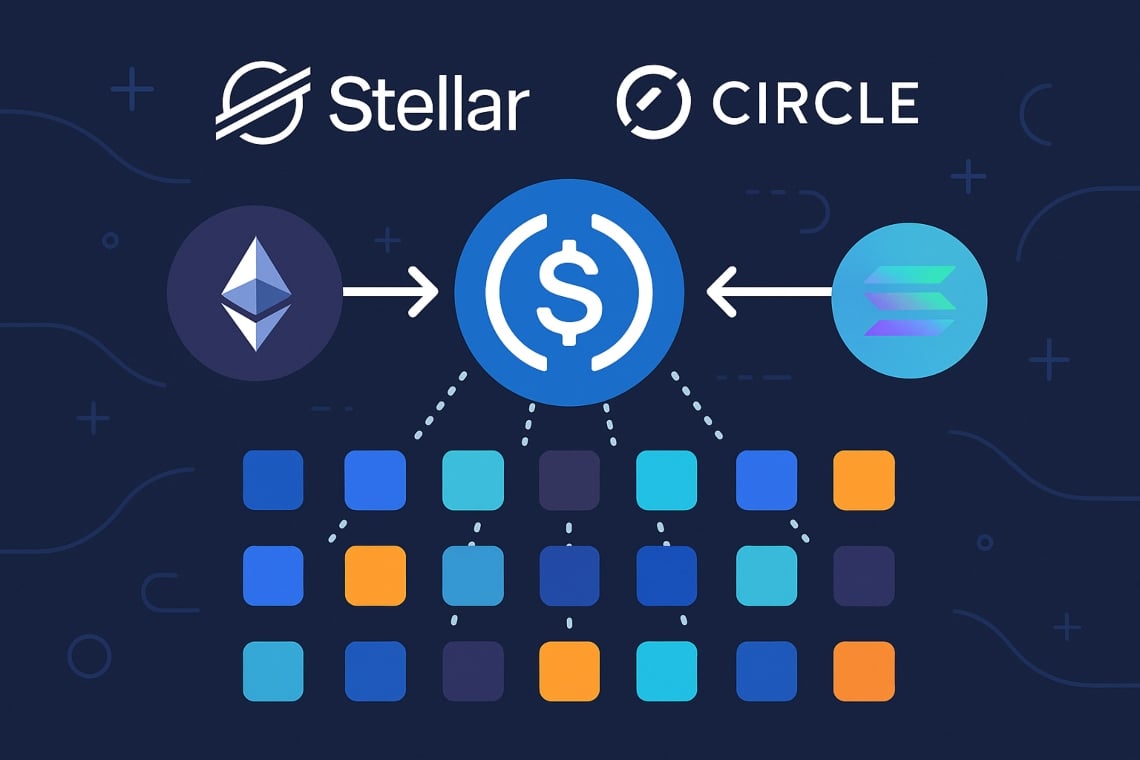
CCTP V2 on Stellar: Native USDC, cross-chain transfers 15+

CCTP V2 on Stellar: Native USDC, cross-chain transfers 15+

Circle has extended the Cross‑Chain Transfer Protocol (CCTP) on Stellar, enabling native and direct transfers of USDC across more than 15 blockchains.

Author: The Cryptonomist